
Industry & Heavy Equipment
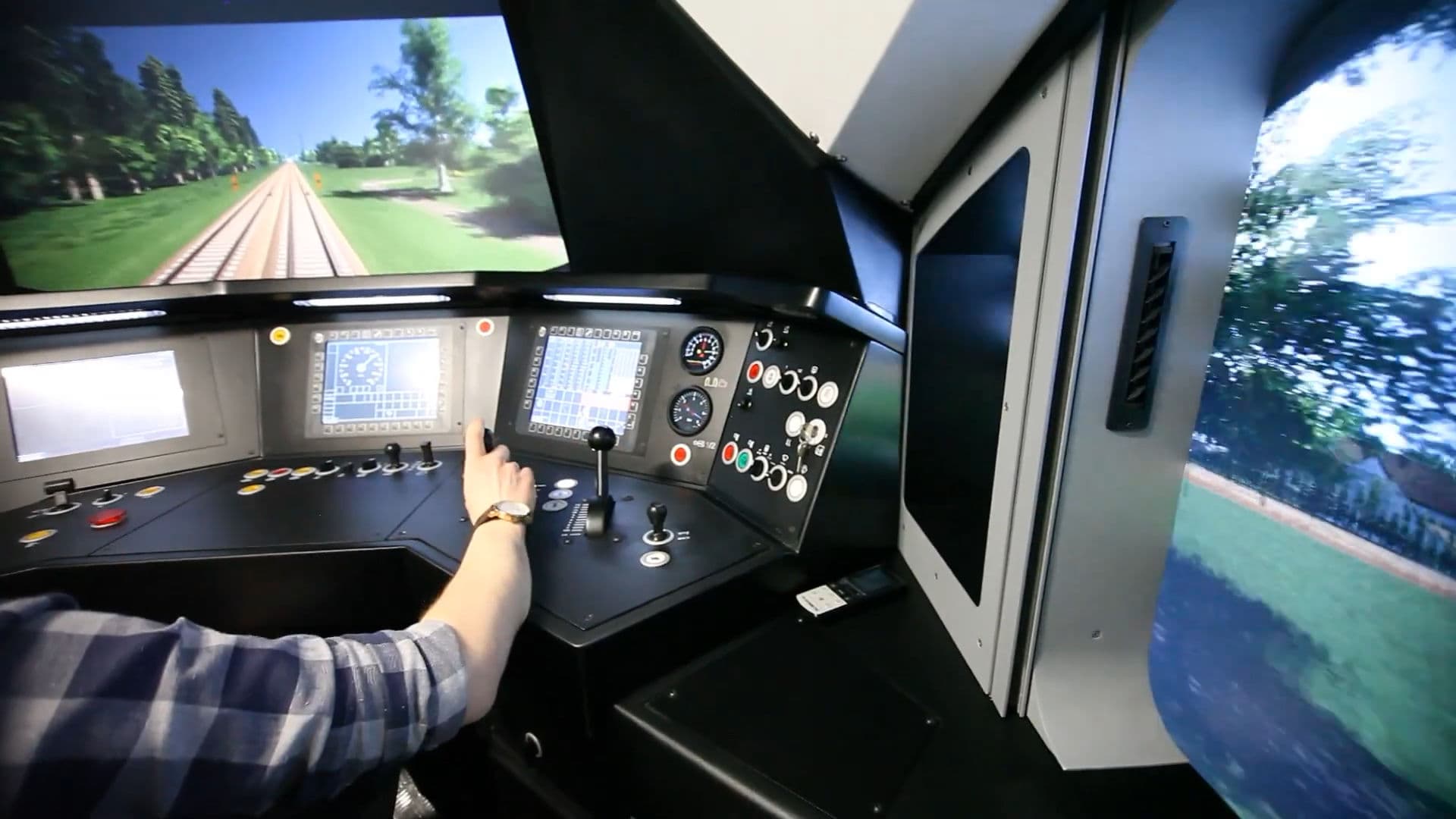
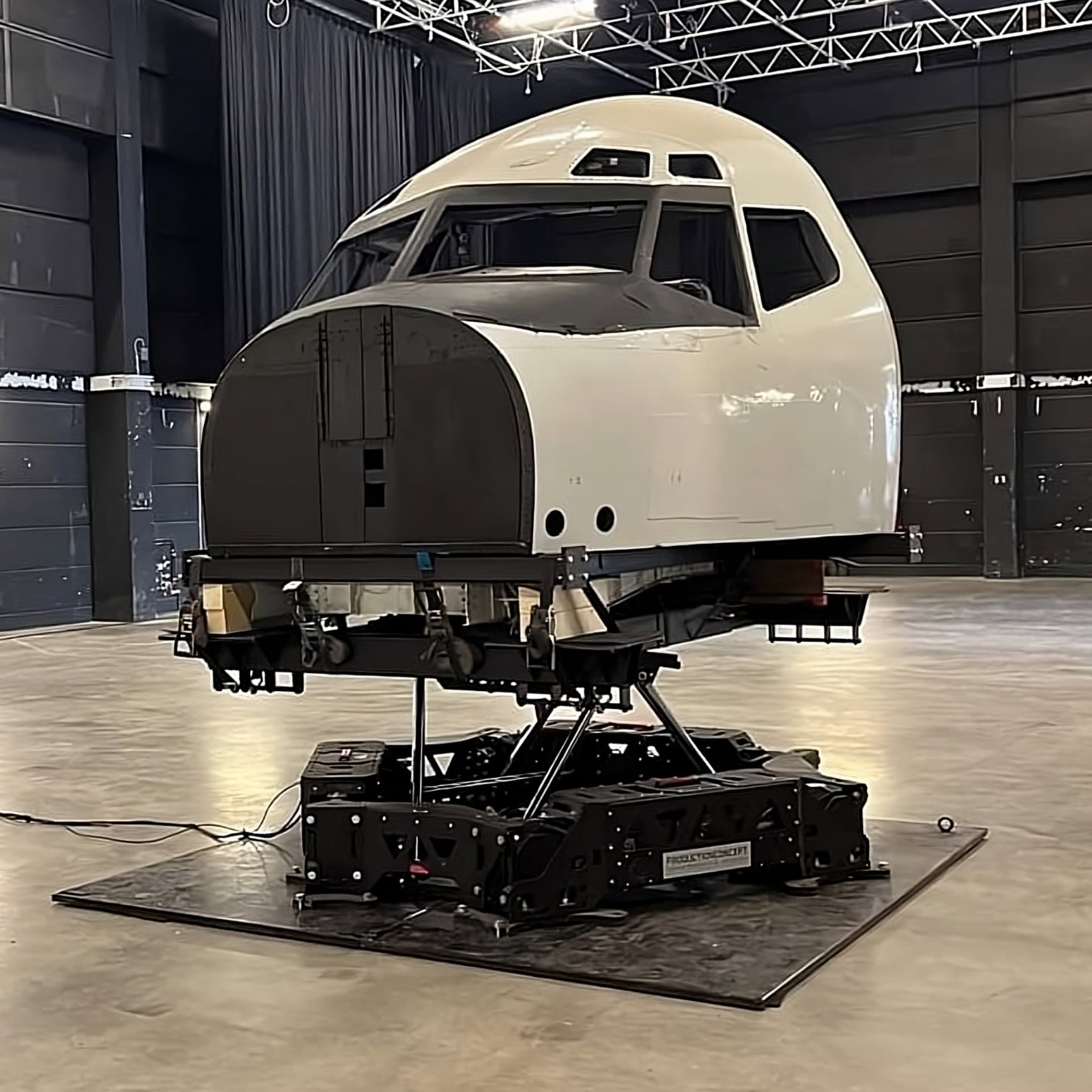
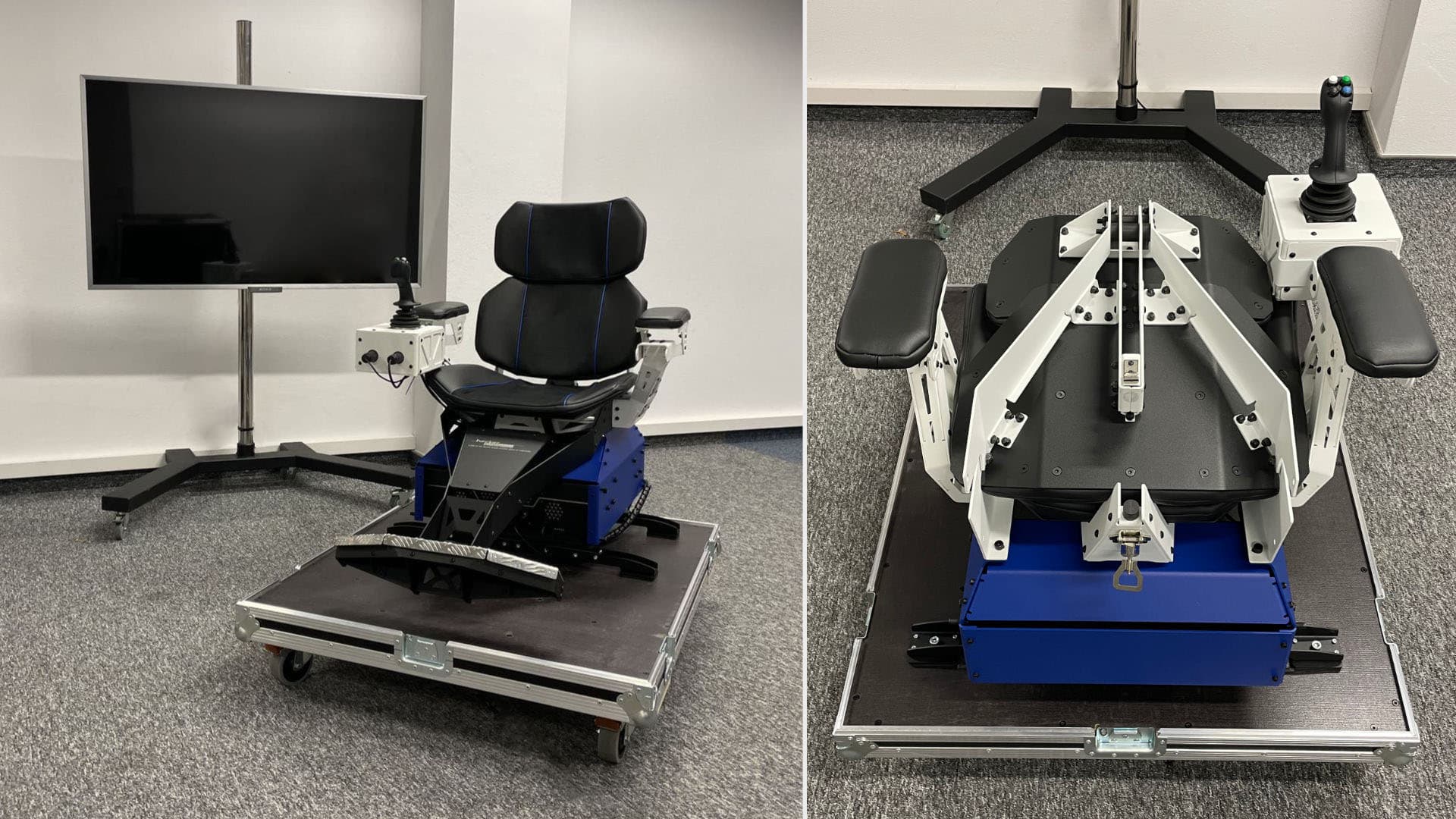
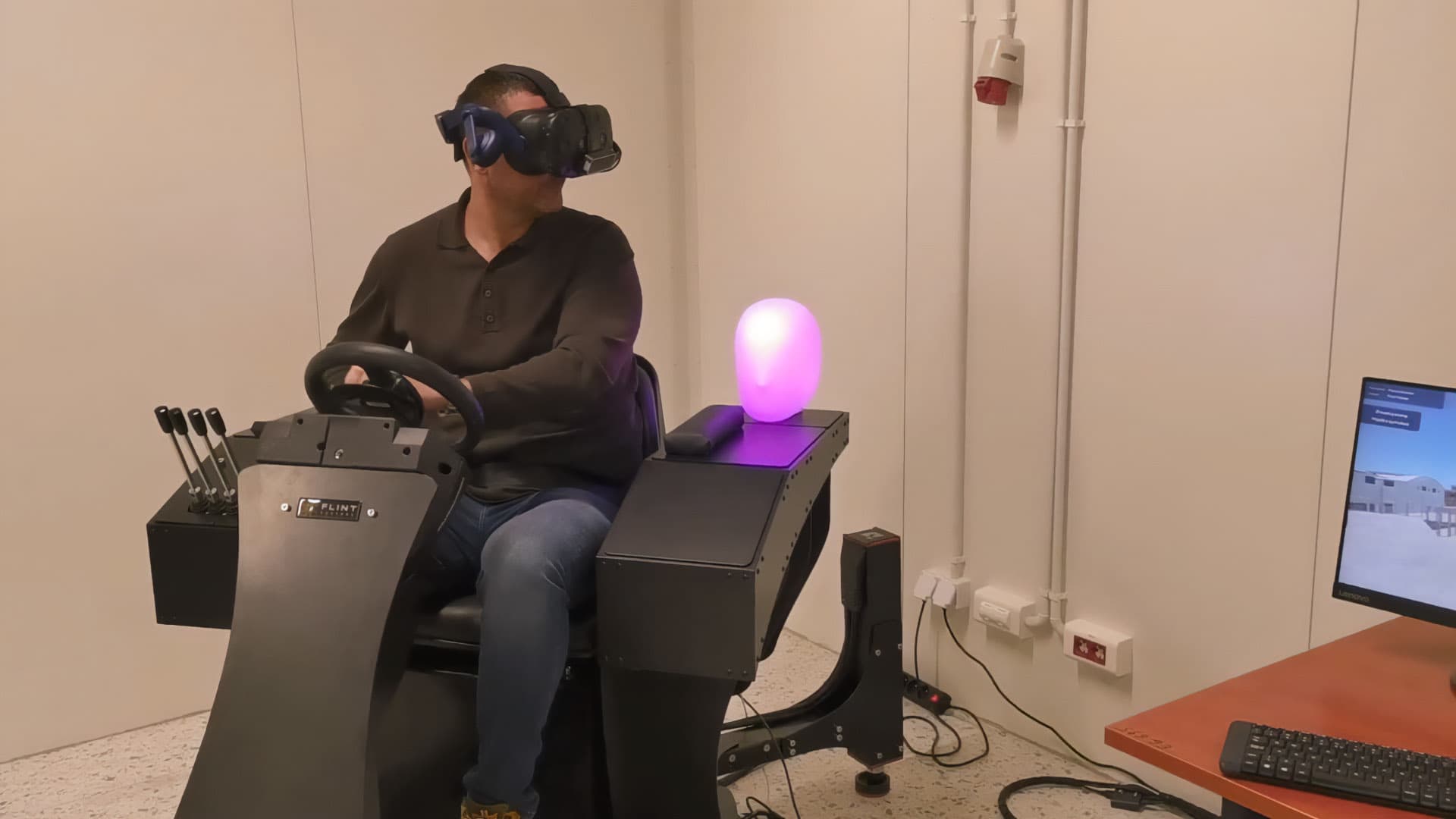
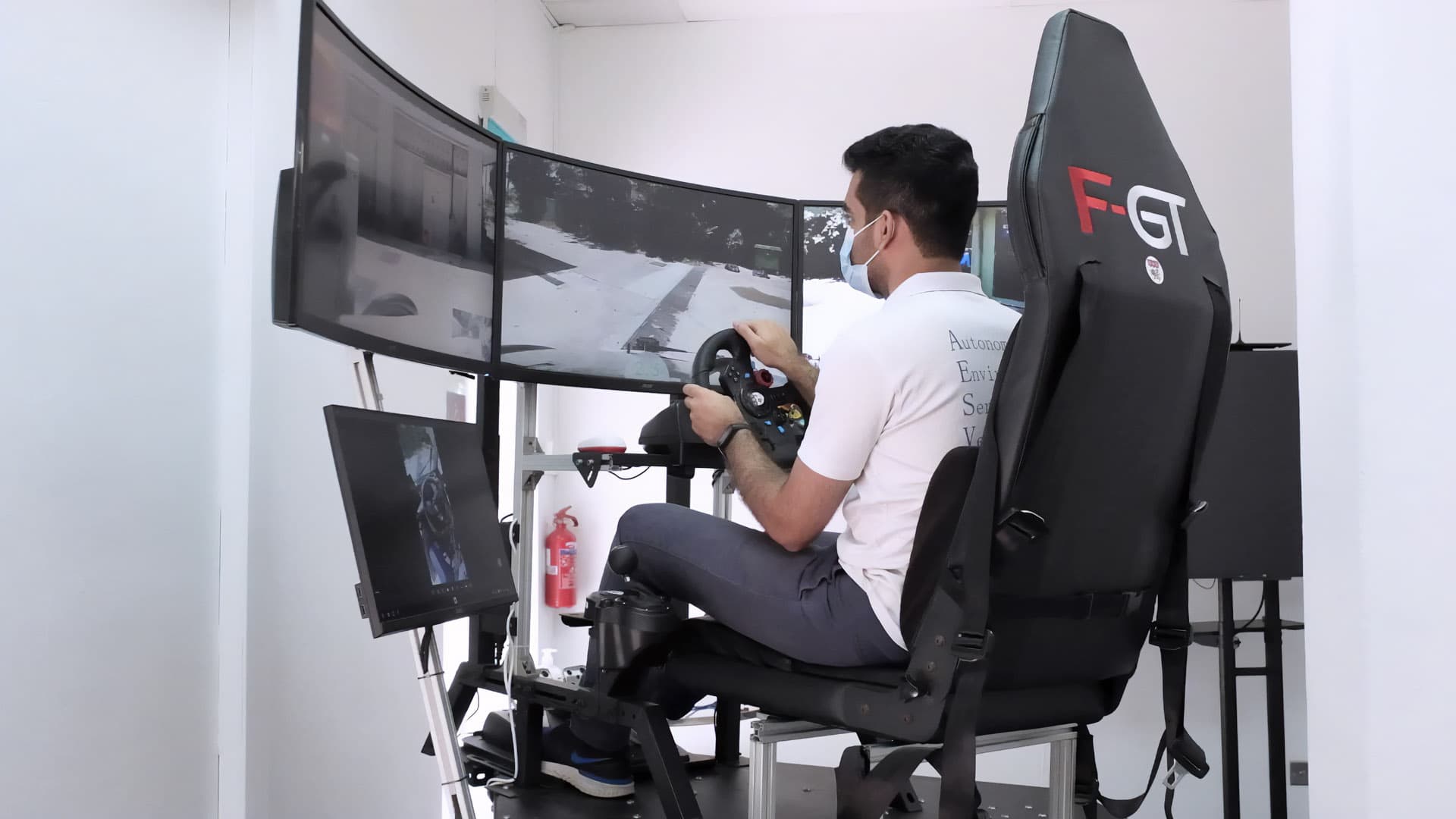
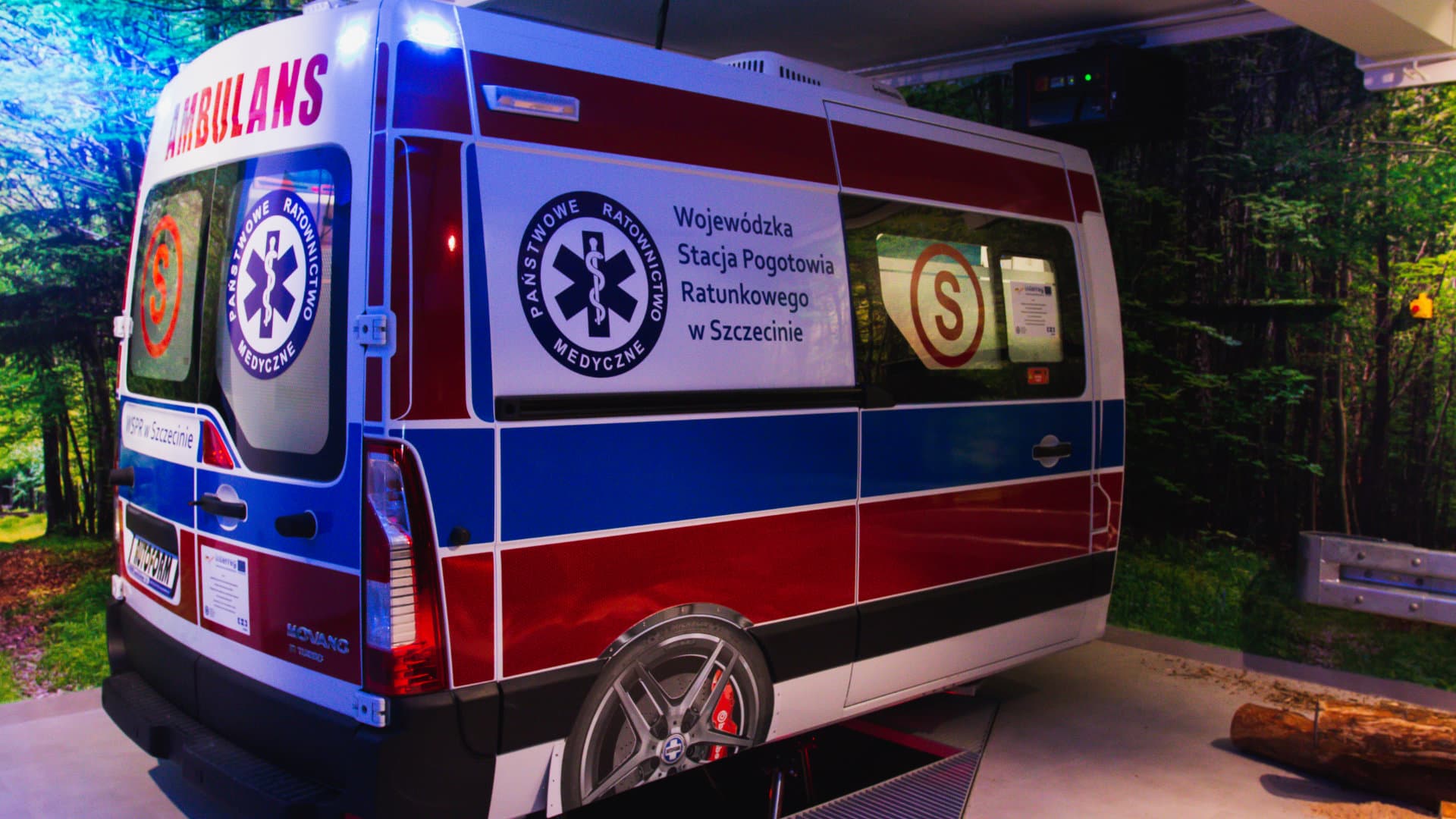
Motion platforms for heavy equipment operator training - from compact single-seat excavator, forklift and crane trainers to full-cab 6DOF mining-truck and railway simulators. One motion supplier and one SDK across the 150-1500 kg payload range.
Engineered for Industry & Heavy Equipment integration teams.
Heavy equipment training runs from a compact forklift trainer to a full 6DOF railway cab - and the motion platform under each one decides whether the skill transfers, VR stays stable, and one supplier covers the fleet.
One Fleet, A Separate Motion Base Per Machine
A heavy equipment training center rarely runs one machine. Excavator, wheel loader, forklift, mining truck and a full railway cab each arrive as its own simulator - and when each sits on a different motion base, the integration team carries a separate codebase, spare-parts profile and vendor per machine. A compact single-seat trainer and a 1500 kg rail cabin end up engineered as if they shared nothing.
Environments No Projection Wall Can Reproduce
Some operating environments cannot be reproduced in a training hall. A tower crane operator works from a glass cab 60 meters up. An underground haul-truck operator drives confined tunnel geometry no projection wall reproduces. A compact single-seat rig with a VR headset is the practical answer - but on a motion platform every movement of the base reads to the headset as movement of the operator head, and the scene drifts off-axis.
Reflexes That Must Transfer to the Real Machine
A trainee changes real-worksite behavior only if the machine is felt, not just seen. The load that begins to tip, the center-of-gravity shift, the first sub-degree pitch as a haul truck nears a slope limit - these are felt before they are seen, and they are the cues that build a safe reflex. On a screens-only rig, or a motion base that answers late, the onset lands after the picture - and the reflex built in the hall does not carry to the live worksite.
Industry & Heavy Equipment
Tap a constraint on the left to see how the platform addresses it.
One Fleet, A Separate Motion Base Per Machine
A heavy equipment training center rarely runs one machine. Excavator, wheel loader, forklift, mining truck and a full railway cab each arrive as its own simulator - and when each sits on a different motion base, the integration team carries a separate codebase, spare-parts profile and vendor per machine. A compact single-seat trainer and a 1500 kg rail cabin end up engineered as if they shared nothing.
Environments No Projection Wall Can Reproduce
Some operating environments cannot be reproduced in a training hall. A tower crane operator works from a glass cab 60 meters up. An underground haul-truck operator drives confined tunnel geometry no projection wall reproduces. A compact single-seat rig with a VR headset is the practical answer - but on a motion platform every movement of the base reads to the headset as movement of the operator head, and the scene drifts off-axis.
Reflexes That Must Transfer to the Real Machine
A trainee changes real-worksite behavior only if the machine is felt, not just seen. The load that begins to tip, the center-of-gravity shift, the first sub-degree pitch as a haul truck nears a slope limit - these are felt before they are seen, and they are the cues that build a safe reflex. On a screens-only rig, or a motion base that answers late, the onset lands after the picture - and the reflex built in the hall does not carry to the live worksite.
What sets the motion platform apart
Technical differentiators that directly impact performance in industry & heavy equipment applications.
One integration process, one toolchain, one motion supplier - from a compact 2- or 3DOF forklift trainer to a 6DOF full-cab railway simulator. Technician skills and the SDK carry across the whole fleet.
A motion base from a different vendor per machine multiplies the integration work, the spares inventory and the support contracts - and every SDK revision is regression-tested across all of them instead of one.
Crane operators train with 360-degree views from 60 meters. Underground miners train in tunnel environments. Full spatial awareness in VR without the motion sickness that undermines training effectiveness.
Without head-motion compensation the scene shifts on every movement of the base; sickness climbs, sessions get capped, and the VR program reschedules into shorter blocks that wreck its duty-cycle economics.
ACE - the Acceleration Control Engine - puts cue onset for tip-over, slope-stability breach and load shift inside the vestibular window, so the felt motion matches the machine and the reflex carries back to the actual equipment.
Above the vestibular window, the trainee adapts to the platform delay rather than to the vehicle dynamics. Skills learned on a high-latency simulator require un-learning on the real equipment.
Find the right motion platform for the project.
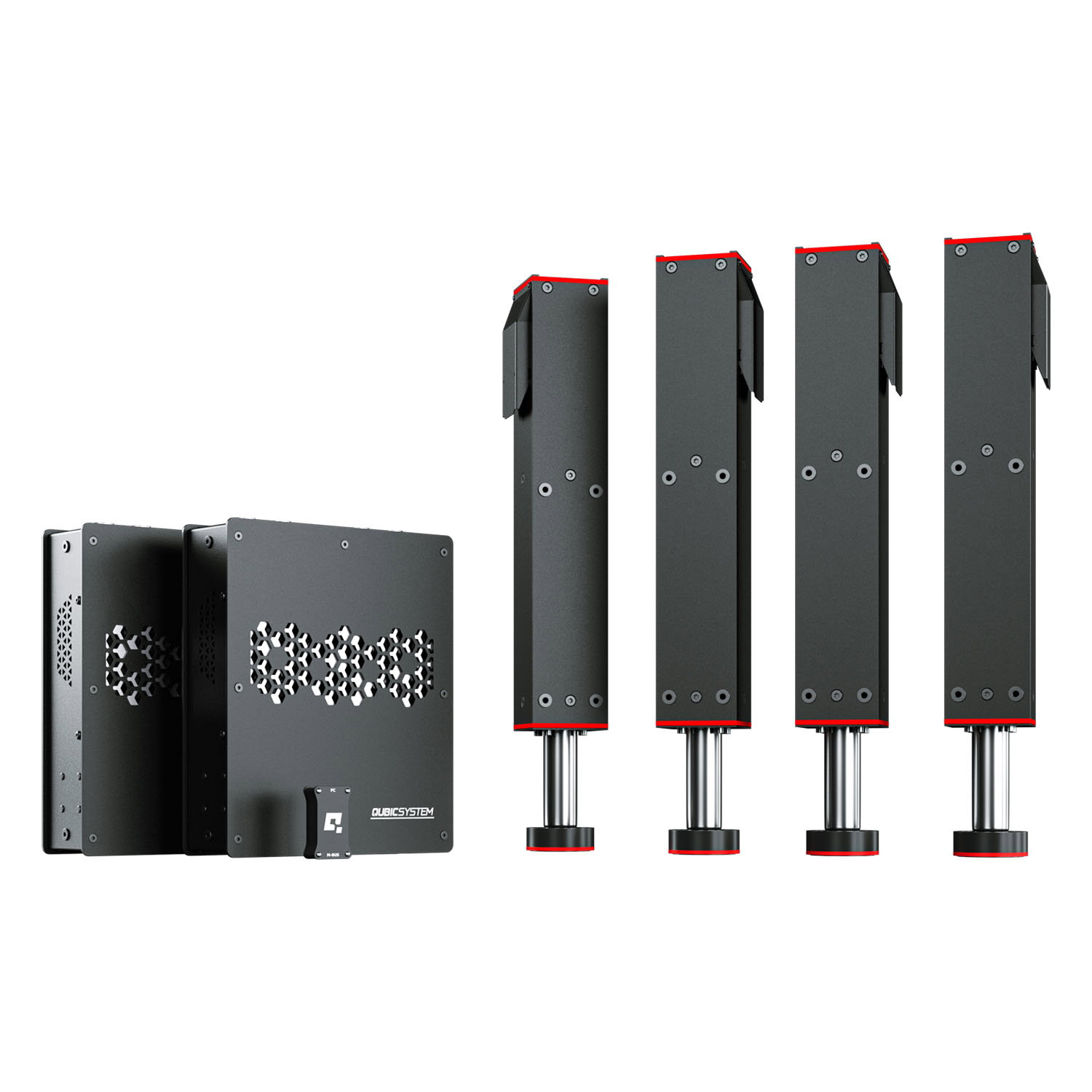
The platform families that fit this application class - Linear high-payload, Low-Profile 6DOF and compact Qubic sets.
Proven in the Field
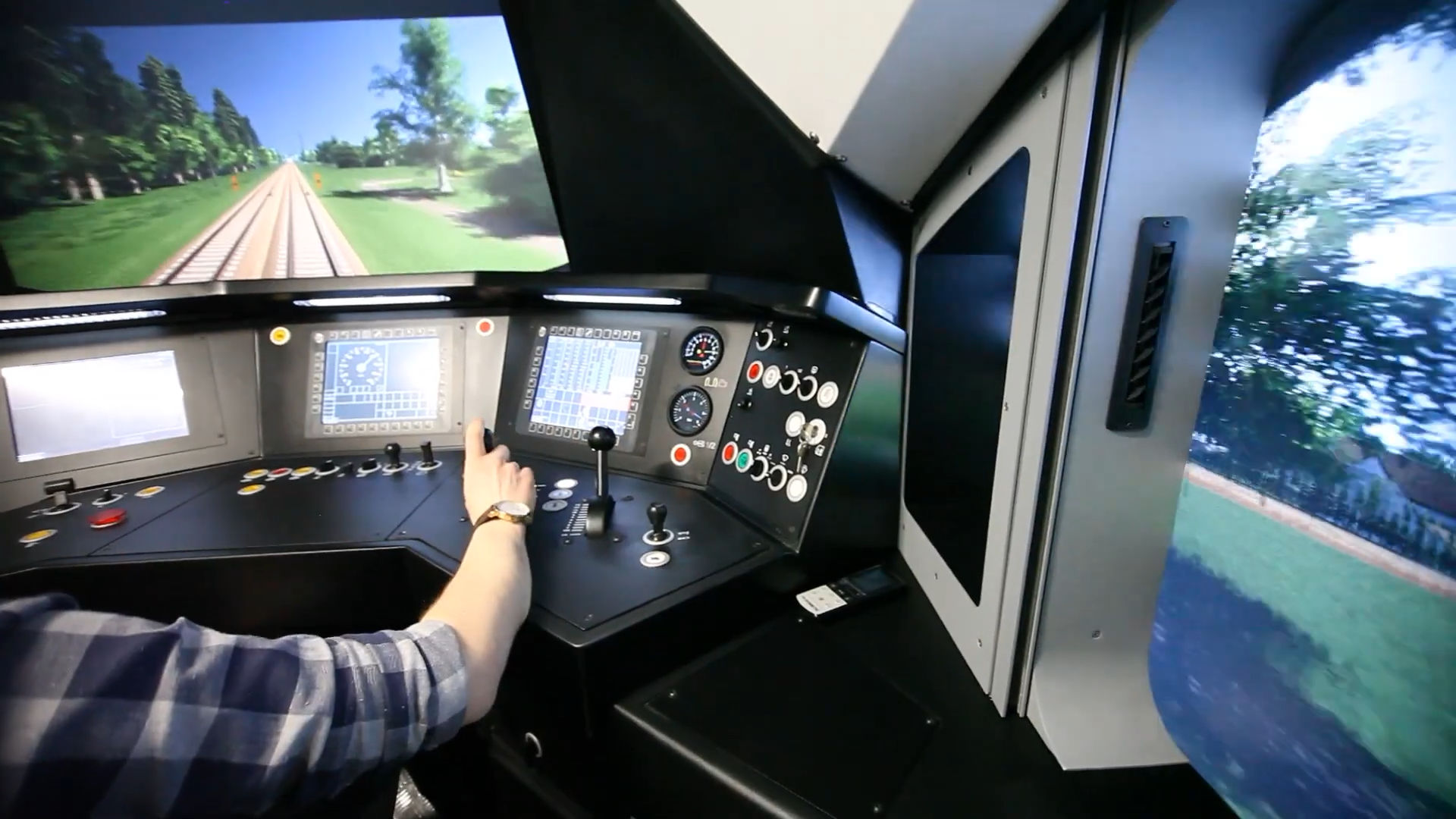
Railway Vehicle Simulators
Warsaw, Poland
The Machine Testing and Monitoring Center is equipped with 3 railway vehicle simulators for driver training and certification.
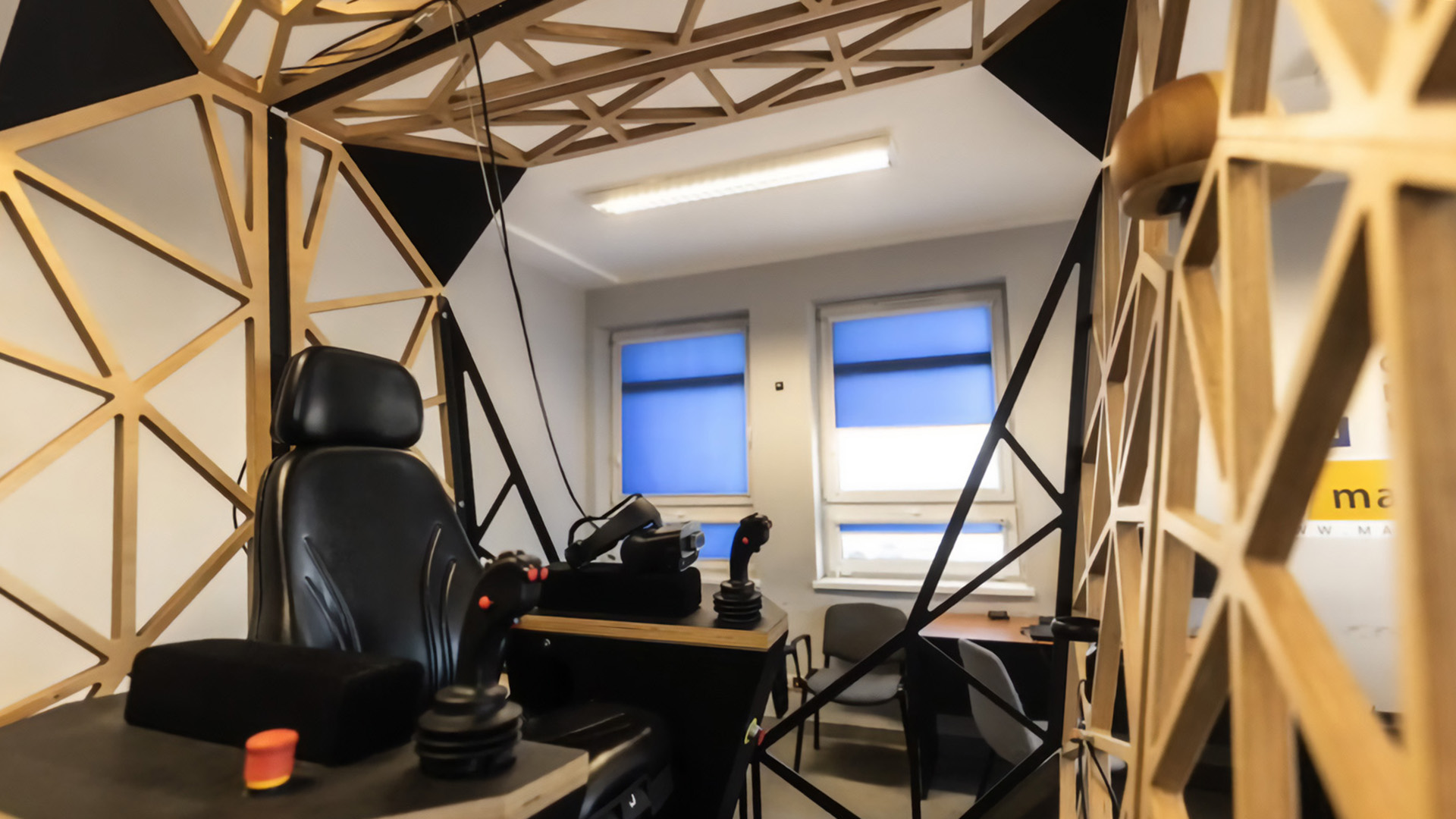
VR Crane Simulator
Gdansk, Poland
The VR Crane Simulator provided by Flint Systems, located in the New Competence Center, Poland.
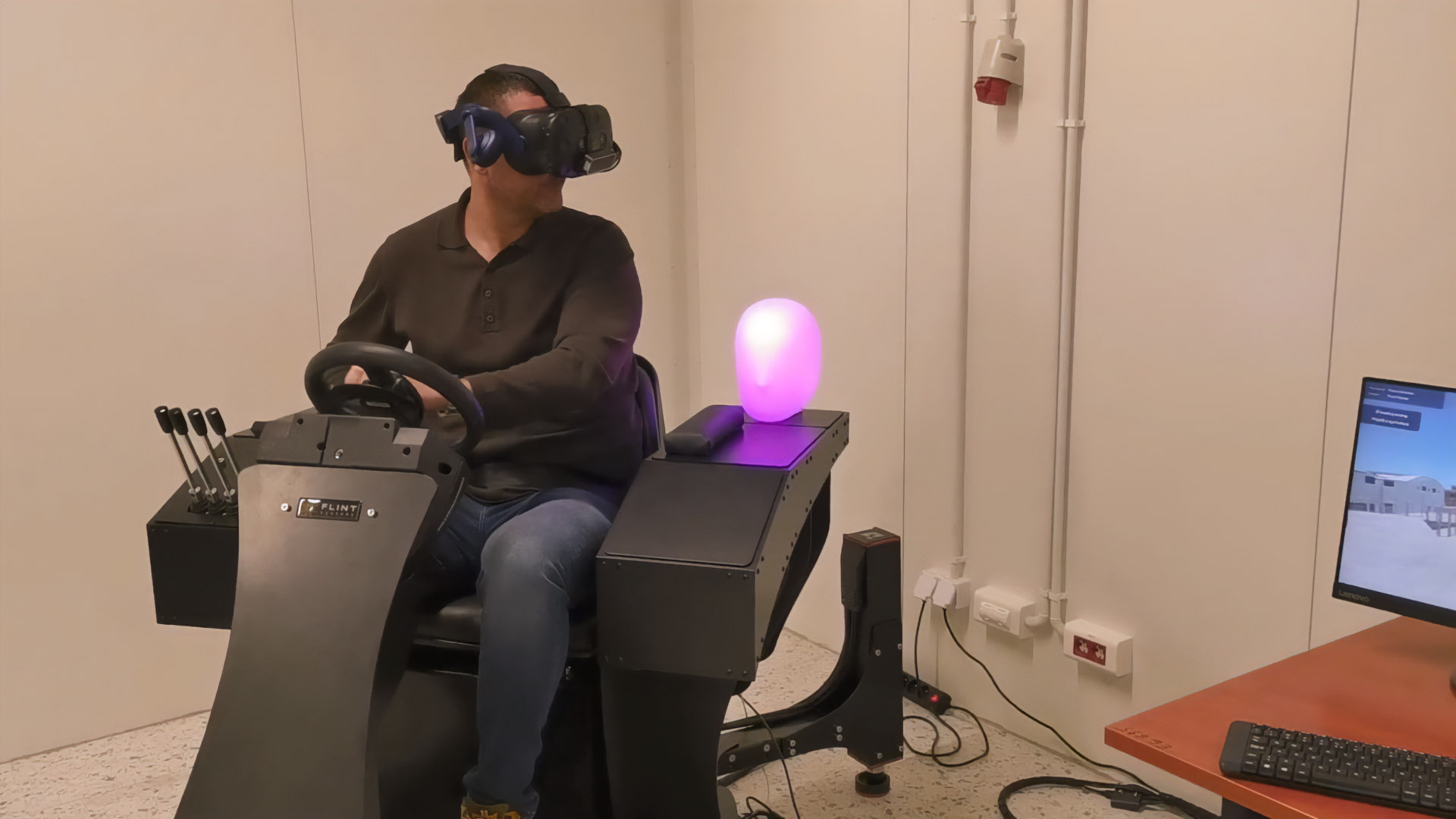
Forklift VR Training Simulator
Poznan, Poland
Forklift VR training simulator from Flint Systems, built on QS-220 actuators. The trainee physically feels weight transfer during acceleration, braking and turning with the load raised, cues a desktop trainer cannot deliver.
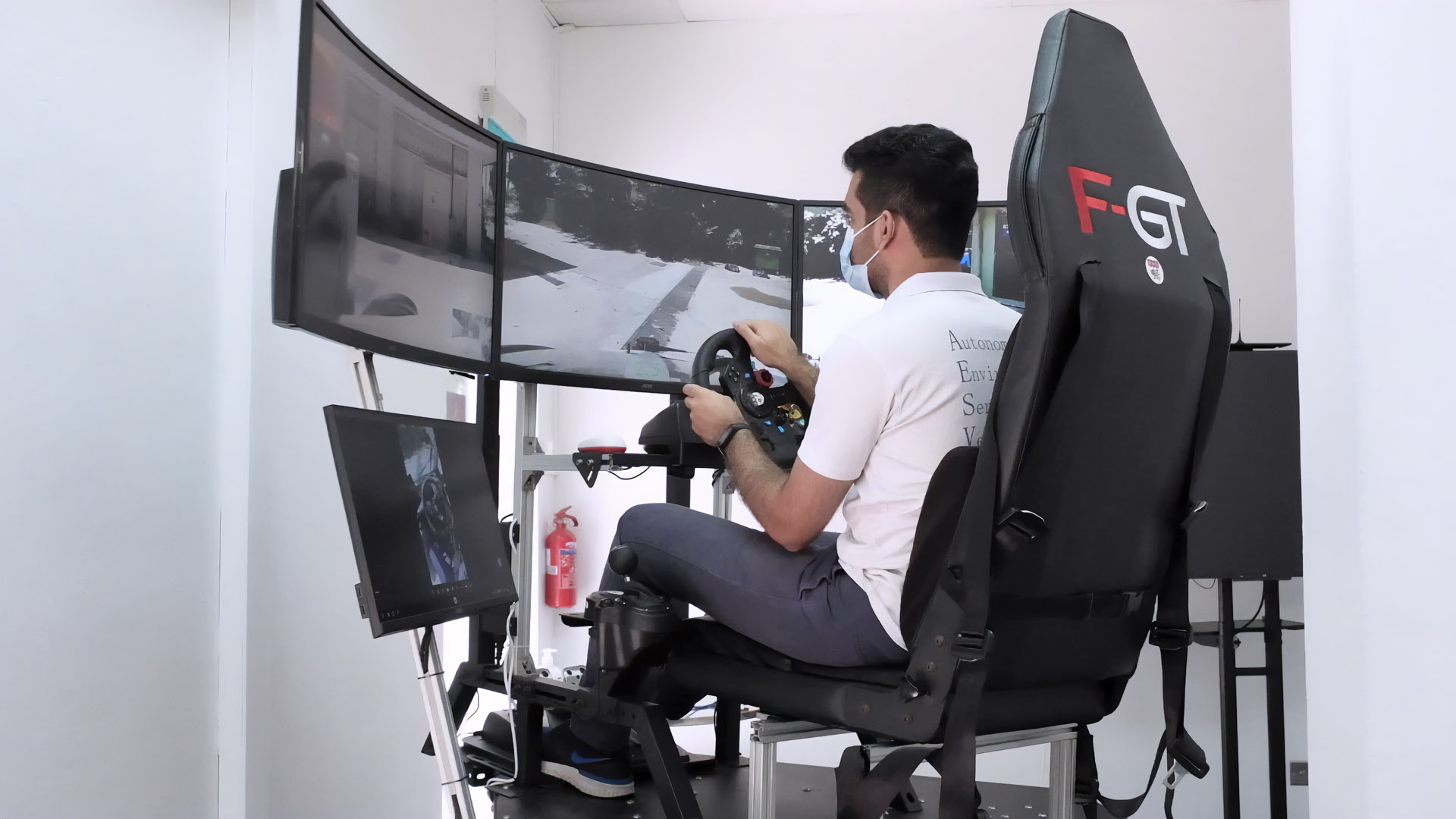
High-fidelity Teleoperation System
Singapore
High-fidelity teleoperation system on the PS-3TM-350 that lets operators drive heavy-duty vehicles remotely. Selected for the Singapore government 5G trials on Sentosa to remotely operate an autonomous road sweeper.
Questions the team gets first.
Fleet standardization, VR training, 3DOF vs 6DOF and uptime - answered up front, ahead of the first call.
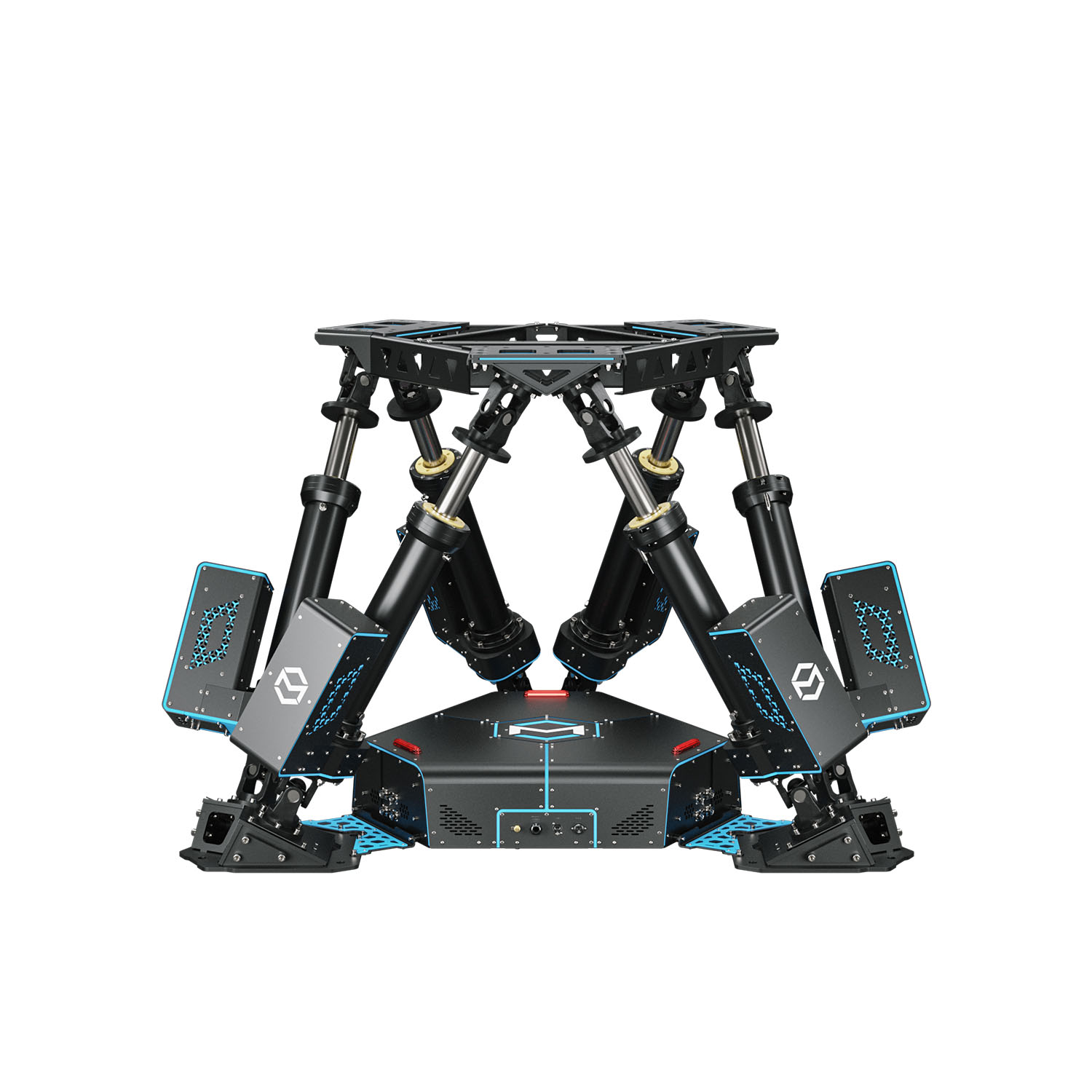
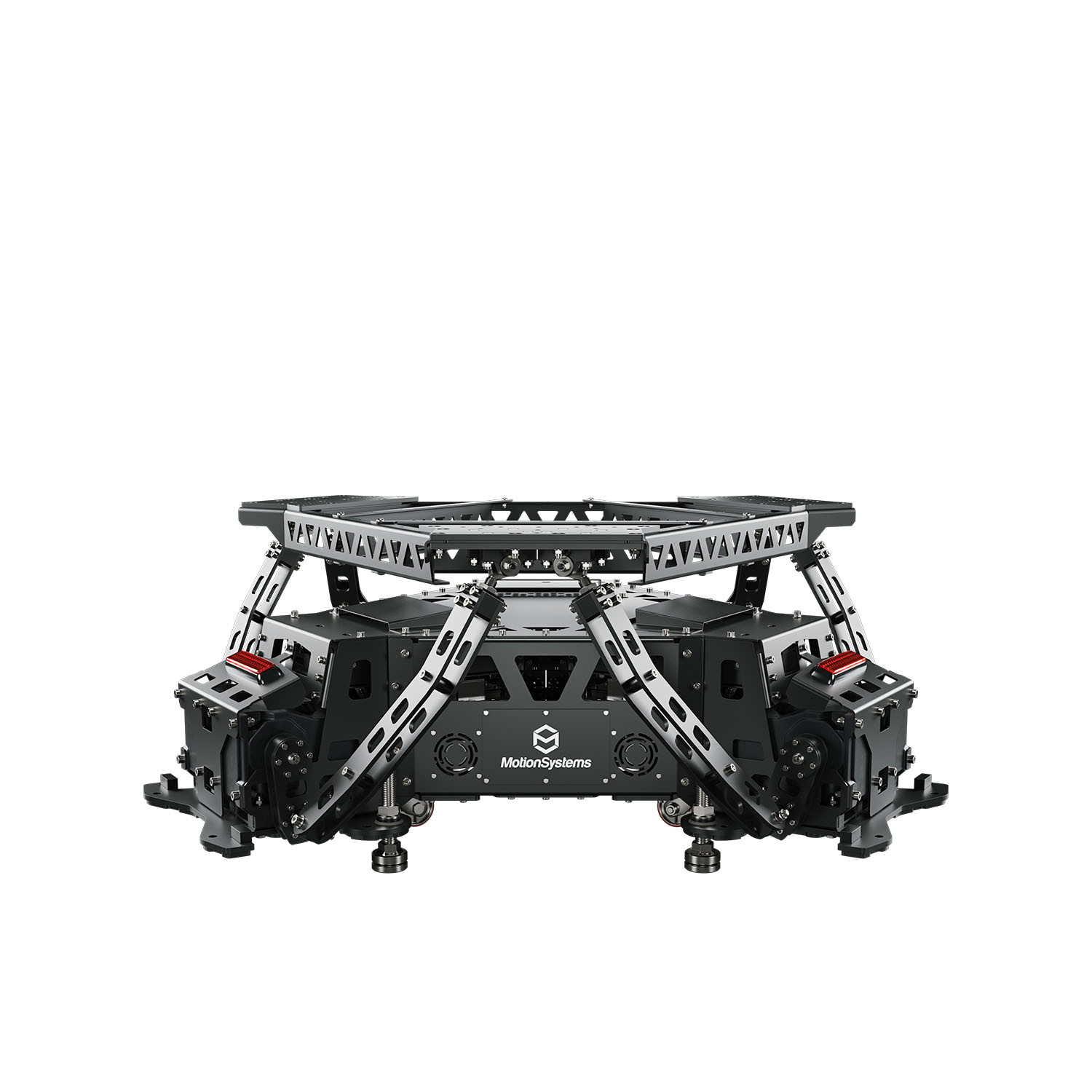
One supplier and one SDK cover the full fleet. The Professional Series spans the 150-1500 kg PS payload range - from a compact 2- or 3DOF forklift trainer (a Qubic System set or the PS-3TM-550) to a 6DOF full-cab railway or mining-truck simulator: the PS-6TM-1500 carries a 1500 kg payload, and the PS-6TL-1500 a 1500 kg gross moving load - and ForceSeatMI/DI is the same integration interface across all of them. Crane, forklift, mining-truck and rail run on one codebase, so technician skills, spare-parts inventory and the support contract consolidate to a single vendor instead of one per machine type.
Match axes to the cue, not the spec sheet. 3DOF (heave, roll, pitch) fits compact single-seat trainers - forklift, basic excavator, mobile rigs - on a Qubic System set or the PS-3TM-550. 6DOF adds surge, sway and yaw for load swing, vehicle handling and slope approach, and carries the heavier full cabs: the PS-6TL-1500 takes a railway or mining-truck cab up to 1500 kg gross moving load. Motion Systems covers 3DOF through 6DOF on one SDK (ForceSeatMI/DI), so a center can mix classes without changing integration toolchain.
VR HeadWay compensates for platform-induced head displacement in ForceSeatPM alongside the motion-cueing engine, so the headset scene stays locked to the operator's perceived viewpoint while the base moves. It runs against standard VR runtimes (SteamVR/OpenXR), so headset choice is not frozen to a fixed list. This is what makes VR practical for environments no projection wall reproduces - a tower-crane cab 60 meters up, or confined underground tunnel geometry - without the scene drift that drives the nausea cap limiting VR session length.
Because above the vestibular window the trainee adapts to the platform delay instead of the vehicle dynamics, and the reflex does not carry to the live worksite. The Professional Series holds sub-30 ms end-to-end at full payload, measured at the cabin attachment point, with ACE motion cueing running at 250 Hz - well inside the 150-250 ms human reaction window. So the tip-over onset, center-of-gravity shift and first sub-degree pitch near a slope limit are felt before they are seen, which is the cue that builds a transferable safety reflex.
Electric. The Professional Series uses electric servo actuators with no hydraulic pump, no pump room and no pressurized fluid to leak, which keeps a multi-year operator pipeline on schedule. Service is model-aware: the 3TM and 6TM-550 cabs run oil-free, while the heavier 6TL-1500 rail and truck cabs take a scheduled HLP-32 lubricant service planned around the training calendar rather than interrupting it. Electric drives start instantly and idle silently between sessions, which matters in a hall running back-to-back operator cohorts.
On power loss the drives de-energize and the platform is held or settled by design, not left to drop. The Linear and Low-Profile Professional Series models that carry electromagnetic brakes engage them and hold position, the compact worm-gear Low-Profile models are self-locking, and the lightest brakeless units and the Qubic System sets settle to their lowest boarding position (the QS-S35, the one Qubic System platform with electromagnetic brakes on every leg, holds position instead). Safe Torque Off is the baseline across the Professional Series, and a hardware emergency stop is added through the PS-SB230 or PS-SB400 E-Stop cabinet - the only configurations that carry a true E-Stop, while the brakeless Qubic System models and the lightest units rely on the Motion-Lock to the boarding position. Software-defined envelope limits cap travel and speed on every model, so an operator-training cell stays inside a safe range.
Yes, indirectly. Motion Systems builds the motion platform and its control software, and works with a network of vetted integrators who assemble the complete operator-training simulator - cab, visuals, controls and final integration. Share the machine type, cab and timeline, and the team can point the project to a suitable partner.
Discuss an Industry & Heavy Equipment project
The team discusses project requirements directly - an outline, cabin weight and timeline are enough to start.