
Aviation & Flight Training
Motion platforms for flight training organizations, simulator integrators, and aviation research programs. 6DOF platforms scale to 1500 kg full-cabin payload with ACE 250 Hz interpolation and sub-30ms latency at full payload. Motion Systems supplies the platform and its qualification evidence; a simulator integrator builds and certifies the complete FTD or FNPT device.
Engineered for Aviation & Flight Training integration teams.
Flight training carries hard constraints - motion-cueing latency, cabin payload, and VR scene stability. The platform architecture addresses each at the engineering level.
Cue Timing Pilots Can Trust
In a flight training device the motion platform sits between the flight model and the inner ear of the pilot, so when a cue lands late the body feels one thing while the instruments show another and the trainee starts flying the simulator instead of the aircraft. Vendors that quote latency at the motor controller hide the lag that rendering, the washout filter and the actuator add before the cabin actually moves. The bar is a cue delivered where the pilot sits, inside the vestibular window, held to that standard for the full session.
Cabins That Fit Without Compromise
Helicopter and fighter cockpits arrive with full instrument fit, control loading hardware and ejection-seat replicas, and the cabin can pass several hundred kilograms before the trainee even climbs in. When a platform runs short of payload the build starts cutting corners - instrument panels become flat screens, real controls become desktop peripherals, and the device stops replicating the aircraft it was bought to train on. What decides the outcome is how much instrumented cabin the platform carries at full motion, not on a spec sheet.
VR Scenes That Stay Locked
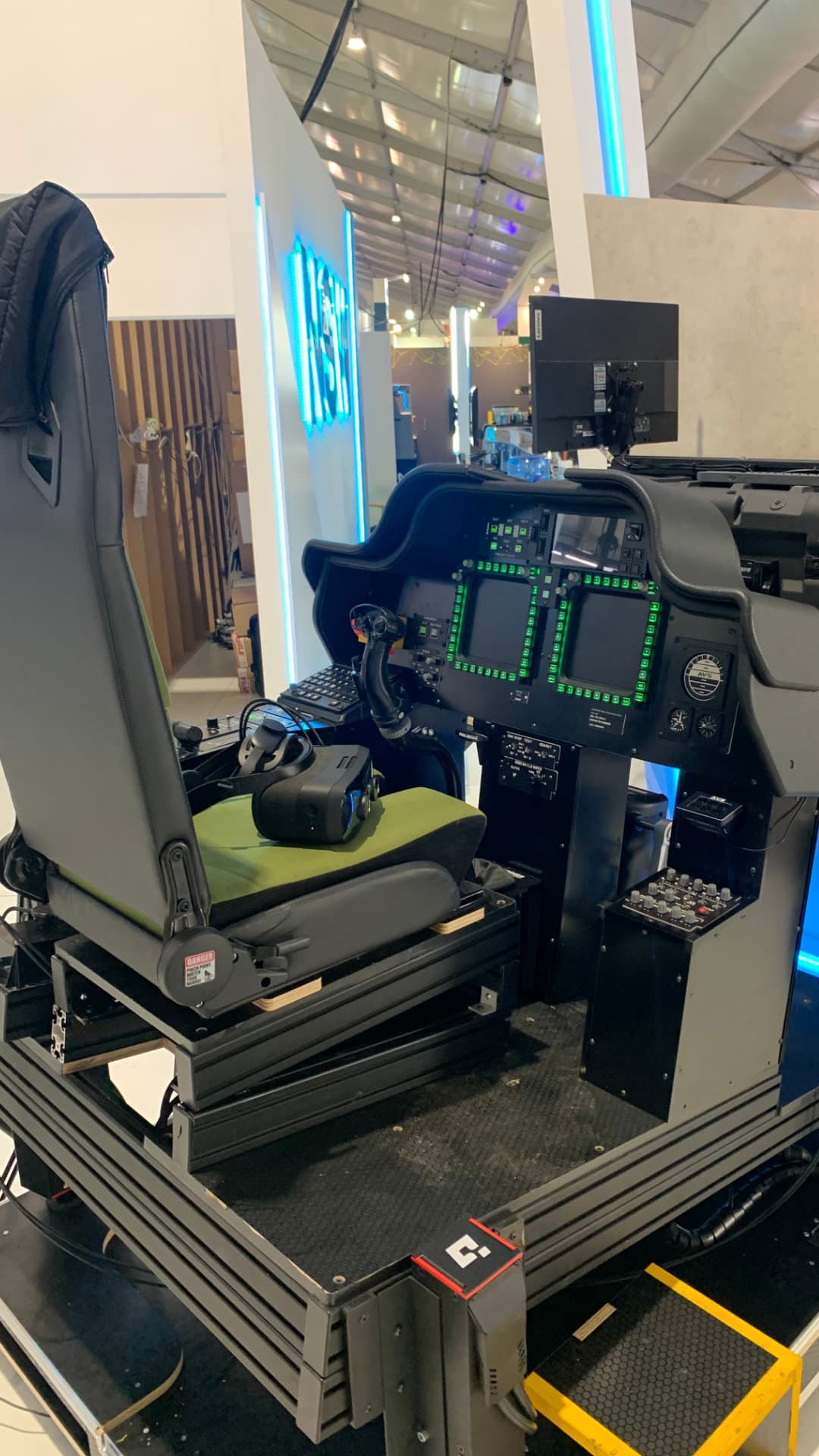
Compact flight trainers increasingly build around VR and mixed-reality headsets instead of physical domes, and that is exactly where motion turns against the picture: every bank of the platform reads to the headset as a movement of the head, the virtual horizon drifts off-axis, and long sessions end in simulator sickness. Strap-on trackers and external cameras only add latency and one more thing to calibrate. The bar is a scene that stays locked to the cockpit for the full session, on whatever VR or mixed-reality headset the trainer fits.
Aviation & Flight Training
Tap a constraint on the left to see how the platform addresses it.
Cue Timing Pilots Can Trust
In a flight training device the motion platform sits between the flight model and the inner ear of the pilot, so when a cue lands late the body feels one thing while the instruments show another and the trainee starts flying the simulator instead of the aircraft. Vendors that quote latency at the motor controller hide the lag that rendering, the washout filter and the actuator add before the cabin actually moves. The bar is a cue delivered where the pilot sits, inside the vestibular window, held to that standard for the full session.
Cabins That Fit Without Compromise
Helicopter and fighter cockpits arrive with full instrument fit, control loading hardware and ejection-seat replicas, and the cabin can pass several hundred kilograms before the trainee even climbs in. When a platform runs short of payload the build starts cutting corners - instrument panels become flat screens, real controls become desktop peripherals, and the device stops replicating the aircraft it was bought to train on. What decides the outcome is how much instrumented cabin the platform carries at full motion, not on a spec sheet.
VR Scenes That Stay Locked
Compact flight trainers increasingly build around VR and mixed-reality headsets instead of physical domes, and that is exactly where motion turns against the picture: every bank of the platform reads to the headset as a movement of the head, the virtual horizon drifts off-axis, and long sessions end in simulator sickness. Strap-on trackers and external cameras only add latency and one more thing to calibrate. The bar is a scene that stays locked to the cockpit for the full session, on whatever VR or mixed-reality headset the trainer fits.
What sets the flight simulator motion platform apart
Technical differentiators that directly impact performance in aviation & flight training applications.
ACE interpolation runs at 250 Hz independent of the visual frame rate, with washout parameters configurable per aircraft model, so onset cues land inside the vestibular window. Latency is published where the pilot sits - end-to-end through rendering, washout and actuator - not at the motor controller. For the program this is the difference that carries the device through FTD evaluation and protects billable training hours.
Vendors that quote latency at the motor controller mask the rendering, washout-filter and actuator lag that the controller figure omits, and generic software processes cueing at the visual frame rate. Turbulence becomes discrete bumps, the cockpit drifts from the spec sheet, and FTD evaluation flags the discrepancy.
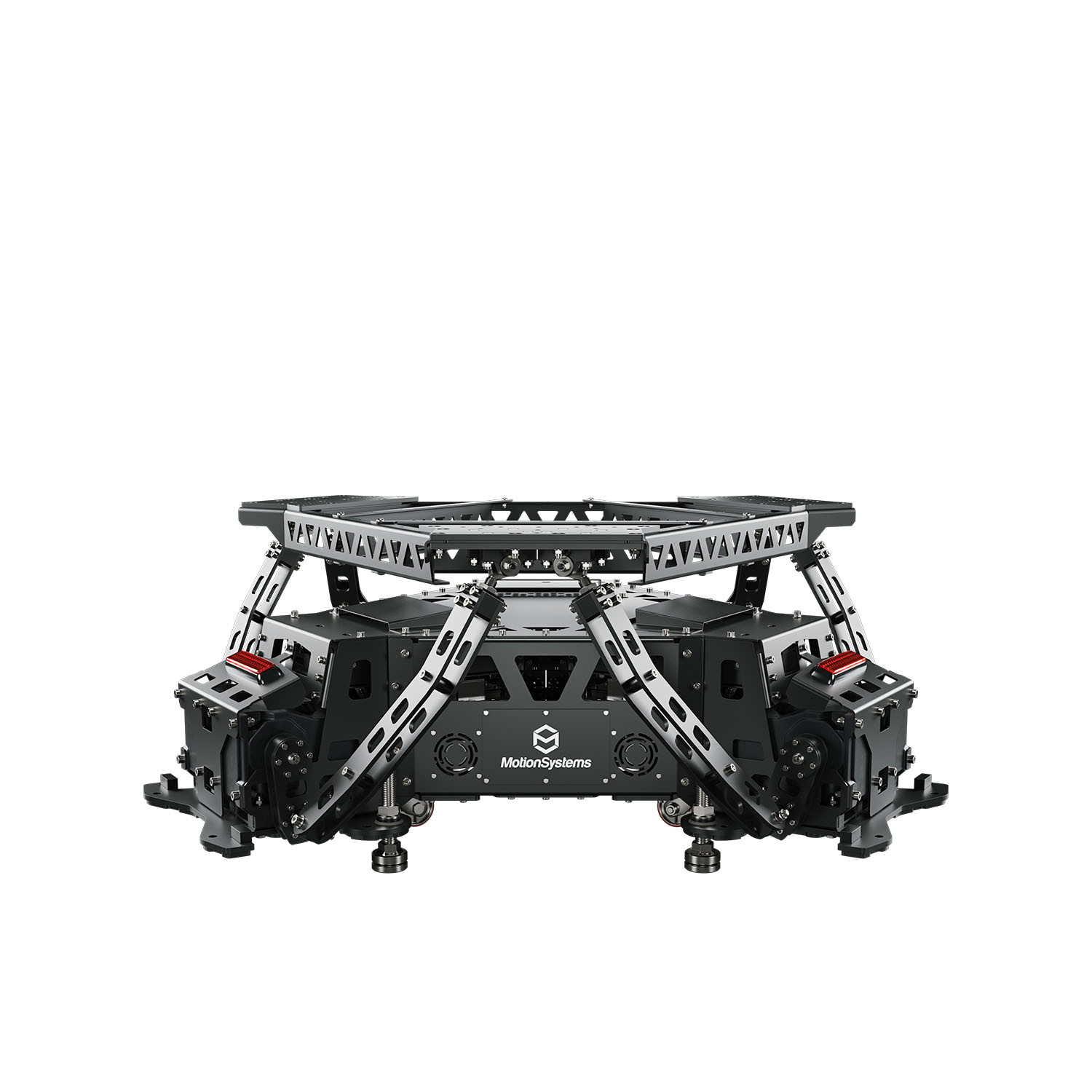
Full-amplitude vertical motion for autorotation sink and hard-landing energy curves. Carries instrumented helicopter cabins and fighter cockpits with control loading hardware. The compact Low-Profile series scales from procedure trainers up to the 1500 kg cabin class. For the program this is the difference between funding one motion base that spans procedure trainers to the integrator-certified device and buying a separate rig for each tier.
Tight payload limits force cockpit compromises: instrument panels become flat screens and physical controls become desktop peripherals, so the simulator approximates the aircraft instead of replicating it.
VR HeadWay runs in ForceSeatPM alongside the motion-cueing engine, reading platform telemetry to subtract platform-induced head displacement in real time so the virtual horizon stays fixed to the cockpit. Sessions hold full length across SteamVR and OpenXR headsets rather than a frozen device list, with optional VR HeadWay CrossPC for per-seat compensation on two-seat devices. For the program this is the difference between VR trainers that stay billable for the full session and sessions capped short by simulator sickness.
A motion platform paired with VR but without scene compensation shifts the visual field on every movement. Sickness rates climb to commercially unviable levels, sessions get capped, and the VR cockpit becomes a liability instead of a training asset.
Find the right flight simulator motion platform.
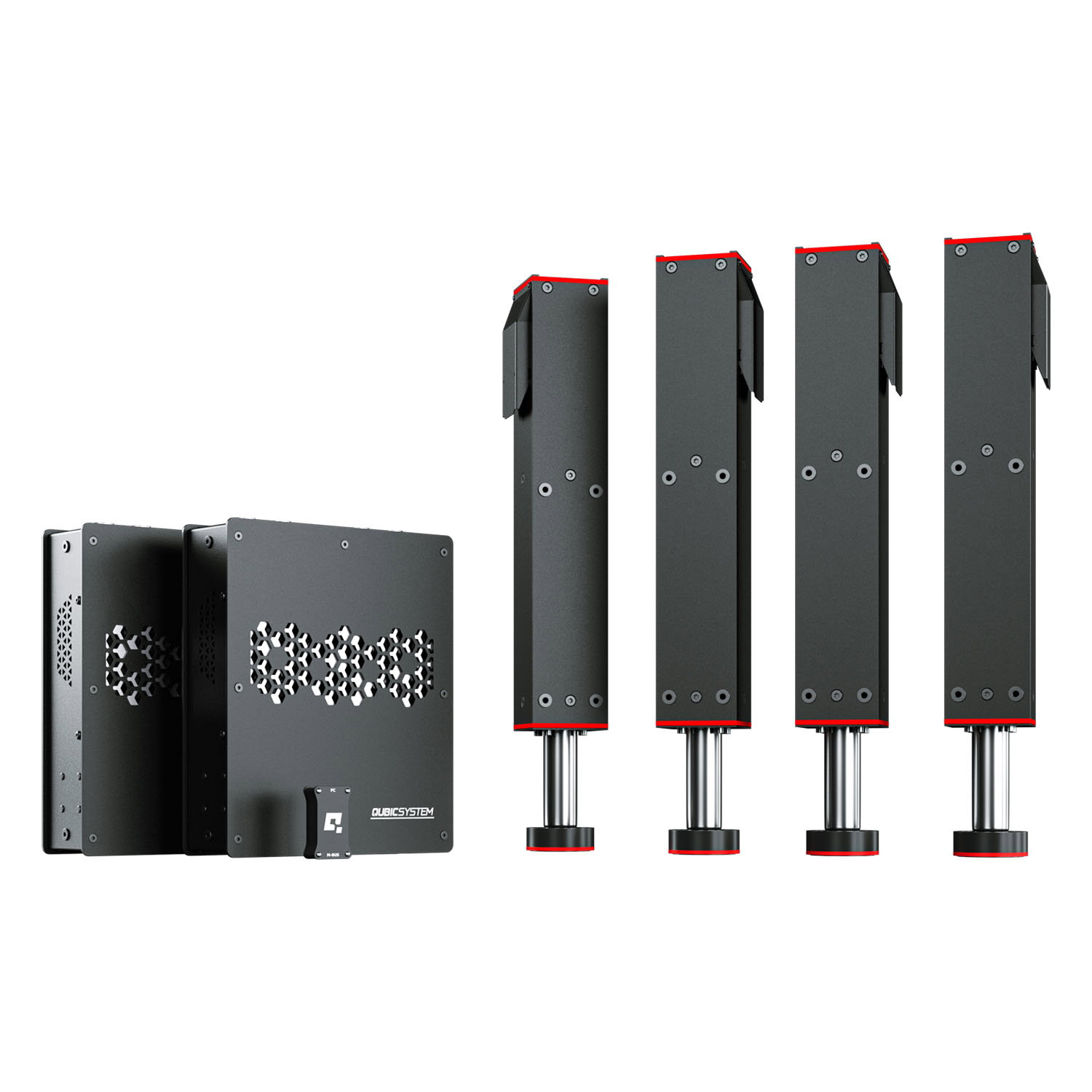
The platform families that fit this application class - Linear high-payload, Low-Profile 6DOF and compact Qubic sets.
Proven in the Field
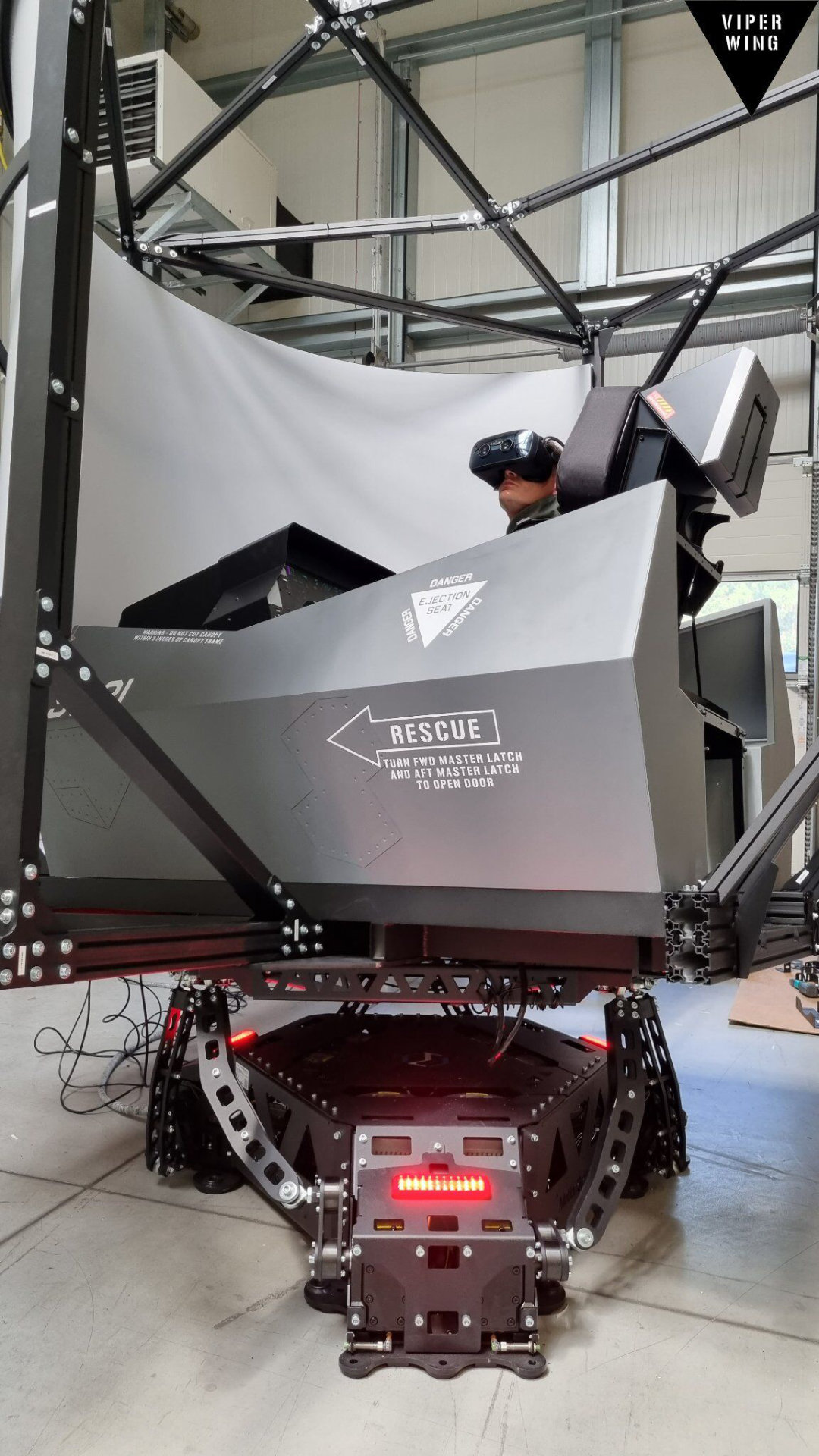
F-35 Fighter Jet Cockpit Simulator
Poznan, Poland
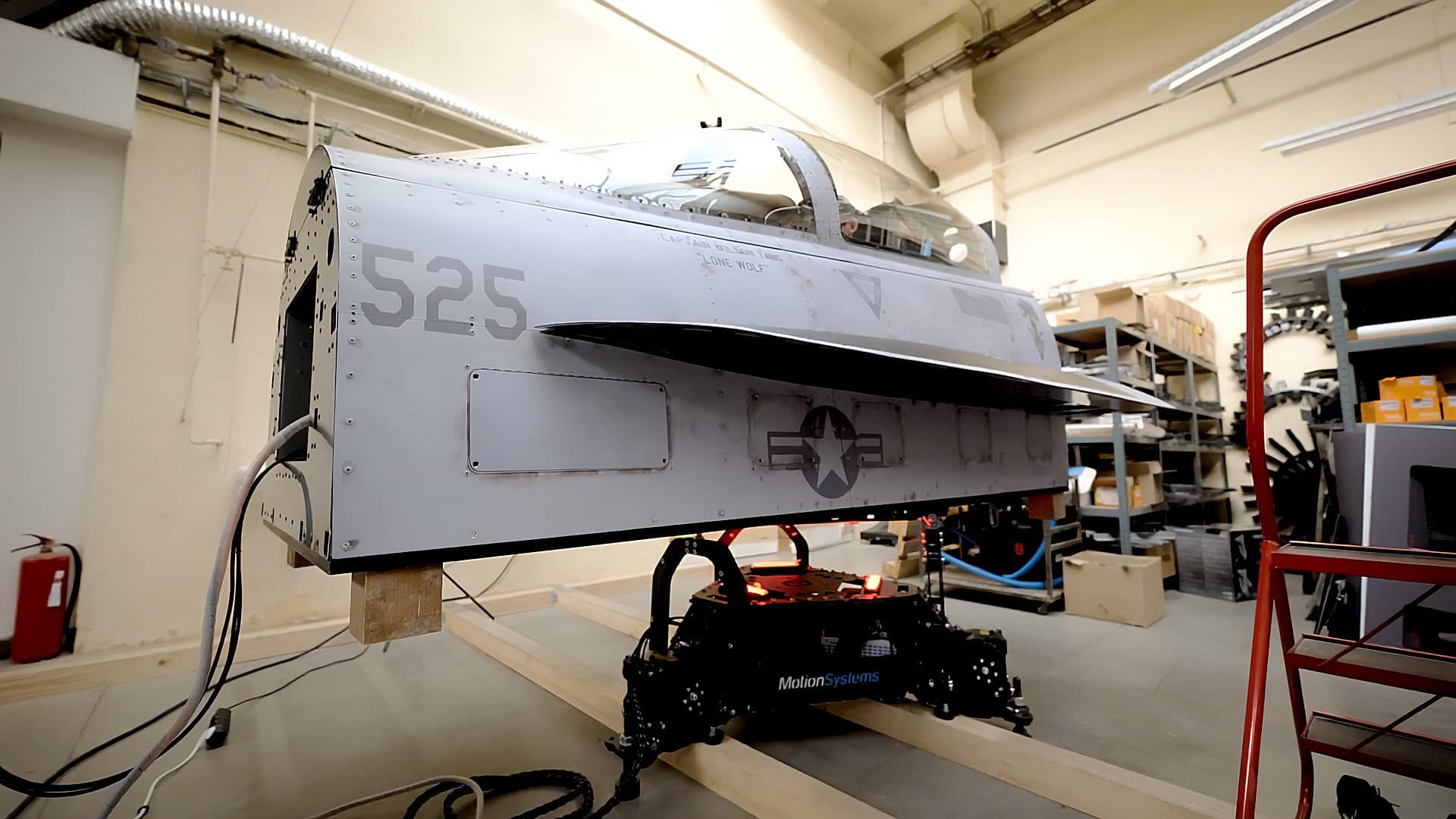
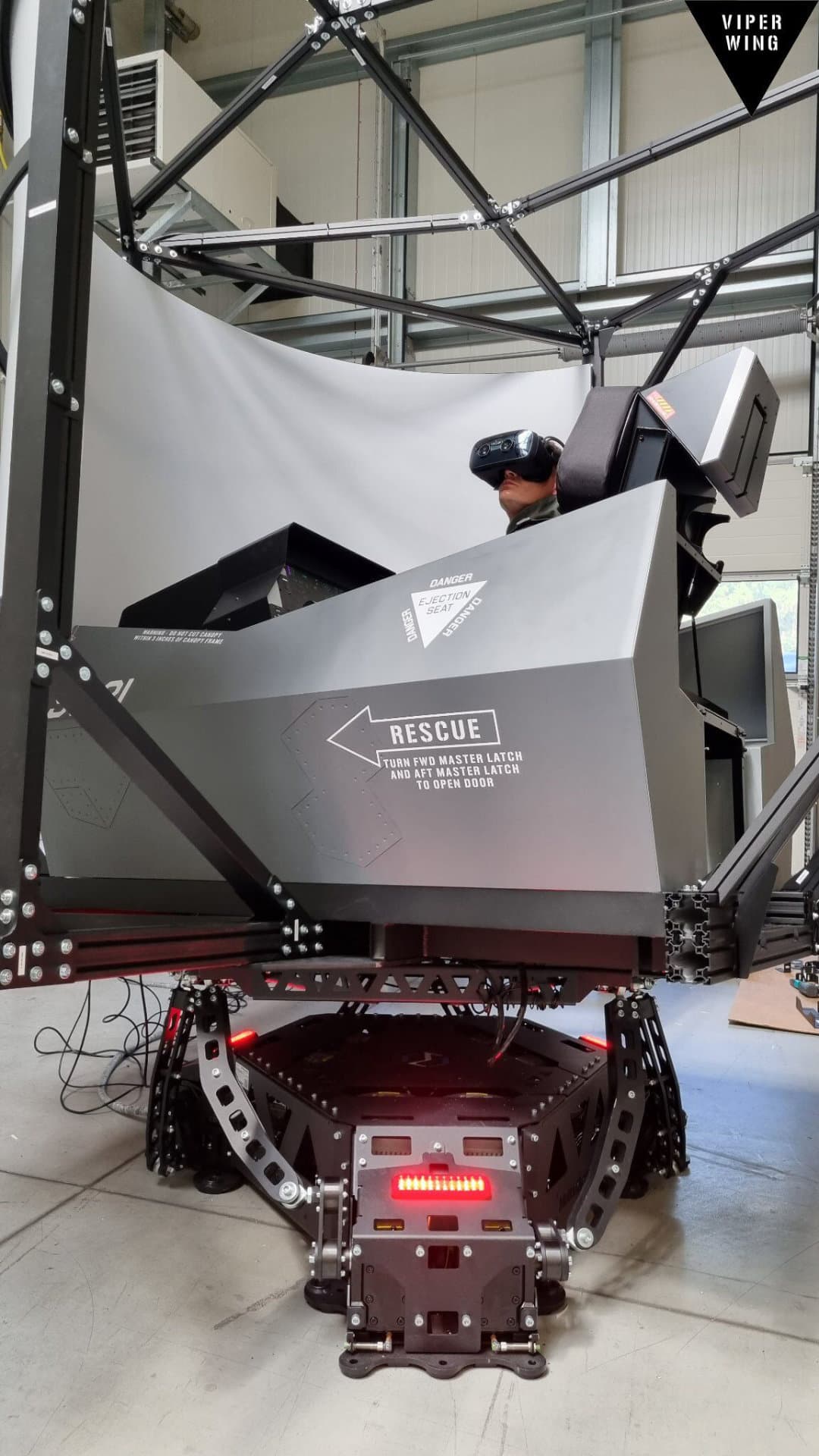
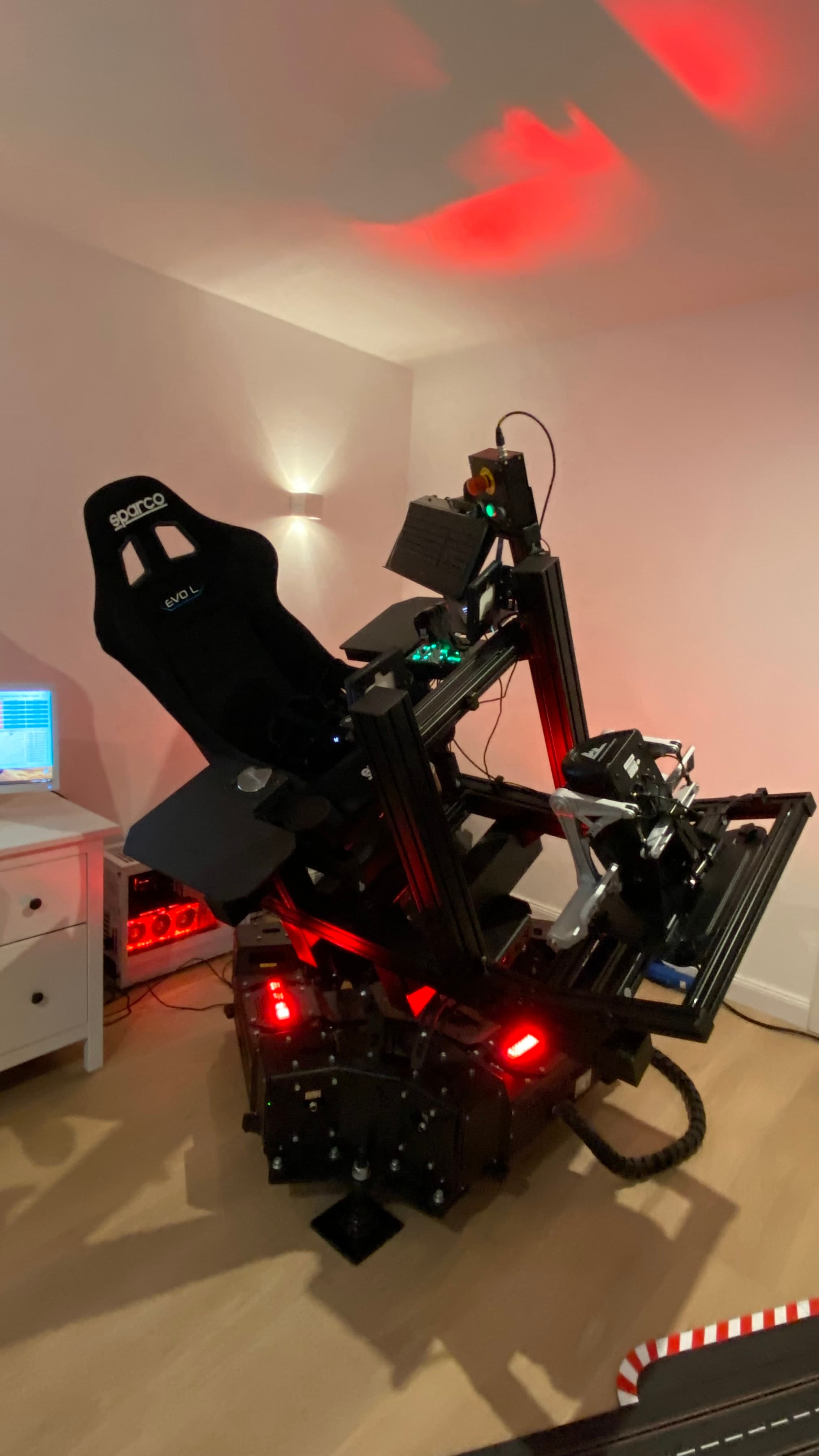
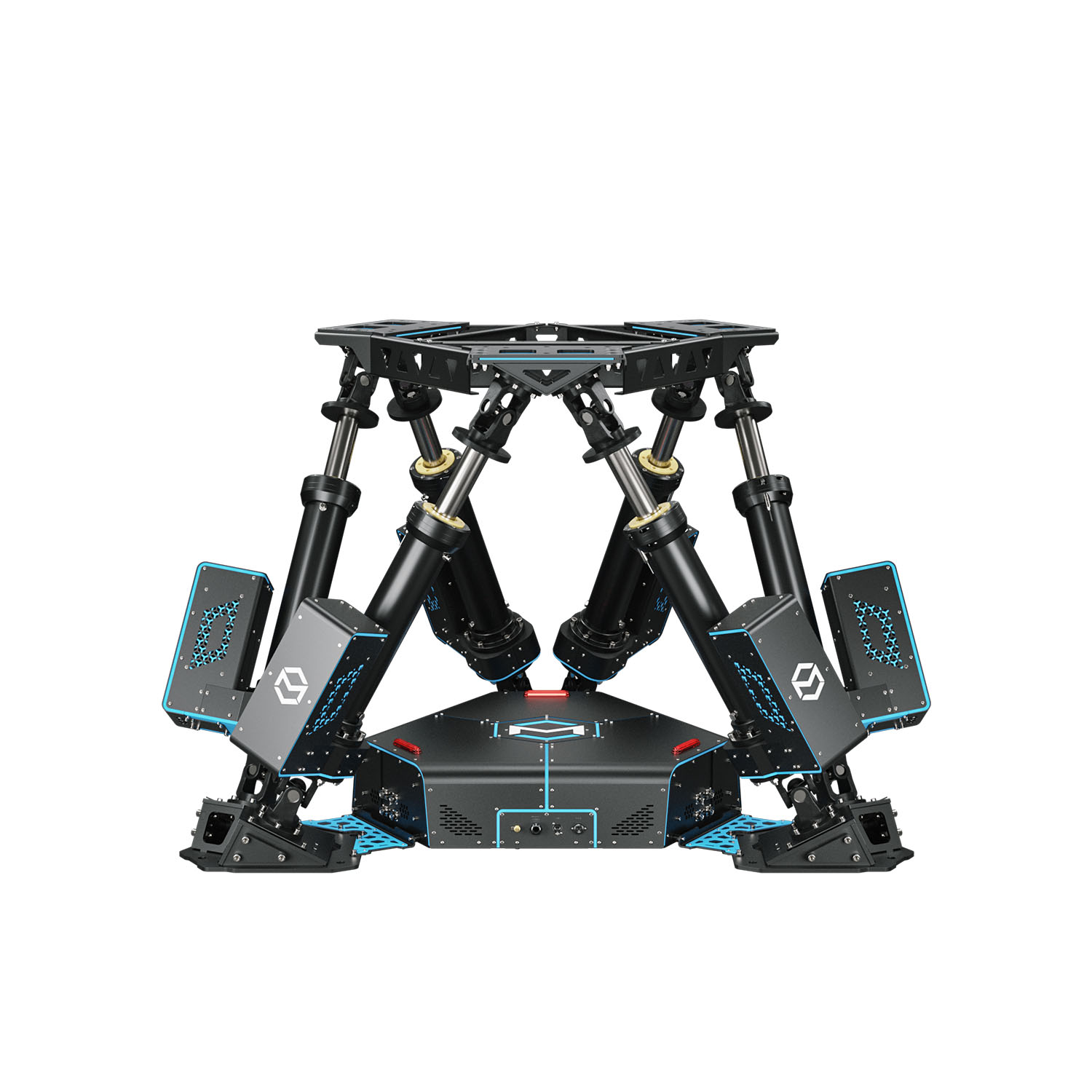
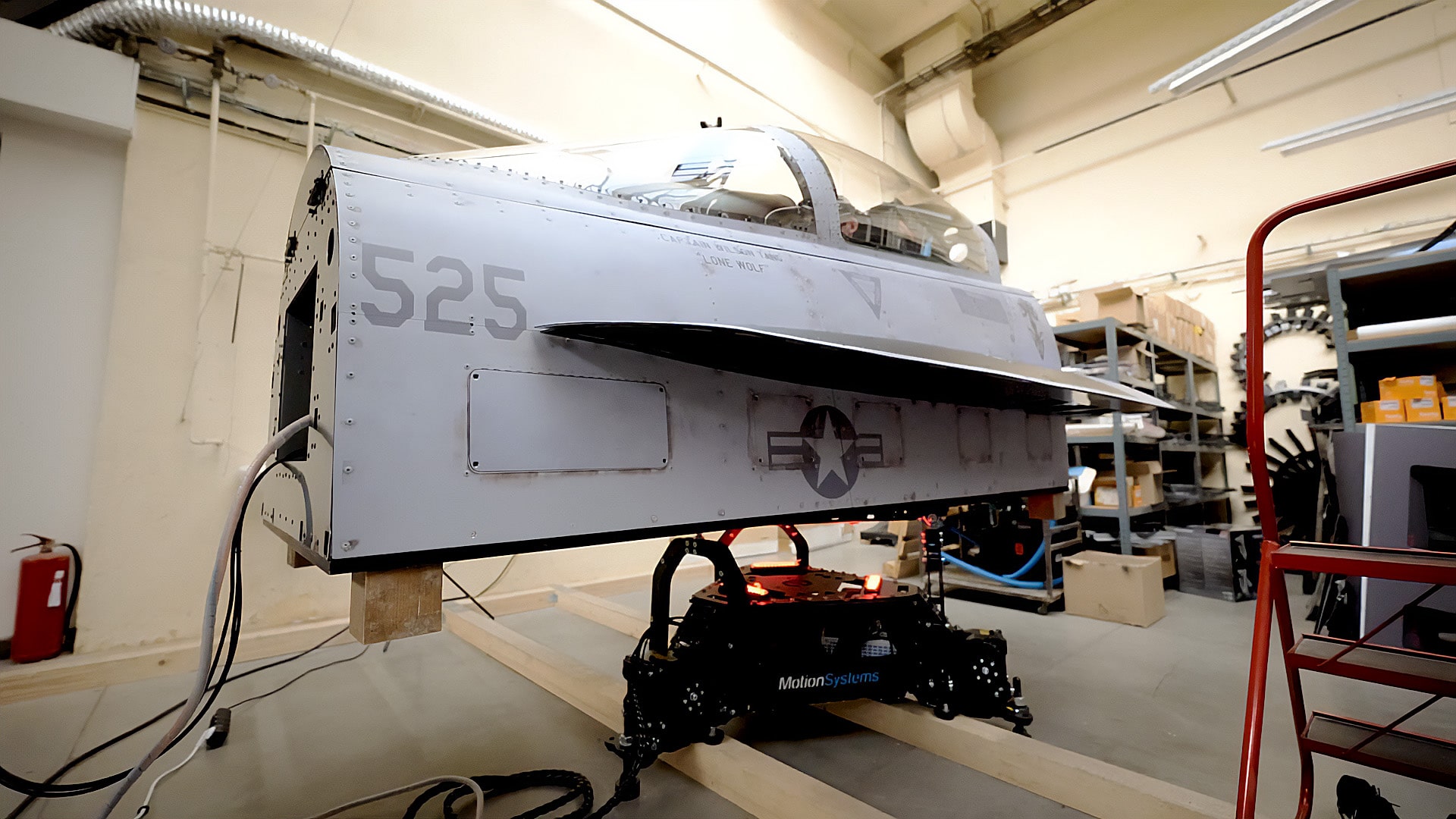
F-35 fighter jet cockpit simulator by Viper Wing on the compact 6DOF PS-6TM-550, with a full aluminum cockpit on a mobile wheeled base for transport between locations.
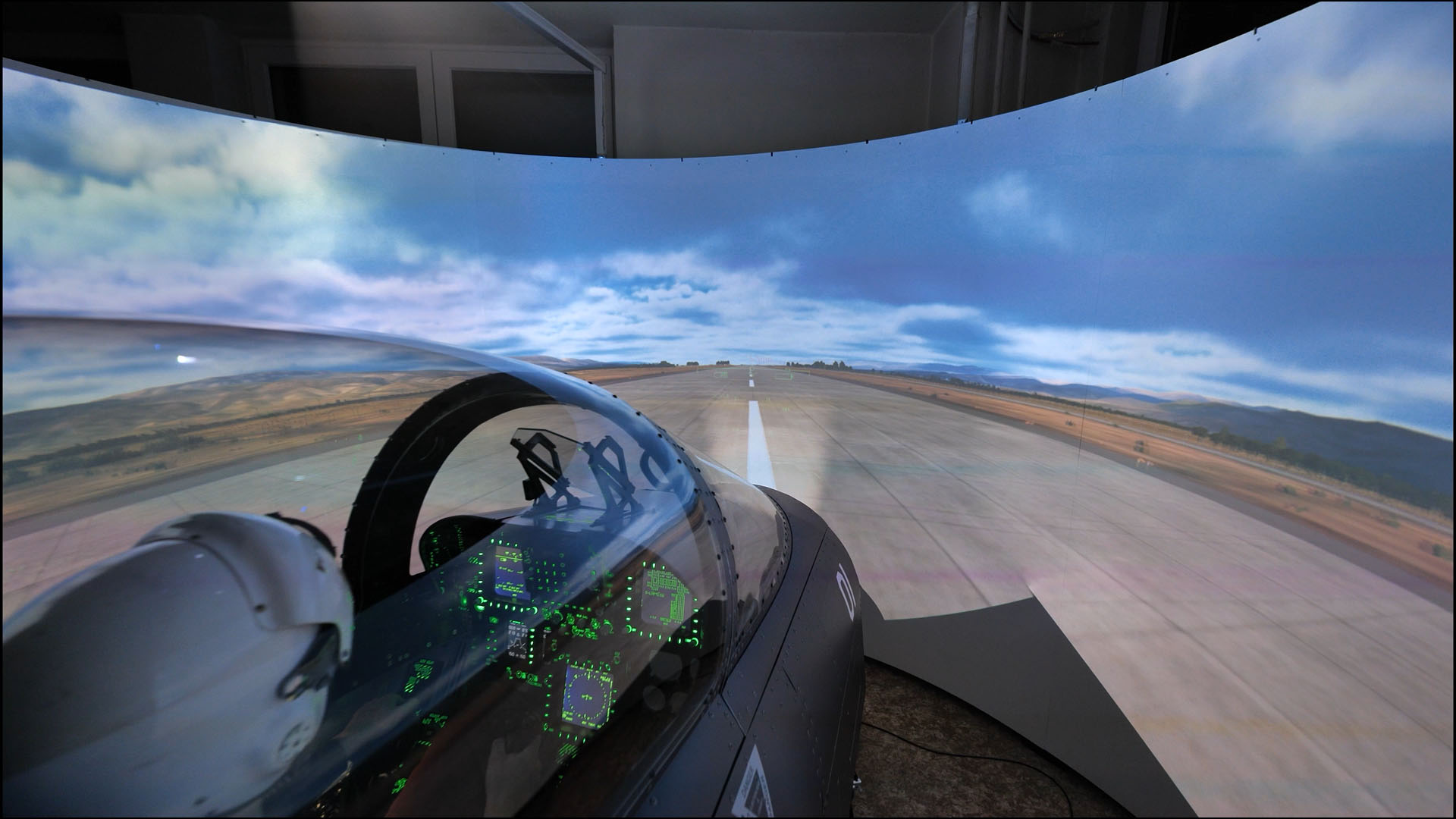
6DOF flight motion simulator
Brno, Czech Republic
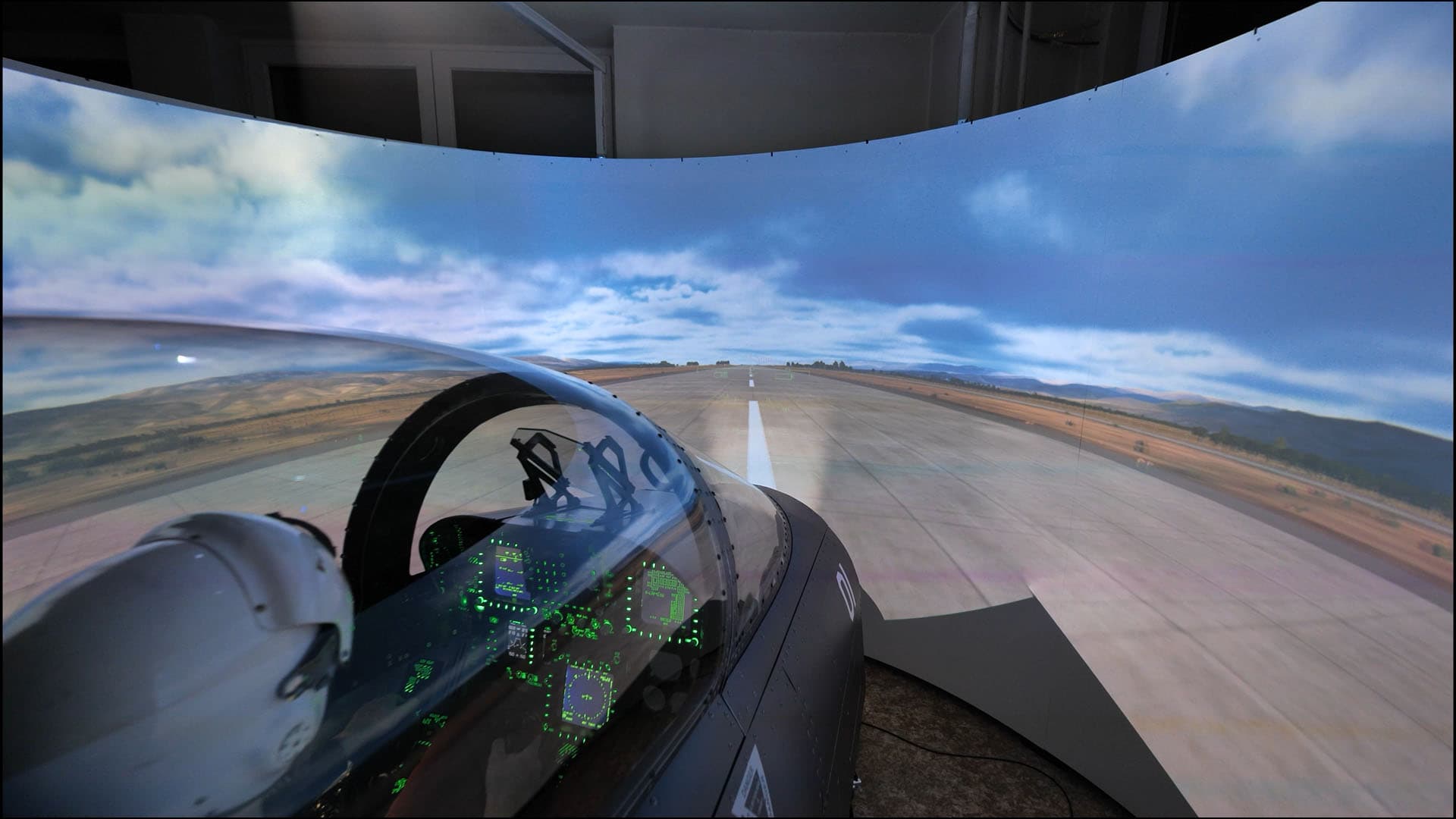
A transportable F/A-18C fighter cockpit on the 6DOF PS-6TL-800, powered by Dogfight Boss in the Czech Republic.
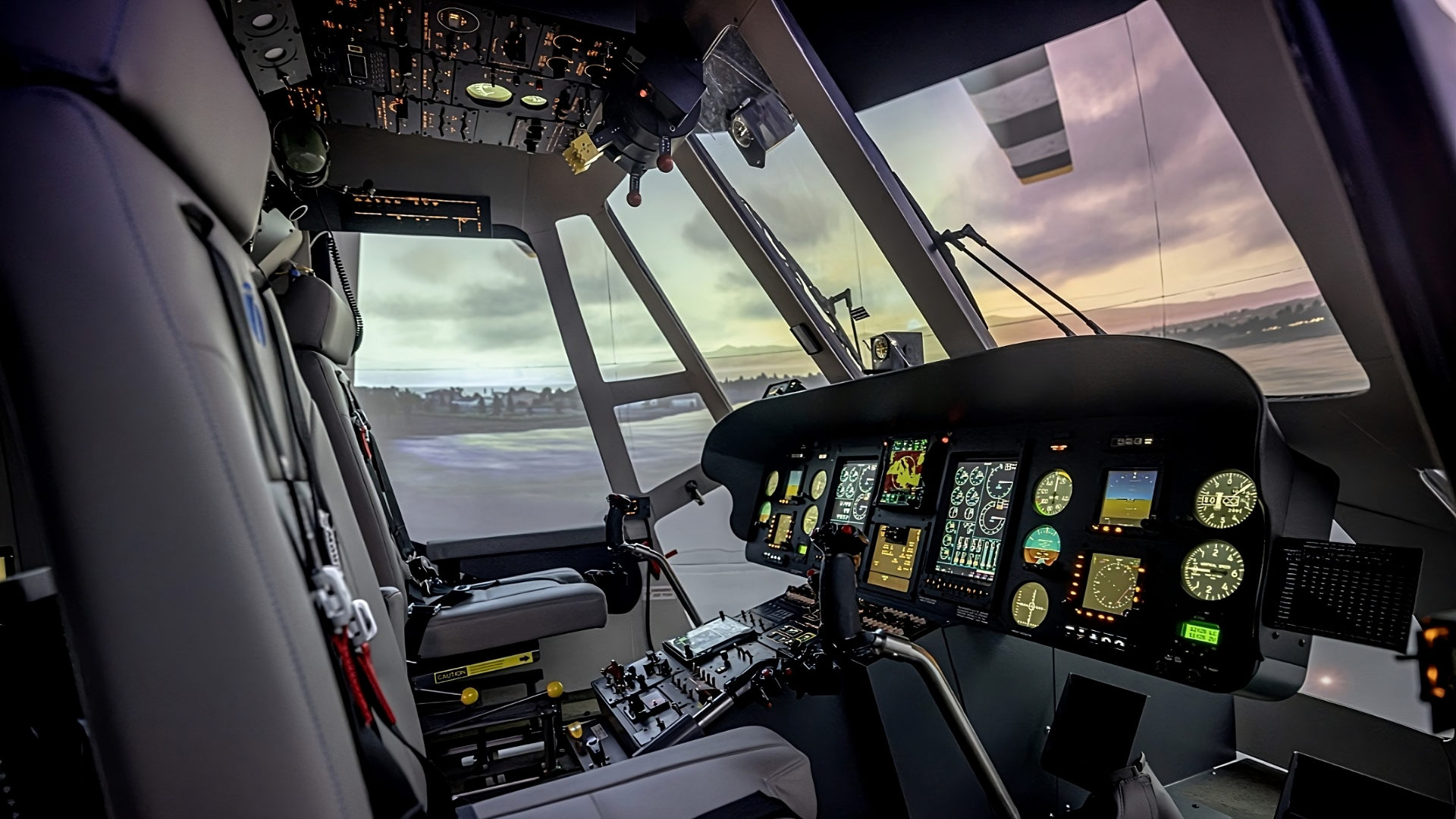
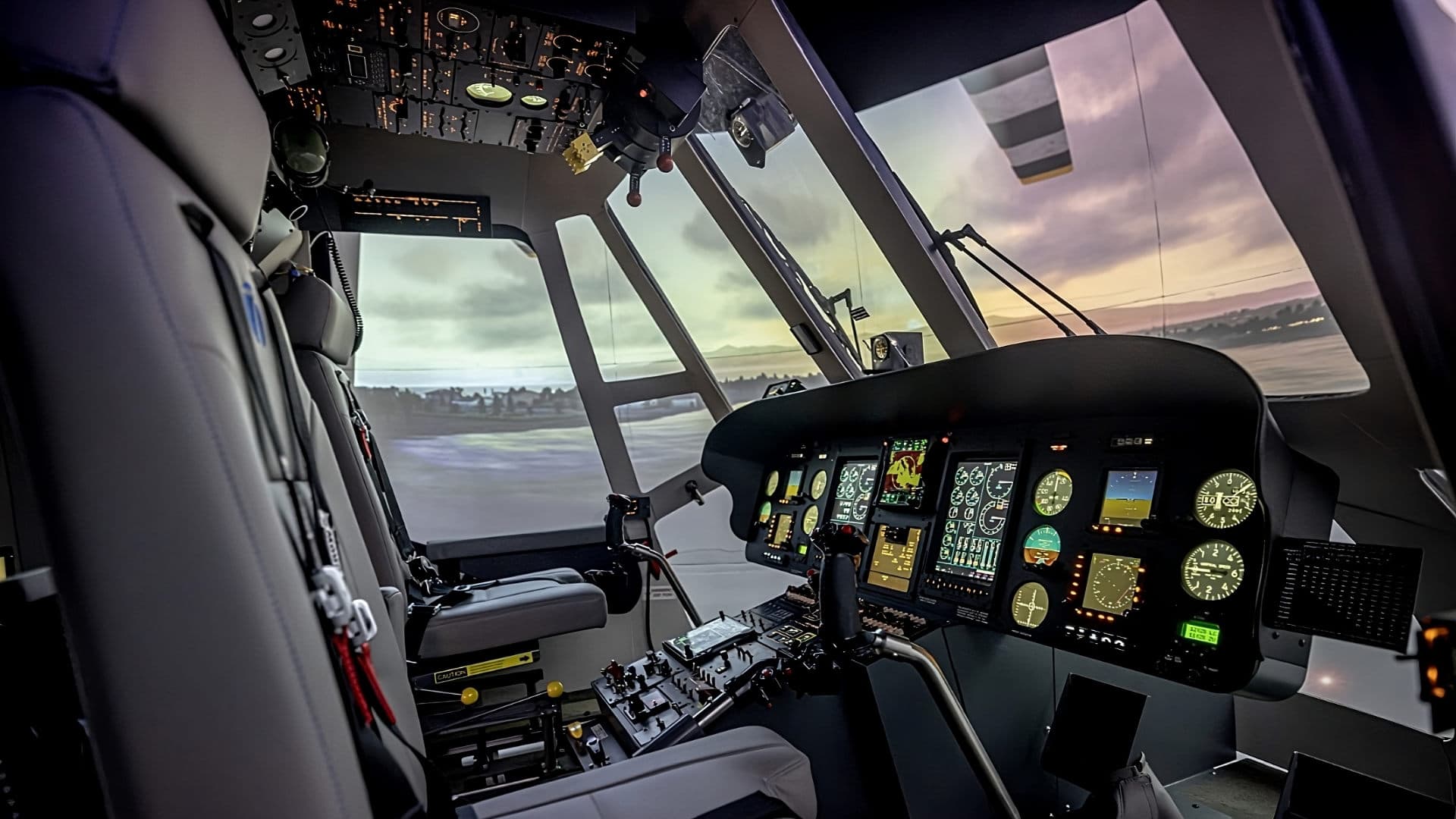
Sikorsky S-64 Skycrane firefighting simulator by Entrol - EASA Level 2 FTD
Spain
Entrol built an FTD based on the Sikorsky S-64 Skycrane for firefighting mission training.
Flight Cockpit Simulators
Czech Republic
An F/A-18C fighter cockpit on a PS-3TM-550 motion platform, powered by Dogfight Boss in the Czech Republic.
Questions the team gets first.
Certification path, cabin payload, latency and VR cockpits - answered up front, ahead of the first call.
Motion Systems platforms support FTD Level 2 and FNPT II devices, not Full Flight Simulators - the cabin payload sits below the FFS class. The Sikorsky S-64 Skycrane EASA Level 2 FTD, an EASA-certified heavy-lift helicopter trainer, is the reference deployment. The platform ships as partly completed machinery with a Declaration of Incorporation under EU Directive 2006/42/EC, so the integrator qualifies the complete device with the authority and holds the certificate. Motion Systems supplies the platform-level documentation - ACE cueing at 250 Hz and sub-30ms latency evidence measured at the cabin attachment point - that the evaluation requires.
Motion Systems specifies sub-30ms end-to-end latency at full payload, measured at the cabin attachment point where the pilot sits, not at the motor controller. The motor-controller figure that some vendors quote hides the rendering, washout-filter and actuator lag added before the cabin actually moves. ACE motion cueing runs at 250 Hz independent of the visual frame rate, so onset cues land inside the vestibular window even when the visuals dip. Above that window, pilots adapt to the simulator instead of the aircraft, and FTD evaluation flags the cue mismatch.
The PS-6TM-1500 reaches up to 1500 kg payload, the heaviest in this lineup, enough for a fully instrumented cockpit with control loading hardware and ejection-seat replicas. The Linear PS-6TL-800 carries 800 kg gross moving load for lighter instrumented cabins, and the oil-free PS-6TM-550 and PS-3TM-550 cover procedure trainers. Helicopter and fighter cabins routinely pass 500 kg before the trainee climbs in, so a platform that runs short of payload forces flat-screen instrument panels and desktop controls - the device then approximates the aircraft instead of replicating it.
VR HeadWay locks the scene by running alongside the motion-cueing engine and subtracting platform-induced head displacement in real time, so the virtual horizon stays fixed to the cockpit on every bank and pitch. It works through ForceSeatPM with any OpenXR or SteamVR-class headset rather than a frozen supported list. For two-seat pilot-and-copilot devices, the separately licensed VR HeadWay CrossPC add-on gives each seat its own rendering PC and geometry-correct compensation, since the left and right seats feel different motion in a yaw. Without scene-lock, every platform movement reads to the headset as head motion, the horizon drifts off-axis, and simulator sickness caps session length - turning the VR cockpit into a liability instead of a training asset.
Both. Off-the-shelf titles - X-Plane, Prepar3D, Microsoft Flight Simulator 2024 and DCS - connect through built-in ForceSeatPM profiles with no code. Custom flight models built in MATLAB®/Simulink® or C++ integrate through ForceSeatMI, the recommended SDK, with native bindings in C, C++, C#, and Python plus Unity and Unreal Engine plugins on Windows. For Linux, Raspberry Pi or Ethernet multi-platform control at the lowest latency, ForceSeatDI gives direct low-level access with built-in kinematics - the path research-grade flight trainers typically take.
Little. The Professional Series runs on electric servo actuators, with no hydraulic power unit, no pump room, and no pressurized fluid to leak, so a training organization keeps its billable slots instead of booking downtime for seal and fluid service. The oil-free Low-Profile procedure trainers need only cleaning and inspection, while the geared 1500 kg Low-Profile flagship and the ball-screw Linear models take a scheduled lubricant service planned around the training calendar. Across a multi-year program it is availability, not peak specification, that protects a flight school's utilization.
Yes, indirectly. Motion Systems builds the motion platform and its control software, and works with a network of vetted integrators who assemble the complete flight or helicopter simulator - cockpit, visuals, controls, and the FTD or FNPT certification path. Share the aircraft, cabin and timeline, and the team can point the project to a suitable partner.
Discuss an Aviation & Flight Training project
The team discusses project requirements directly - technical feasibility and an indicative lead time from the first conversation.