
Automotive & Driving Simulation
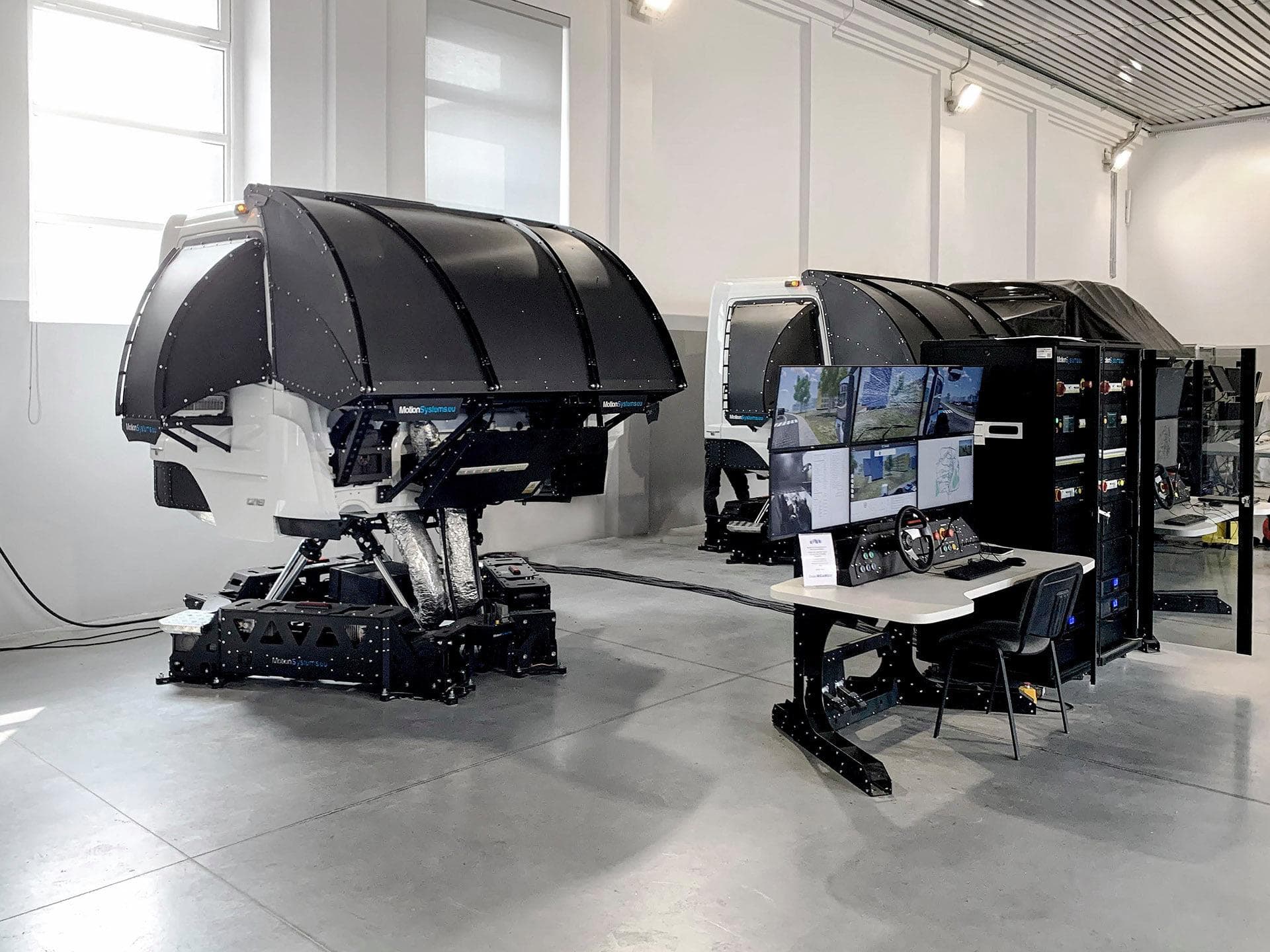
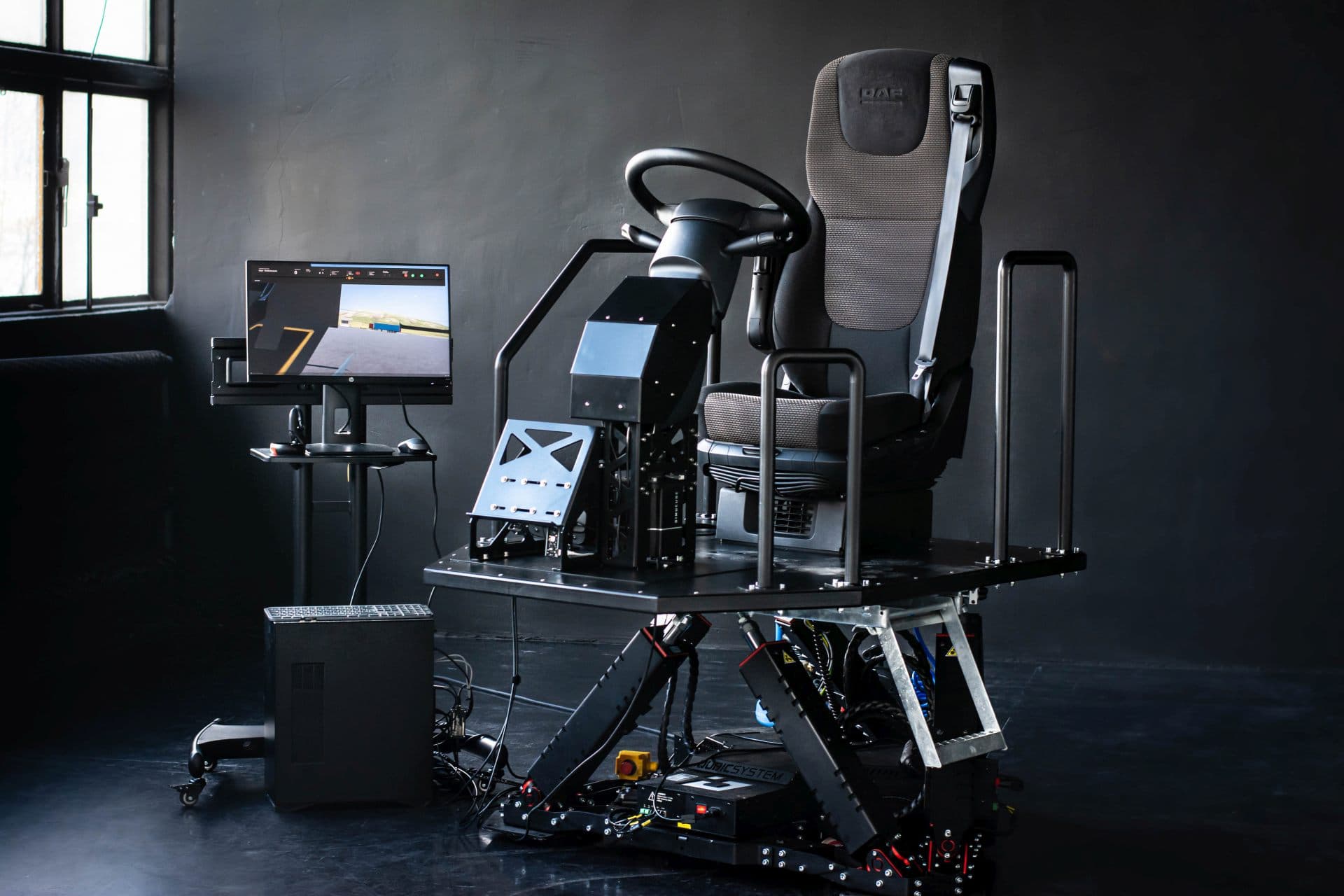
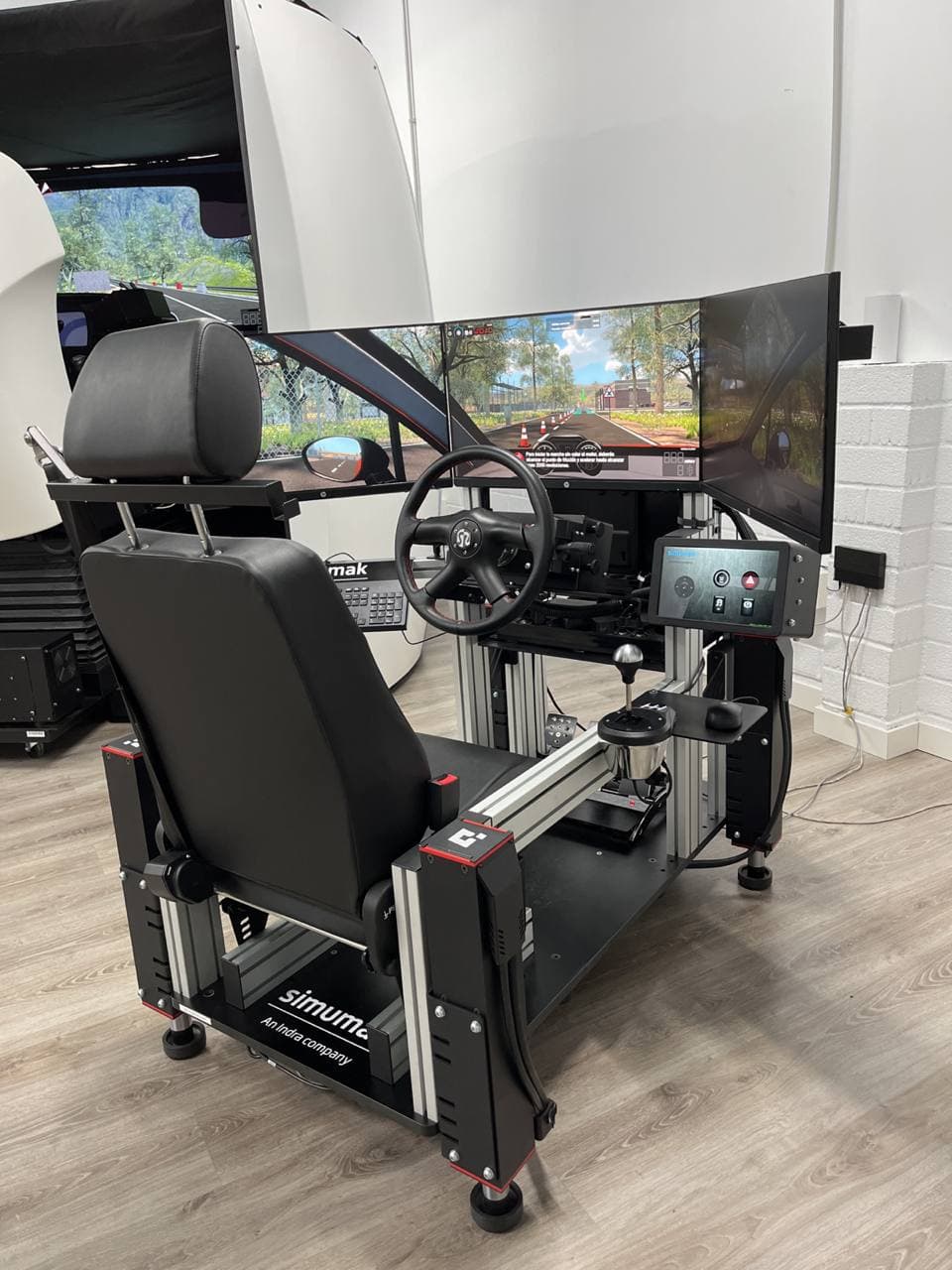
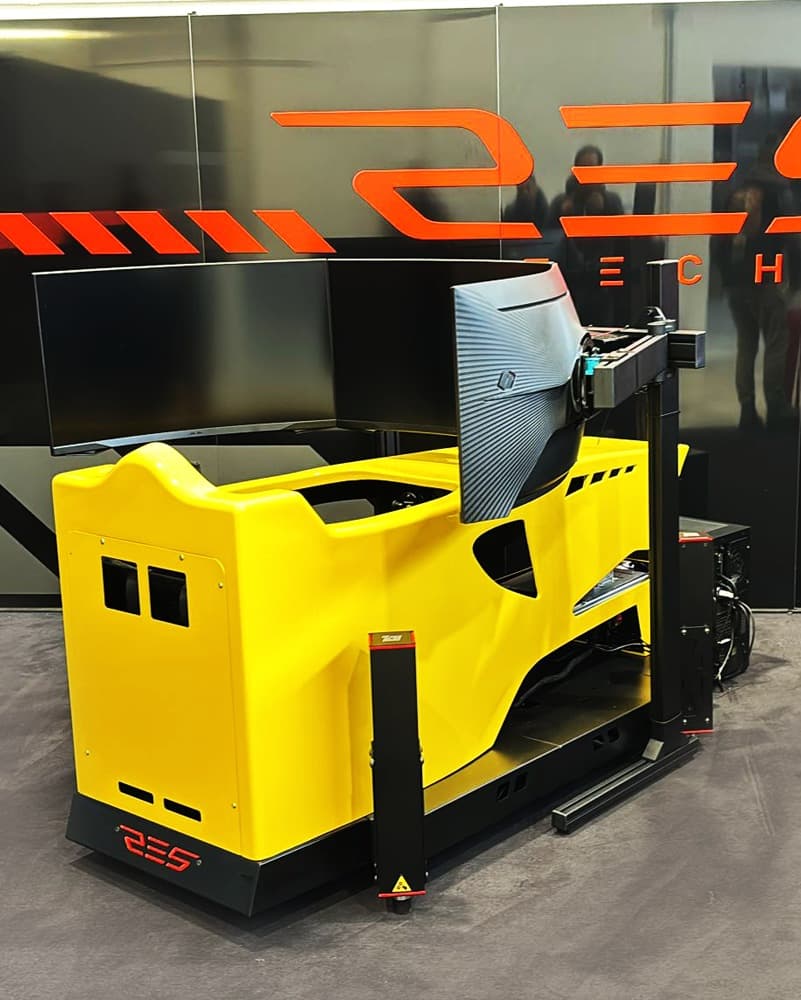
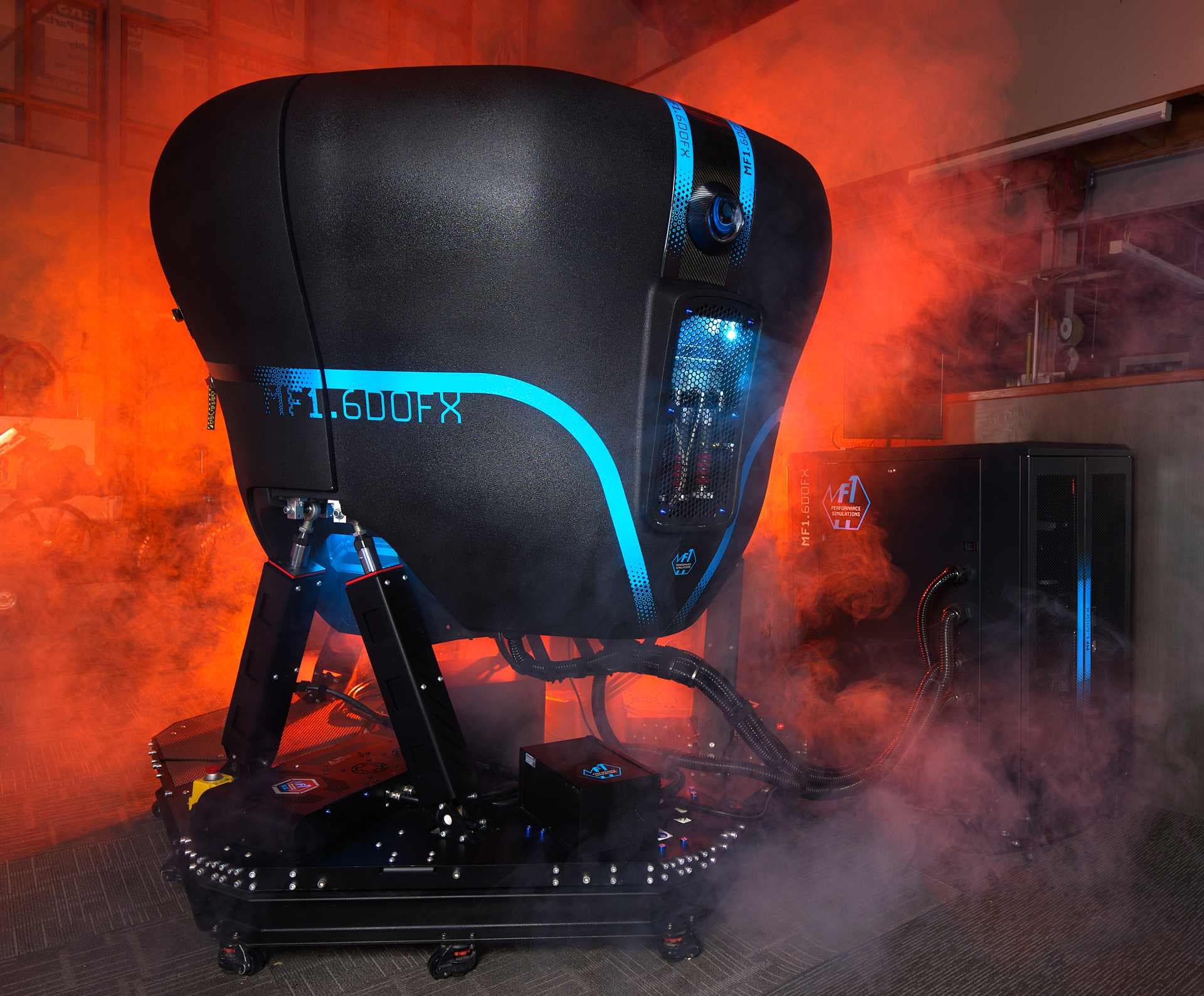
Motion platforms for automotive R&D, driving-school fleets, and ADAS validation labs, 150 to 1500 kg payload with sub-30ms latency at full load. Motion Systems supplies the motion platform; an integrator builds the finished simulator.
Engineered for Automotive & Driving Simulation integration teams.
Automotive simulation puts hard demands on the motion platform - from ADAS timing budgets to driver-training duty cycles. The architecture is engineered to meet each one.
Trustworthy Motion Timing for ADAS Data
In an ADAS validation cell the motion platform sits inside the measurement chain - its timing has to be as trustworthy as the sensors. If the platform answers the vehicle model late or unevenly, that lag becomes noise in the logged vehicle-control data, and the run turns into an argument about the simulator instead of the car. The bar is motion the vehicle electronics under test cannot tell apart from the road, held steady for a full session, at the cabin weight the program actually runs.
Braking and Acceleration That Feel Real
Braking and acceleration are the cues a driver reacts to first, and the hardest to reproduce. A platform that cannot physically move the cabin far enough forward and back has to tilt it instead, standing in for sustained g with a nose-up or nose-down angle. Experienced drivers feel that substitute almost at once - and once they stop trusting the seat, both ride-and-handling work and driver-training transfer suffer. How much real travel the platform has decides how hard a driver can push before the trick shows.
Uptime Across a Multi-Year Program
A research program - or a training fleet - is booked months ahead, and every hour the rig is down is an hour lost from the plan. Hydraulic platforms carry a standing maintenance tax: fluid changes, seal service, a pump room - and every service window pulls the simulator out of use. The number that matters is not peak performance on the best day, but how many days a year the platform is actually available.
Automotive & Driving Simulation
Tap a constraint on the left to see how the platform addresses it.
Trustworthy Motion Timing for ADAS Data
In an ADAS validation cell the motion platform sits inside the measurement chain - its timing has to be as trustworthy as the sensors. If the platform answers the vehicle model late or unevenly, that lag becomes noise in the logged vehicle-control data, and the run turns into an argument about the simulator instead of the car. The bar is motion the vehicle electronics under test cannot tell apart from the road, held steady for a full session, at the cabin weight the program actually runs.
Braking and Acceleration That Feel Real
Braking and acceleration are the cues a driver reacts to first, and the hardest to reproduce. A platform that cannot physically move the cabin far enough forward and back has to tilt it instead, standing in for sustained g with a nose-up or nose-down angle. Experienced drivers feel that substitute almost at once - and once they stop trusting the seat, both ride-and-handling work and driver-training transfer suffer. How much real travel the platform has decides how hard a driver can push before the trick shows.
Uptime Across a Multi-Year Program
A research program - or a training fleet - is booked months ahead, and every hour the rig is down is an hour lost from the plan. Hydraulic platforms carry a standing maintenance tax: fluid changes, seal service, a pump room - and every service window pulls the simulator out of use. The number that matters is not peak performance on the best day, but how many days a year the platform is actually available.
What sets this motion platform apart
Technical differentiators that directly impact performance in automotive & driving simulation applications.
ACE - the Motion Systems Acceleration Control Engine - runs cueing at 250 Hz inside the data-acquisition window, so vehicle-dynamics engineers correlate driver-in-the-loop data against track data with low platform delay. Hardware-in-the-loop rigs running real ADAS ECUs instead use ForceSeatDI to drive the controller directly - bypassing the ACE cueing layer - for example on Linux hosts; MATLAB and Simulink toolchains work with either SDK.
A platform updating well below that rate aliases the high-frequency content of vehicle-control benchmarks. The sampling noise surfaces in correlation plots, and the rig fails OEM sign-off before the cabin is even fitted.
The driver feels acceleration and braking as direct cues, not approximated pitch. Full ride-and-handling envelope reproduced without aggressive washout filters compressing the signal.
Without the translational reach for the full envelope, sustained longitudinal acceleration leans on tilt coordination. Test drivers read the approximated pitch at once, and ride-and-handling correlation studies flag the cue as non-representative.
The platform runs on electric actuators - no hydraulic power unit, no pump room. The lighter gearbox Low-Profile models run oil-free; the ball-screw and heaviest models take a scheduled lubricant service, not the continuous fluid a hydraulic rig needs. A research lab keeps its slots; a training center keeps its utilization.
Hydraulic actuation adds an overhead the schedule has to absorb - pump seals, fluid analysis, leak checks - and every maintenance window costs a booked session. That cost compounds across a multi-year program.
Find the right motion platform for the project.
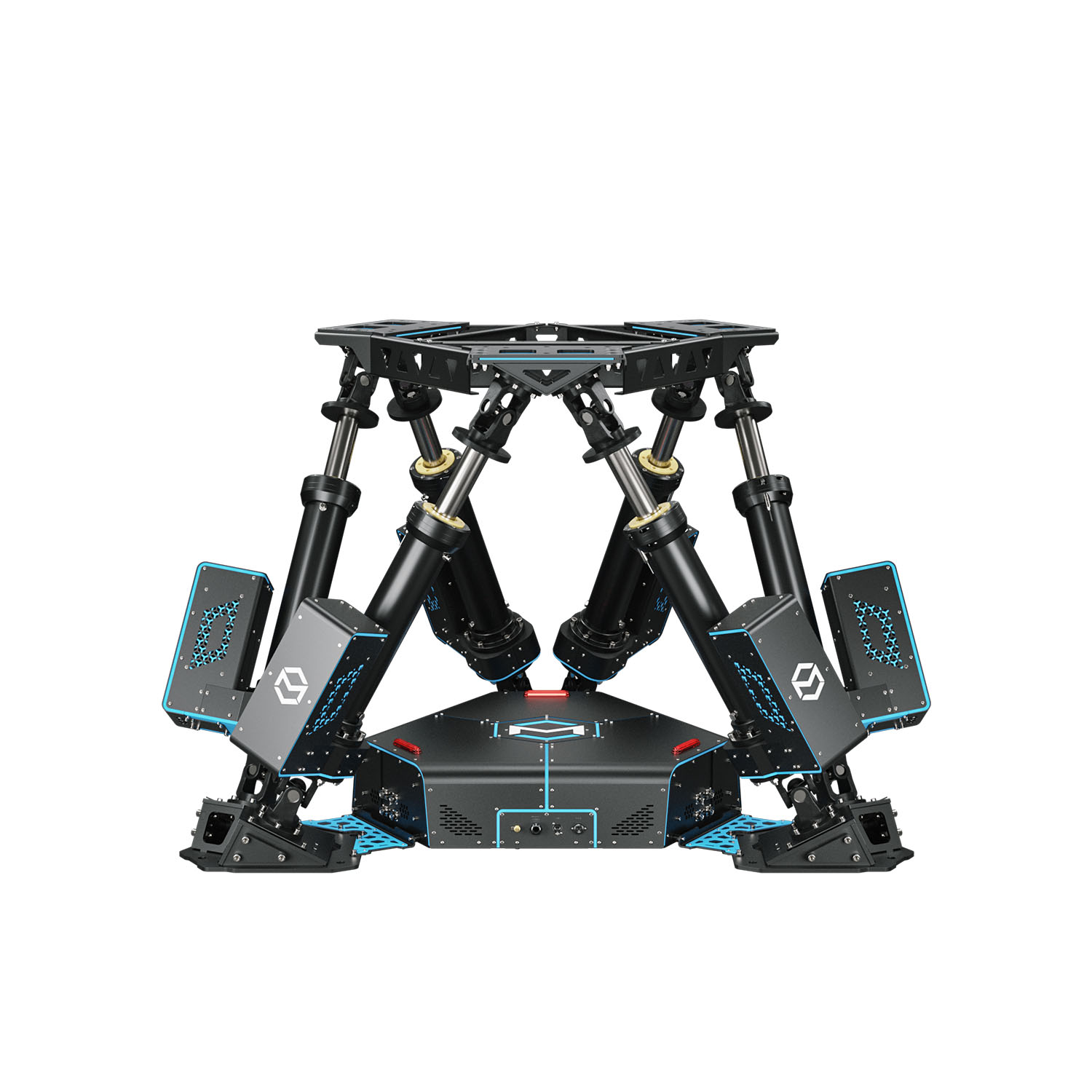
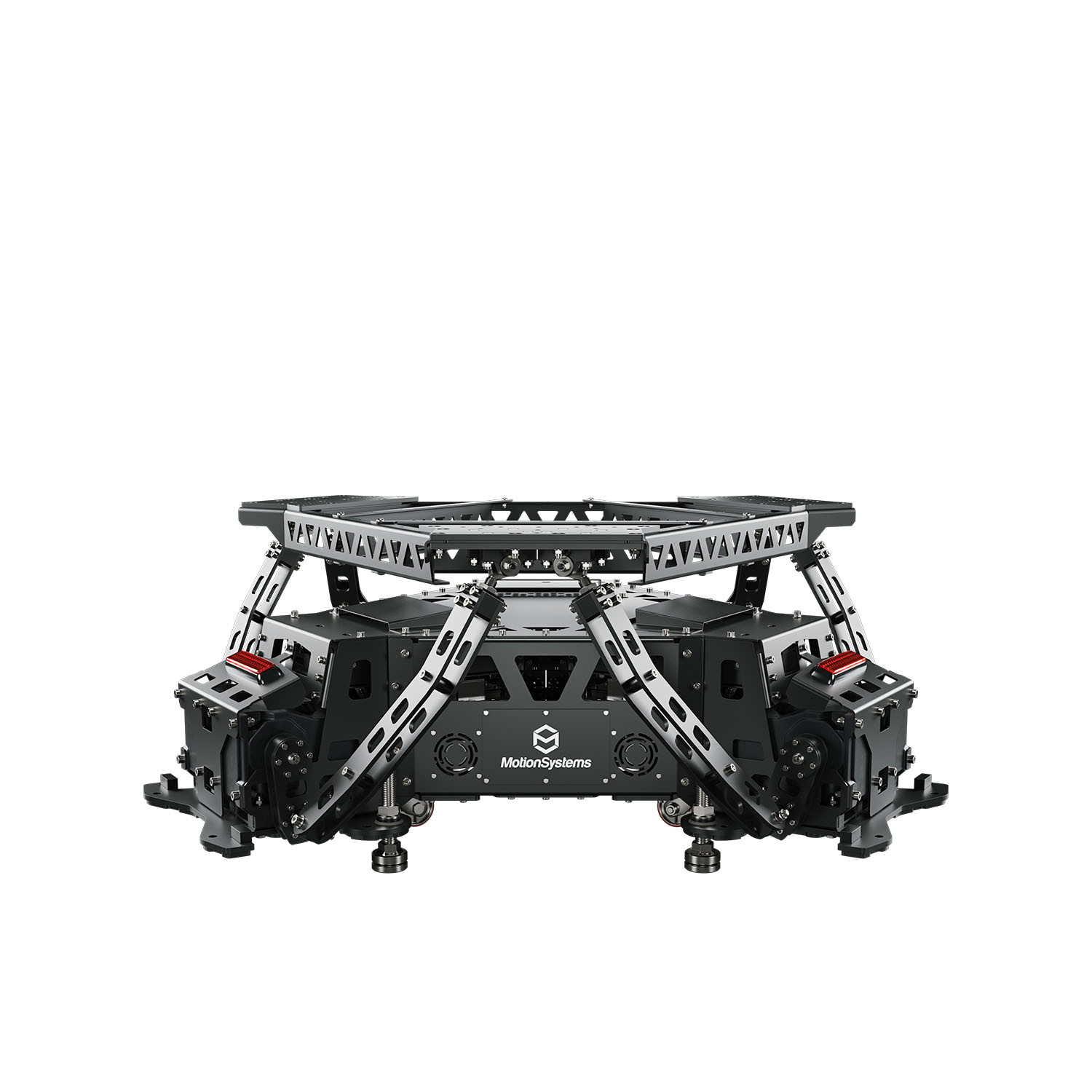
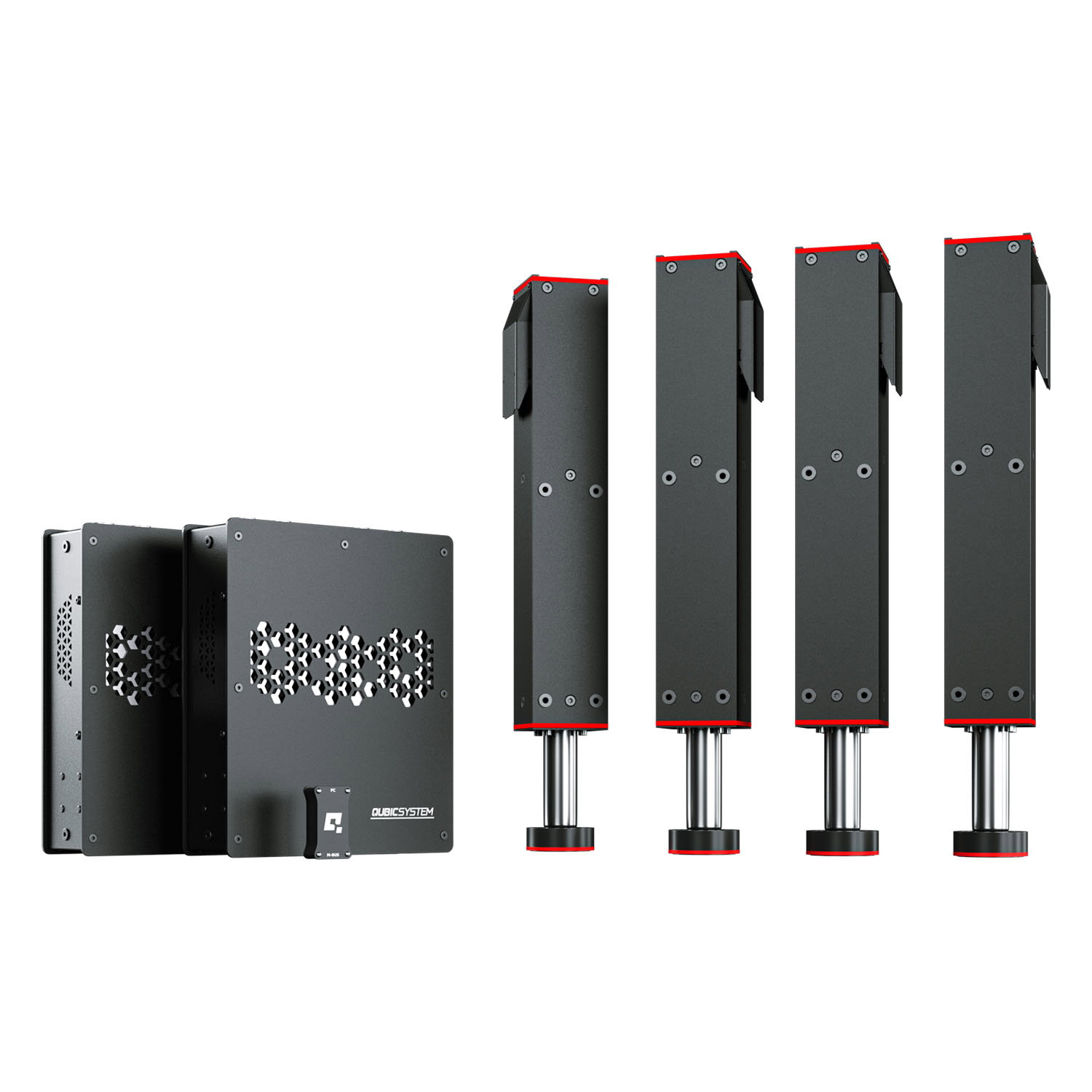
The platform families that fit this application class - Linear high-payload, Low-Profile 6DOF and compact Qubic sets.
Proven in the Field
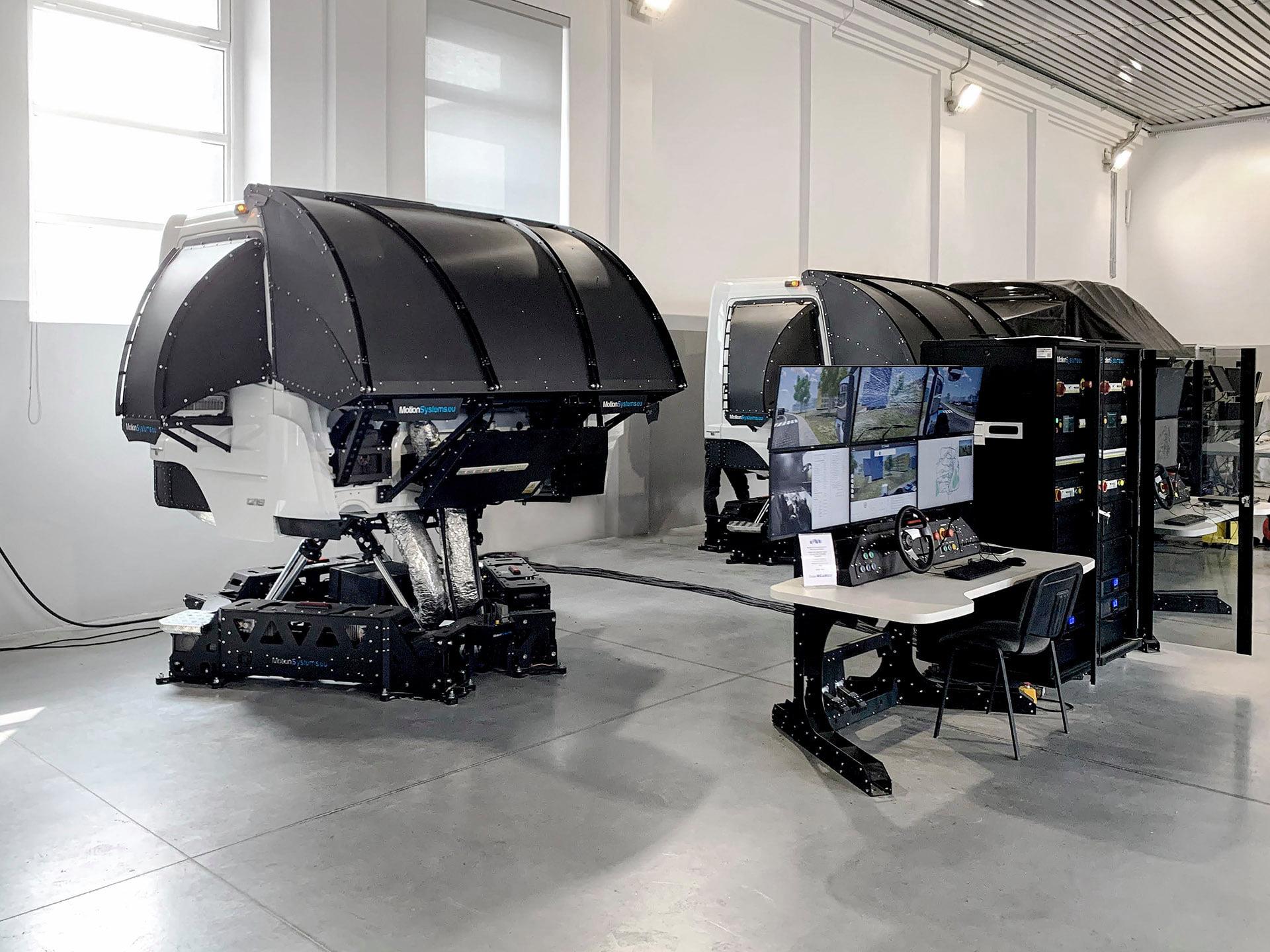
TS-10 truck driving simulator
Jaworzno, Poland
Training system for professional truck and bus drivers, PIMOT-certified under the Polish special-conditions driving simulator regulation (Dz.U. 2011 No. 81 item 444), covering skid, gradient and adverse-weather scenarios.
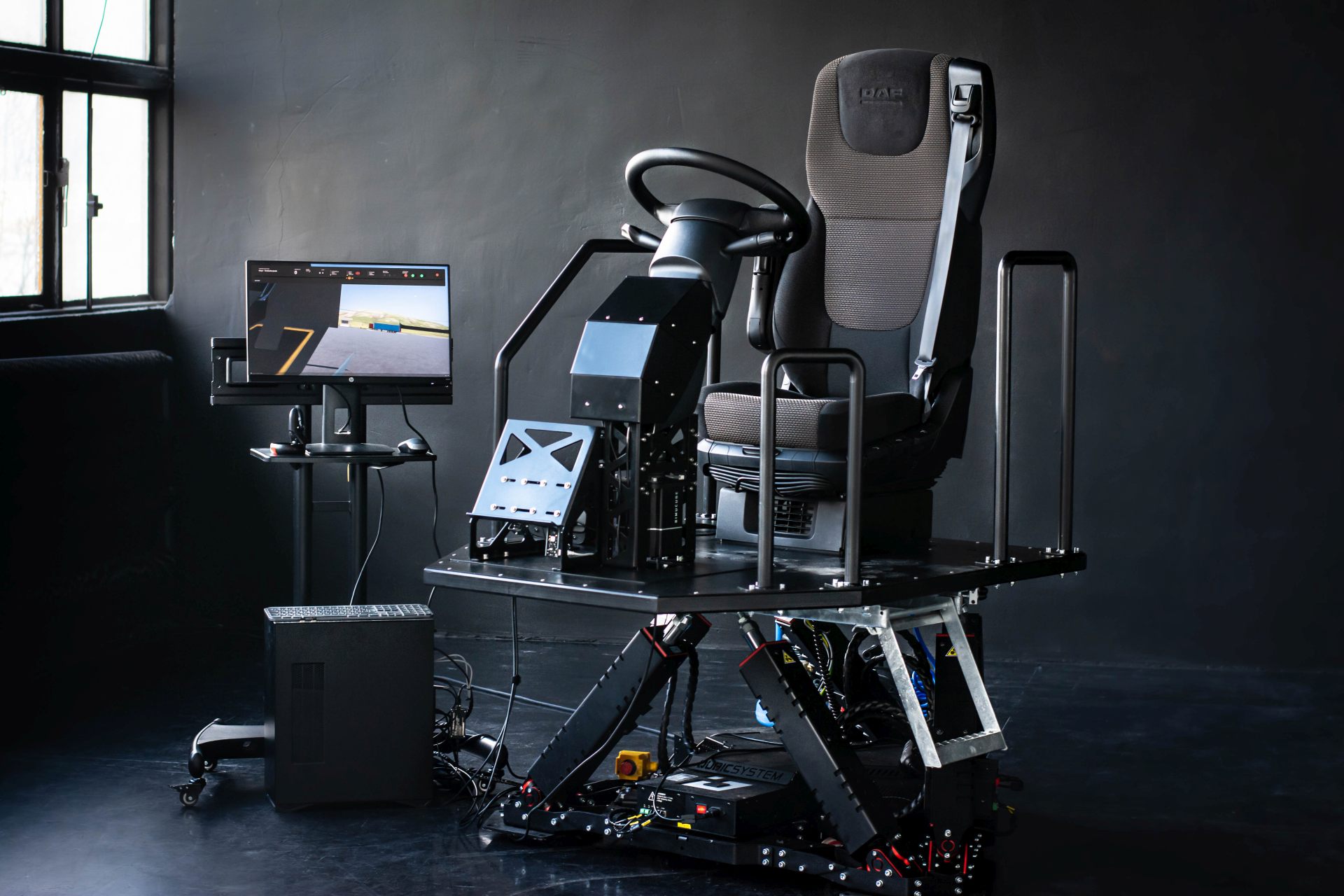
PatronVT Simulator
Poland
The PatronVT is a compact VR-based simulator that teaches and improves truck and bus driving skills.
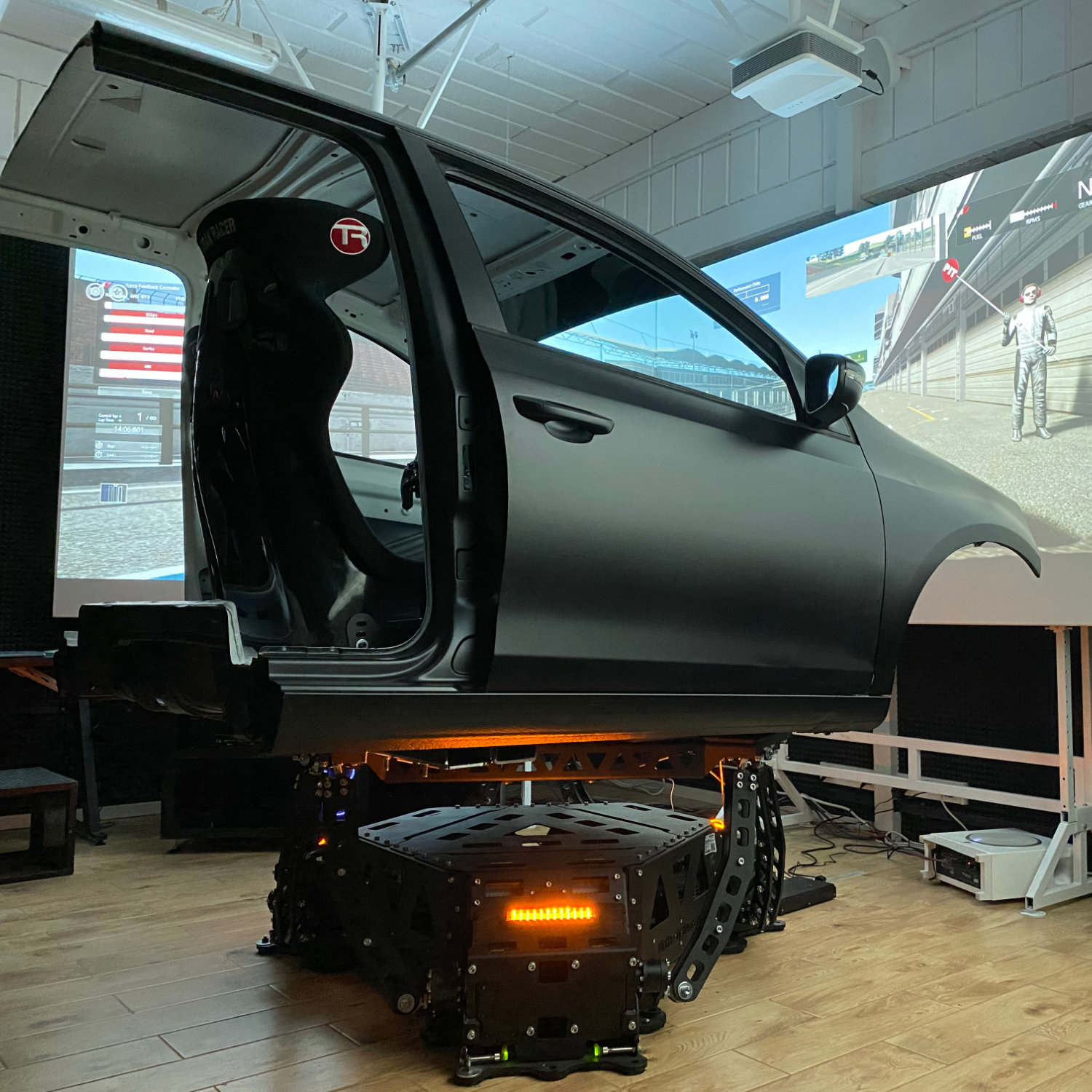
Full Motion Racing Simulator
Poland
Built by pro racing driver Szymon Ładniak on the PS-6TM-550 motion platform in Poland.
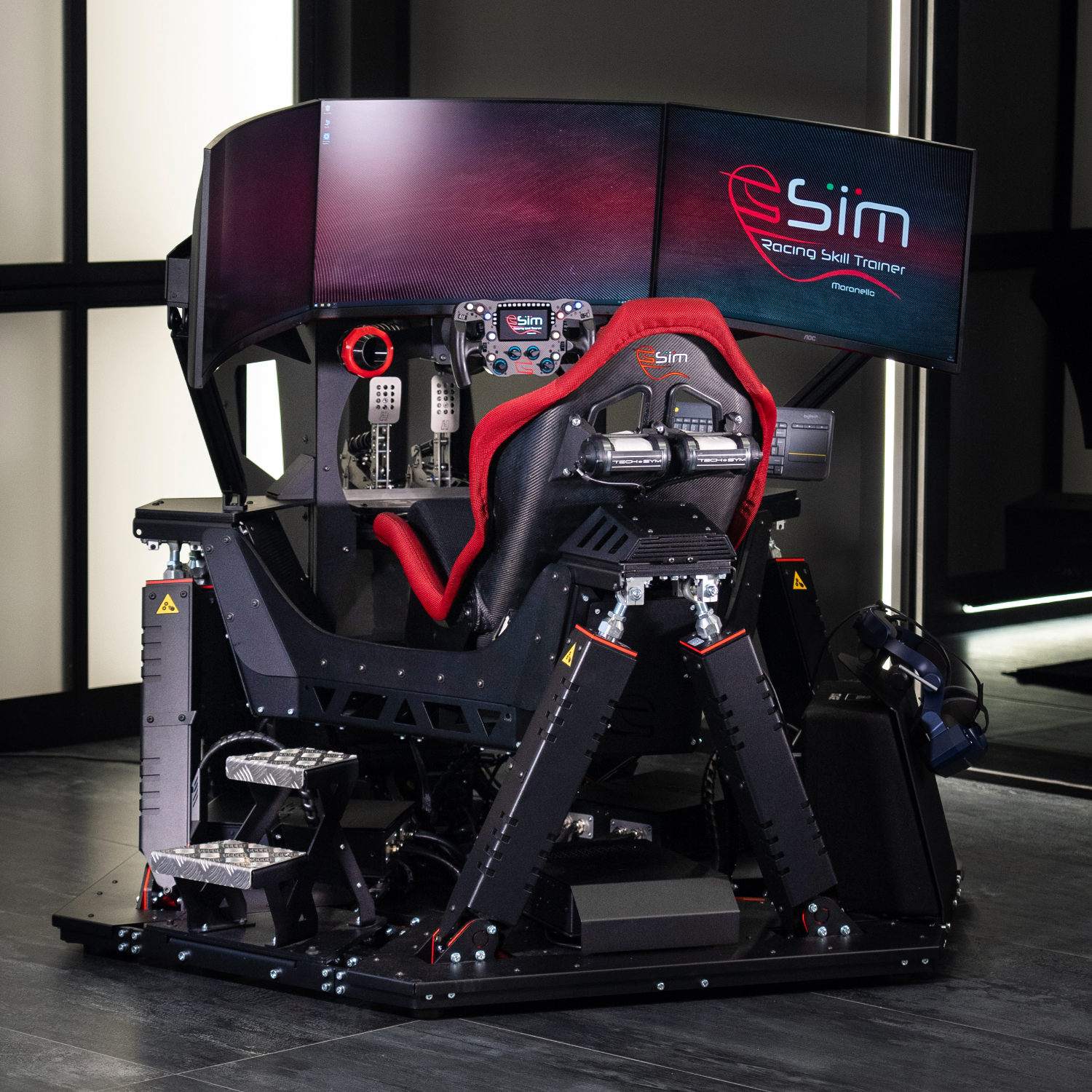
SIM RST 6DOF racing simulator
Italy
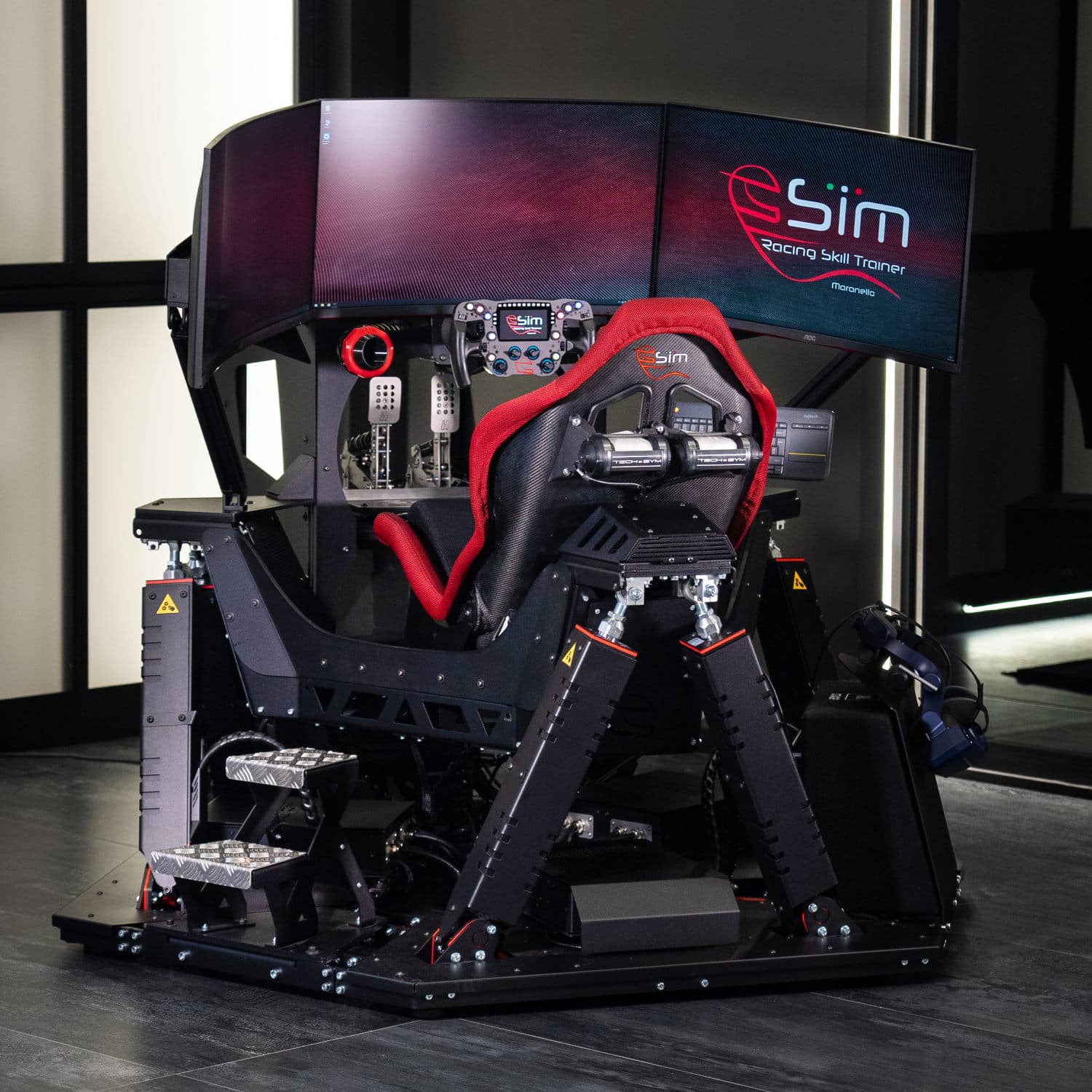
Sim Maranello built the SIM RST 6DOF simulator on the QS-S25.
Questions the team gets first.
Latency measurement, longitudinal travel, toolchain integration and cabin payload - answered up front, ahead of the first call.
Motion Systems publishes sub-30ms end-to-end latency measured at the cabin attachment point, not at the motor controller, and the figure holds at full payload. ACE - the Acceleration Control Engine - runs motion cueing at 250 Hz, so cue onset stays tightly and repeatably timed inside the data-acquisition window. That lets vehicle-dynamics engineers correlate driver-in-the-loop logs against track data without backing out platform delay. Reference point: human reaction time is 150-250ms, several times slower. Latency quoted at the controller hides the rendering, washout and actuator delay that the cabin actually feels.
The Professional Series delivers full-amplitude longitudinal cueing - up to 718 mm peak-to-peak surge - so braking and acceleration register as direct translation, not approximated nose-up or nose-down tilt. Sustained g is the one cue no motion base can hold: the platform reproduces onset, then washout returns it to center, and a belt tensioner (such as the Qubic System QS-BT1, up to 200 N per channel) can carry the steady pull for ride-and-handling and driver-training work. Test drivers read substitute pitch almost immediately, which flags the cue as non-representative in correlation studies. Real surge travel, not tilt, is what lets a driver brake hard before the substitute gives itself away.
Yes. The recommended ForceSeatMI SDK connects MATLAB®/Simulink®, IPG CarMaker and rFpro, with raw API access in C, C++, C# and Python for in-house vehicle models, running on Windows through ForceSeatPM. For real-time and hardware-in-the-loop loops driving live ADAS ECUs, ForceSeatDI adds direct low-level kinematics control on Linux, Raspberry Pi or Windows over Ethernet, with the lowest latency of the two. ForceSeatDI streams positions at the platform's control rate, so cue timing stays tightly and repeatably matched to the update rate the ECU under test expects.
Motion Systems platforms run on electric servo actuators - no hydraulic power unit, no fluid analysis, no pump room - which protects booked slots across a research or training fleet. Maintenance is model-specific: the Low-Profile PS-6TM-550 and PS-3TM-550 are oil-free and need only cleaning and inspection, while the ball-screw PS-6TL-800 and PS-6TL-1500 take a scheduled HLP-32 lubricant service. That is planned downtime, not the continuous fluid handling a hydraulic rig demands, and every hydraulic service window pulls the simulator out of use over a multi-year program.
The platforms shown for automotive R&D run from the Low-Profile PS-3TM-550 and PS-6TM-550 bases up to the Linear PS-6TL-1500, rated for 1500 kg gross moving load - enough for an instrumented vehicle cabin with control loading and measurement hardware; the PS-6TL-800 sits between at 800 kg. The wider Professional Series catalog spans 150-1500 kg. A payload rating is static weight, not a promise that every cabin at that figure moves the same way: center of gravity and moment of inertia decide the real limit, so application engineers size to cabin mass, CoG and motion profile - typically with about 15% headroom - per program.
Yes, indirectly. Motion Systems builds the motion platform and its control software, and works with a network of vetted integrators who assemble the complete simulator - cockpit, visuals, controls and final integration. Share the application, cabin and timeline, and the team can point the project to a suitable partner.
Discuss an Automotive & Driving Simulation project
The team reviews project requirements directly - technical feasibility and an indicative lead time from the first conversation.