
Entertainment & VR
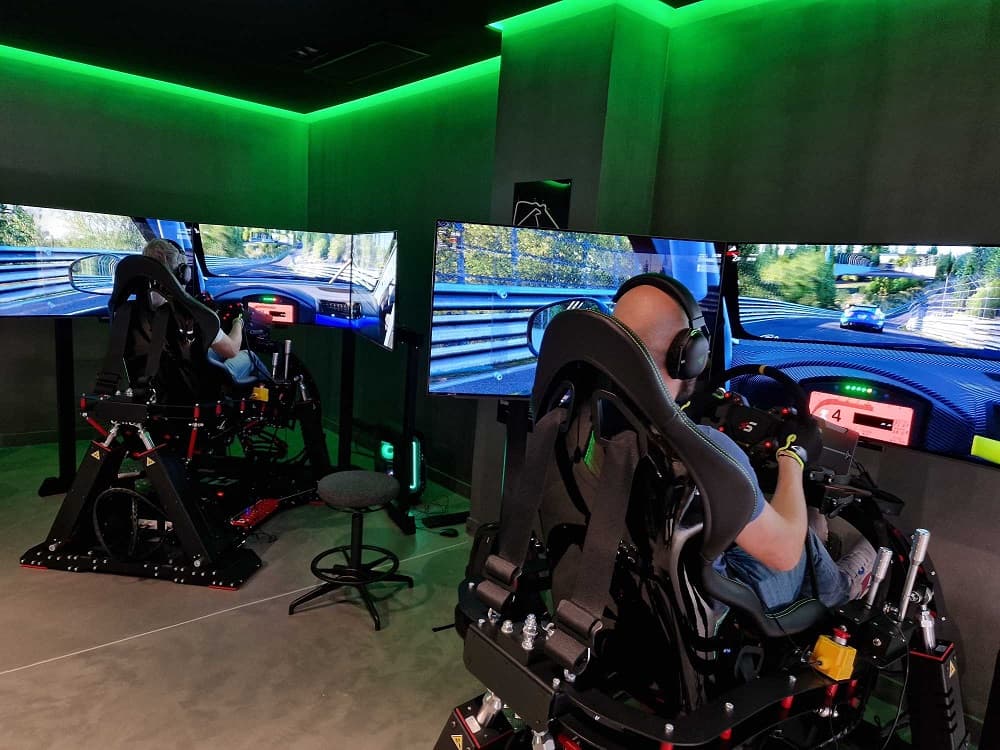
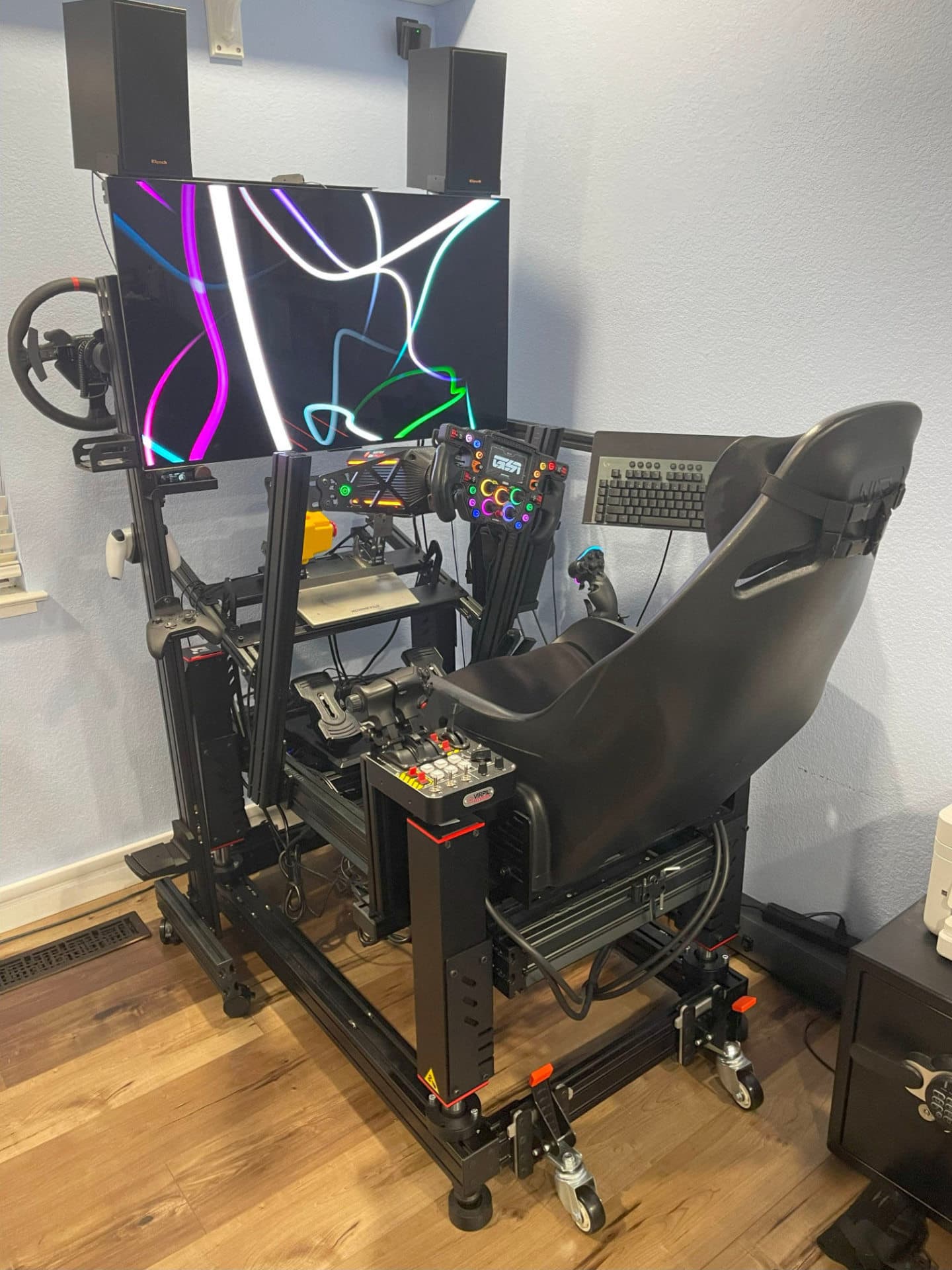
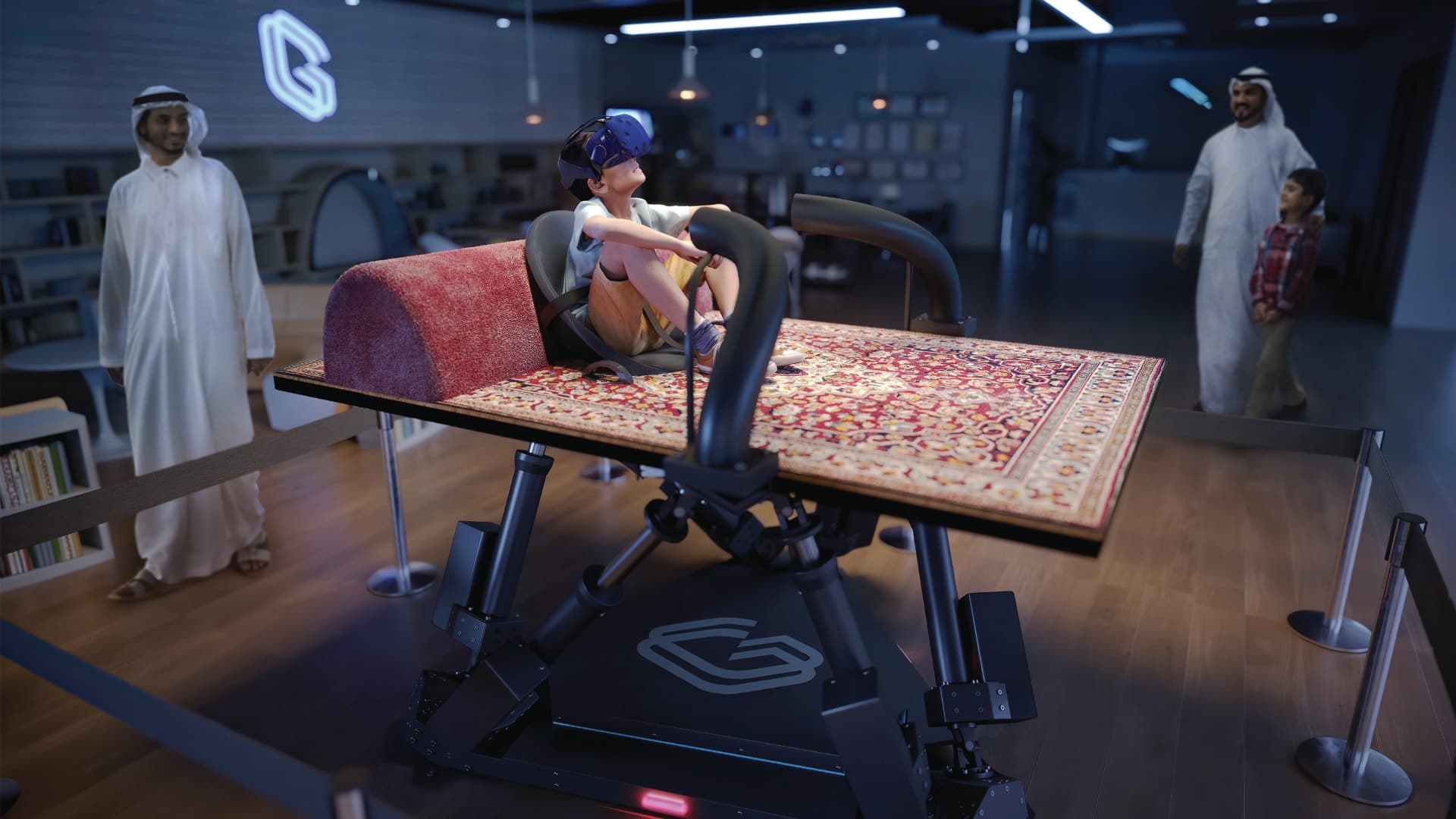
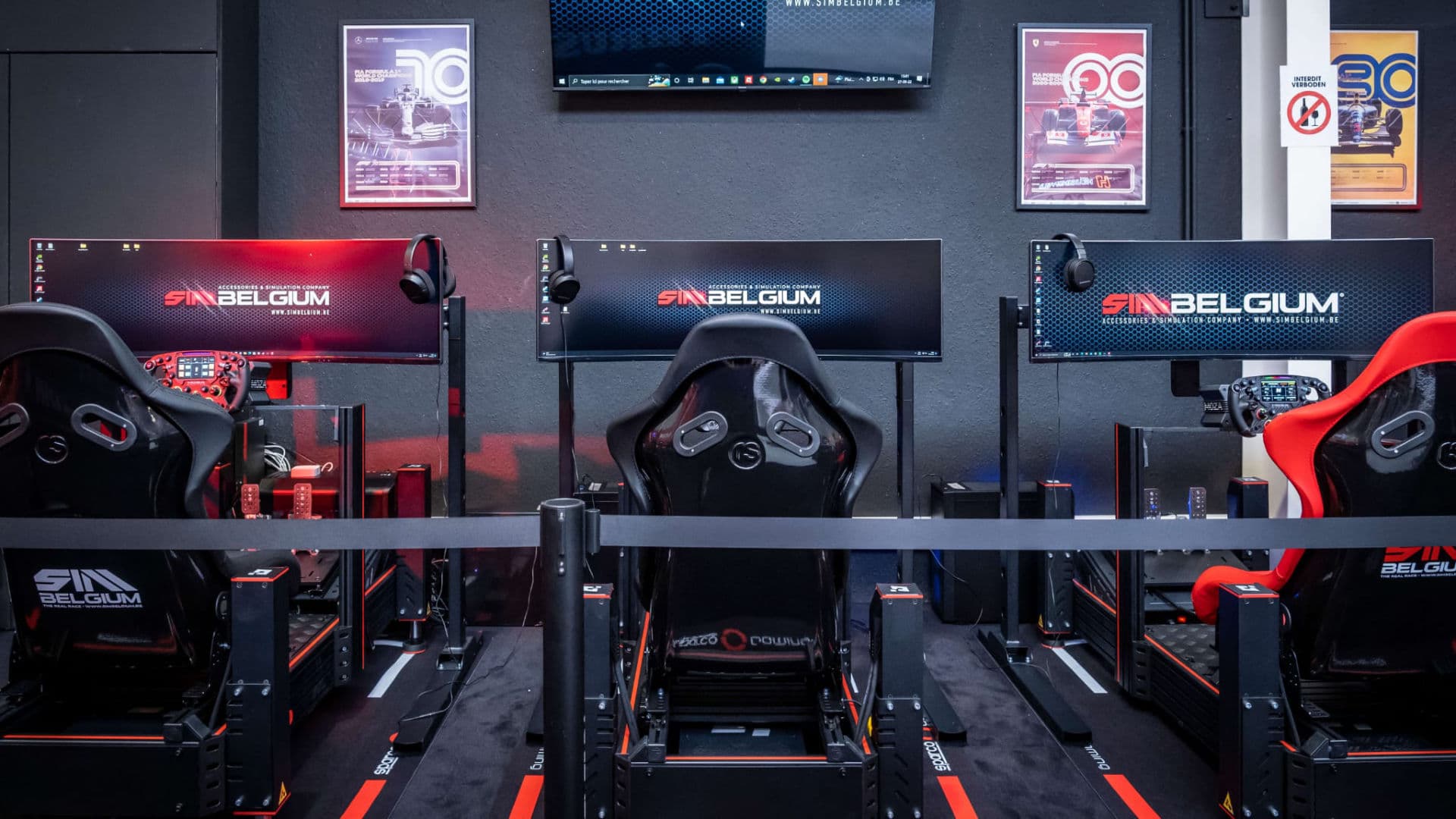
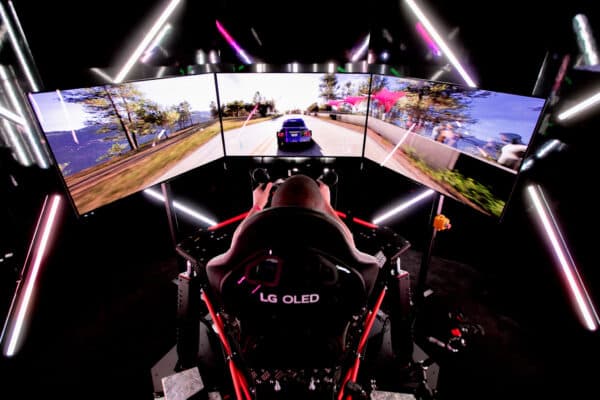
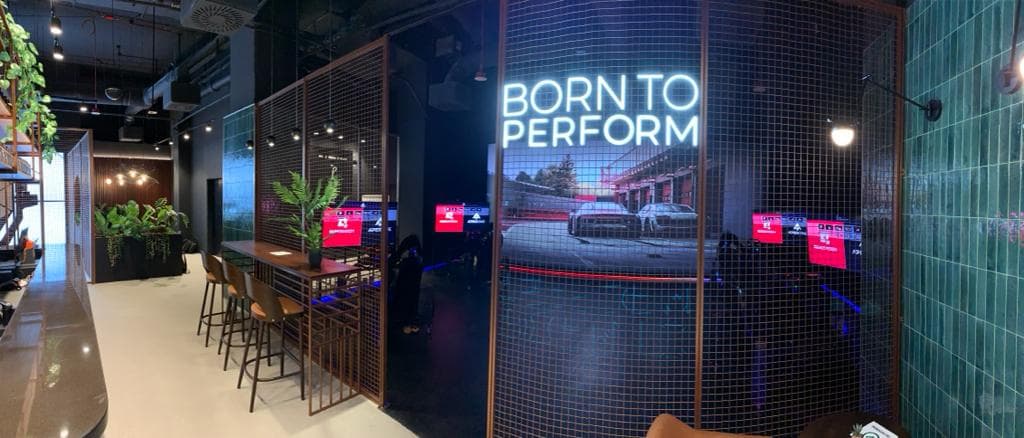
A full eight-hour commercial day, booking after booking, is what decides second-year profit. Qubic System motion platforms ship factory-tuned to run quiet in a mall and keep guests comfortable for full sessions - in VR centers, sim-racing arcades and training centers, and themed attractions.
Engineered for Entertainment & VR venues.
A commercial entertainment venue puts hard demands on a motion platform - guest throughput, cybersickness risk, and content that has to keep growing. The architecture is engineered to meet each one.
Throughput Decides Year-Two ROI
A motion venue lives on guest throughput - every minute a platform spends settling or being hand-reset is a paid session that never sold, and across a twenty-station floor that drag compounds shift after shift. It is the quiet line item that decides whether year-two ROI lands in green or red. What matters is how fast the seat is ready for the next guest.
The Guest Who Feels Sick Never Returns
In a VR arcade the body feels one thing while the headset shows another the moment platform motion and the visual scene fall out of sync - and a guest who leaves queasy does not rebook, often posting the one-star review that costs weeks of marketing. The bar is a scene that stays locked to the cabin for the full session.
Repeat Visits Live on Fresh Content
A venue lives on repeat visits, and those need a content library that keeps growing - if every new title means commissioning a developer, the line-up stalls and guests stop coming back. The same floor is run by staff who turn over every few months and pick up the load-and-go workflow fast, so anything that needs an engineer to launch is a paid session that never runs.
Entertainment & VR
Tap a constraint on the left to see how the platform addresses it.
Throughput Decides Year-Two ROI
A motion venue lives on guest throughput - every minute a platform spends settling or being hand-reset is a paid session that never sold, and across a twenty-station floor that drag compounds shift after shift. It is the quiet line item that decides whether year-two ROI lands in green or red. What matters is how fast the seat is ready for the next guest.
The Guest Who Feels Sick Never Returns
In a VR arcade the body feels one thing while the headset shows another the moment platform motion and the visual scene fall out of sync - and a guest who leaves queasy does not rebook, often posting the one-star review that costs weeks of marketing. The bar is a scene that stays locked to the cabin for the full session.
Repeat Visits Live on Fresh Content
A venue lives on repeat visits, and those need a content library that keeps growing - if every new title means commissioning a developer, the line-up stalls and guests stop coming back. The same floor is run by staff who turn over every few months and pick up the load-and-go workflow fast, so anything that needs an engineer to launch is a paid session that never runs.
What sets a commercial-duty motion platform apart
Technical differentiators that directly impact performance in entertainment & vr applications.
Settling and hand-positioning vanish from the cycle, so the seat is ready for the next guest in seconds and the floor keeps moving through the queue without an operator touching the rig between sessions.
Hydraulic settling cycles or mechanical hand-positioning workflows quietly erode throughput on every shift - operational drag that compounds into a visible revenue gap by the second year.
Qubic System holds sub-8ms end-to-end response, well inside the ~60ms end-to-end window linked to visual-vestibular conflict. VR HeadWay subtracts platform-induced head displacement across SteamVR and OpenXR headsets rather than a frozen device list, so sessions run their full ten-to-fifteen-minute length.
VR experiences on motion platforms without scene compensation produce a visual field that shifts with every platform movement. Sessions end early. The VR motion experience becomes a liability.
Ready-made titles run plug-and-play - factory-tuned profiles load automatically, no developer needed. Themed VR attractions are a separate track: a custom build an integrator assembles on the motion platform.
Platforms that require custom motion profiles for each title limit the content library. Adding a new game means commissioning a developer. Content stagnation leads to repeat-visit decline.
Find the right motion platform for the venue.
The platform families that fit this application class - Linear high-payload, Low-Profile 6DOF and compact Qubic sets.
Proven in the Field
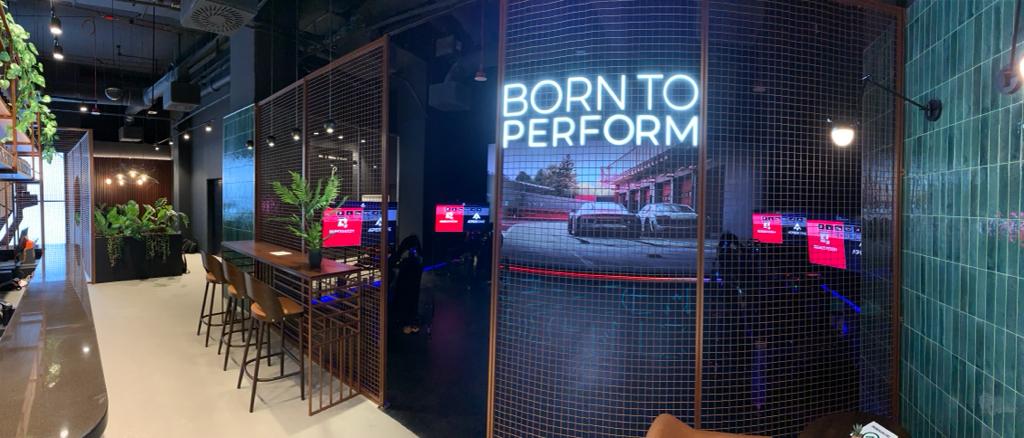
Apex One - The largest Sim Racing Center in Poland
Apex One Training and Sim Racing Center in Wroclaw, Poland
Apex One is the largest sim racing center in Poland, which provides residents, tourists, and racing enthusiasts with a new way to spend time in the heart of Wrocław.
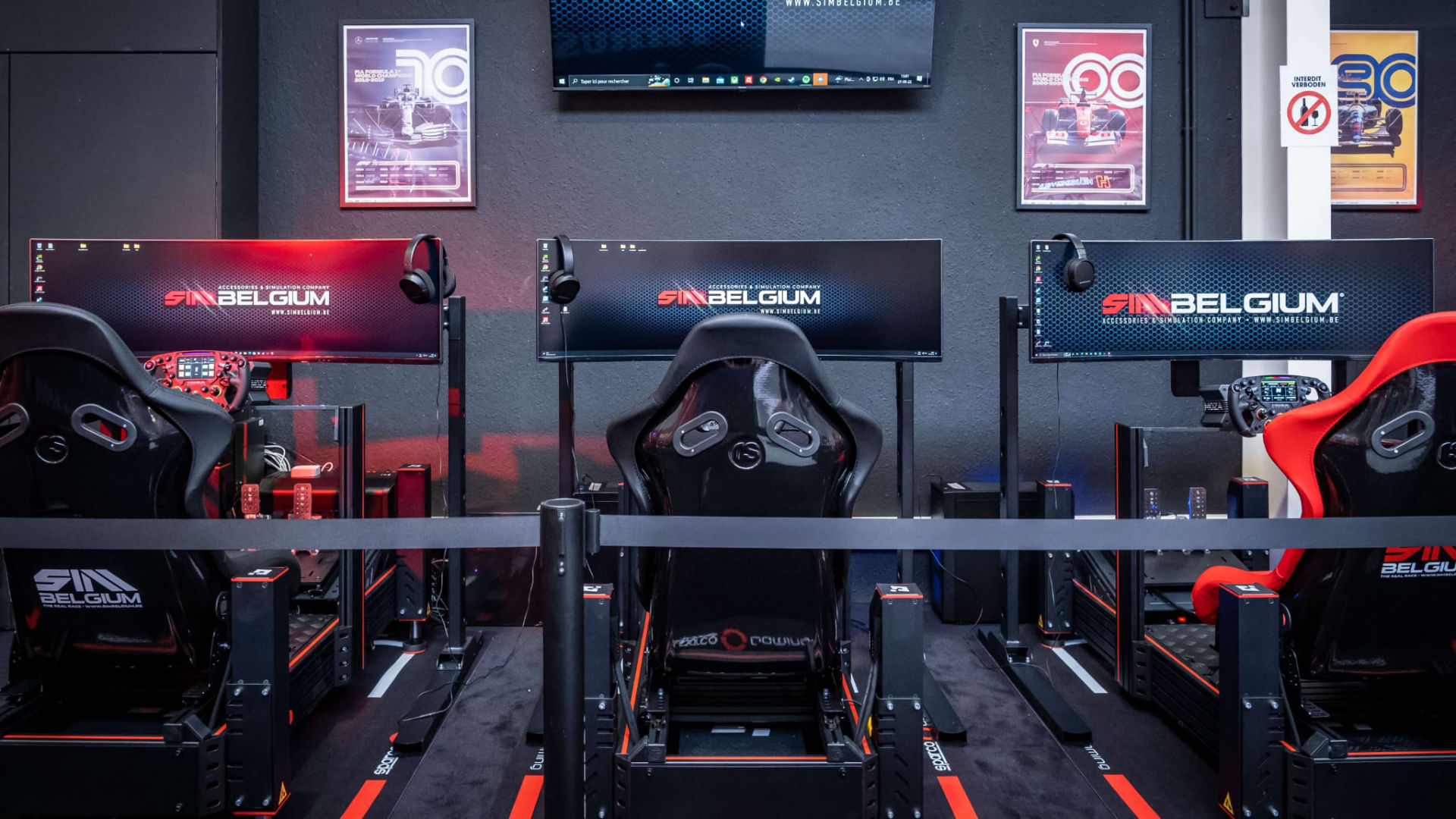
Sim Racing Center Merchtem in Belgium
Merchtem, Belgium
Sim Racing Center Merchtem, run by SimBelgium, is one of Belgium's most advanced sim racing centers.
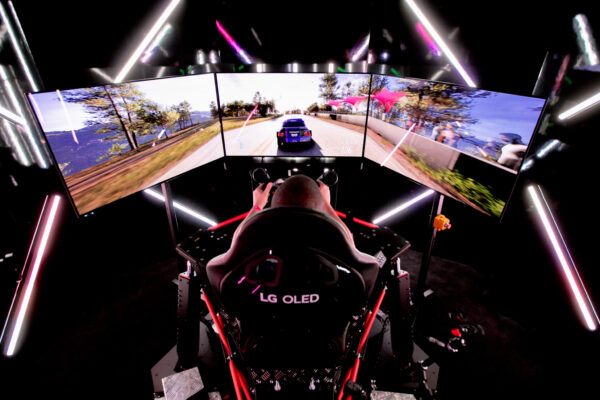
LG OLED X Forza Horizon 5 Unleashed
Dunsfold Aerodrome in Surrey Hills, United Kingdom
Imagination and LG delivered a secret test-drive gaming experience to celebrate the launch of the racing video game Forza Horizon 5.
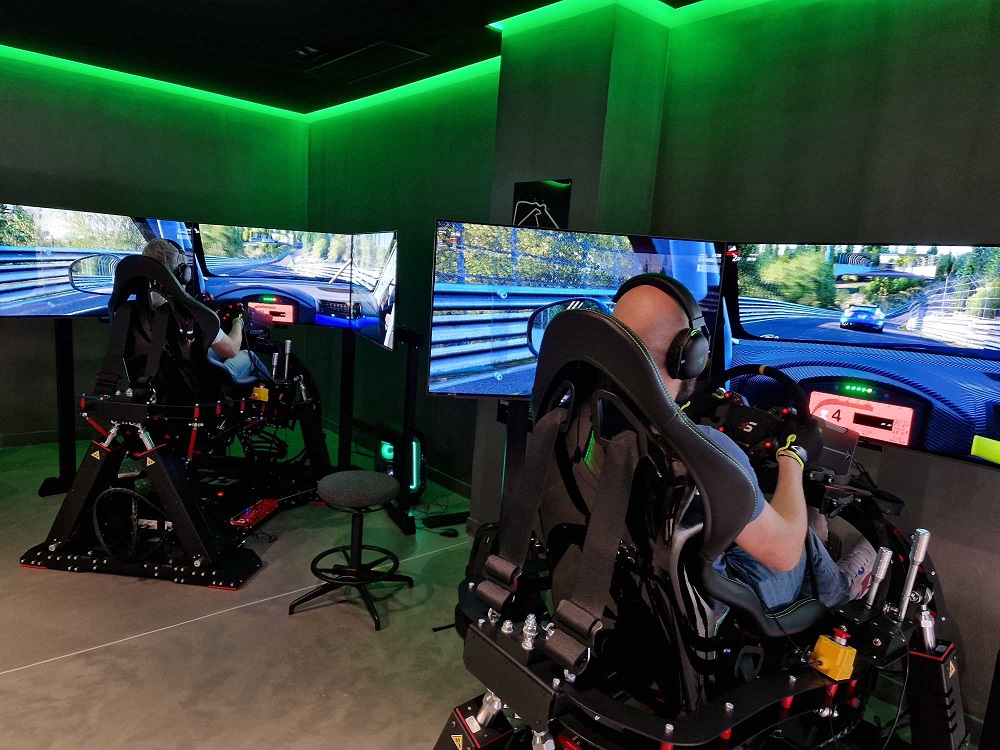
SimClub Sim Racing Center in Greece
Athens, Greece
SimClub is a leading sim racing center in Greece, giving racing enthusiasts a highly immersive way to train and compete.
Questions the team gets first.
Throughput, motion sickness, content and uptime - the questions a venue operator asks before signing off on a floor.
Reset is a single button press measured in seconds, not a settling cycle. On the QS-220, QS-S25 and QS-V20 a Motion-Lock command parks the platform, and because these Qubic System units carry no holding brakes the cockpit settles to its lowest boarding position on its own - no hydraulic settling, no hand-positioning. Across a twenty-station floor that protects the paid sessions a venue margin depends on, since every minute a seat spends resetting is throughput that never sold. The 6DOF QS-S25 and the QS-V20 share the same one-button boarding workflow.
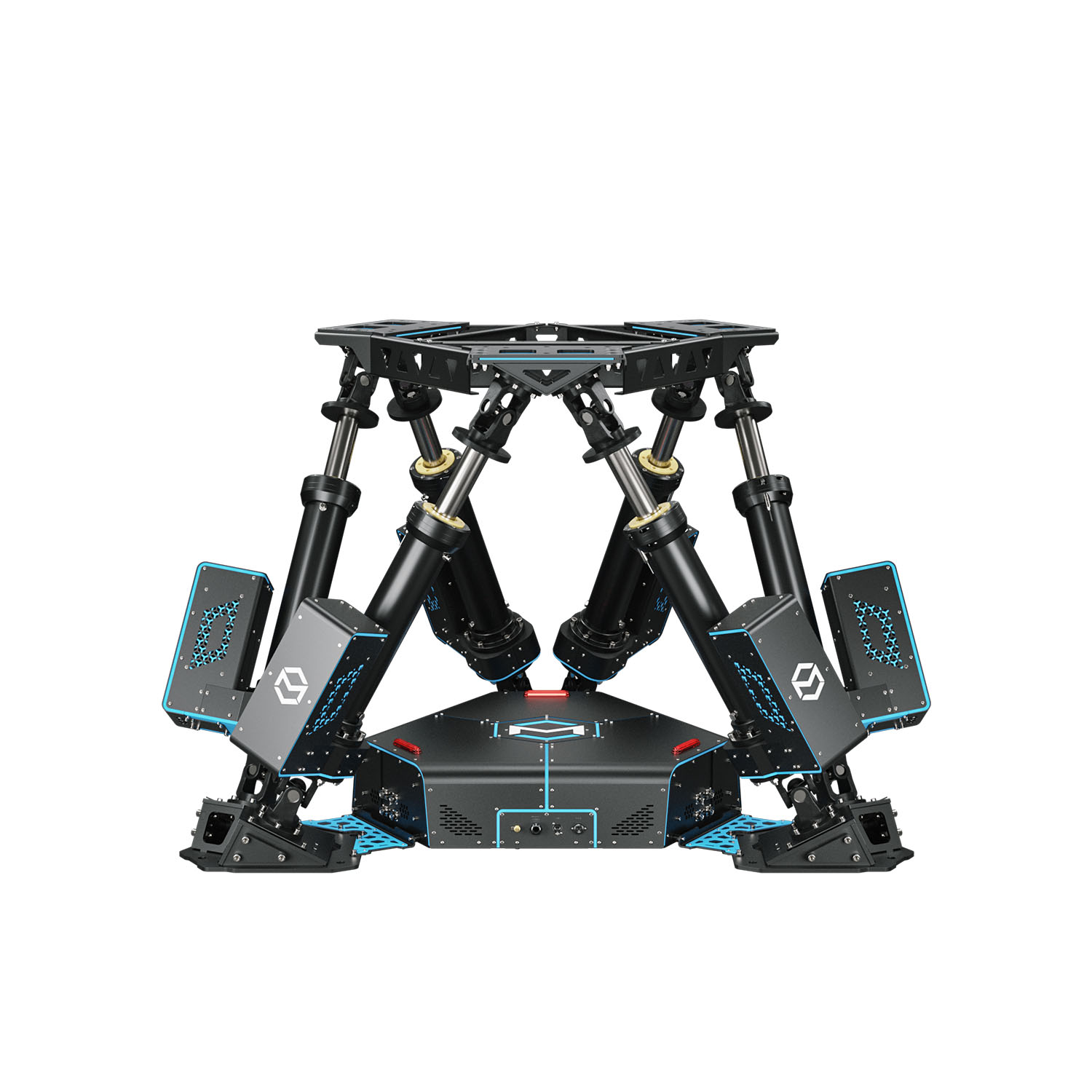
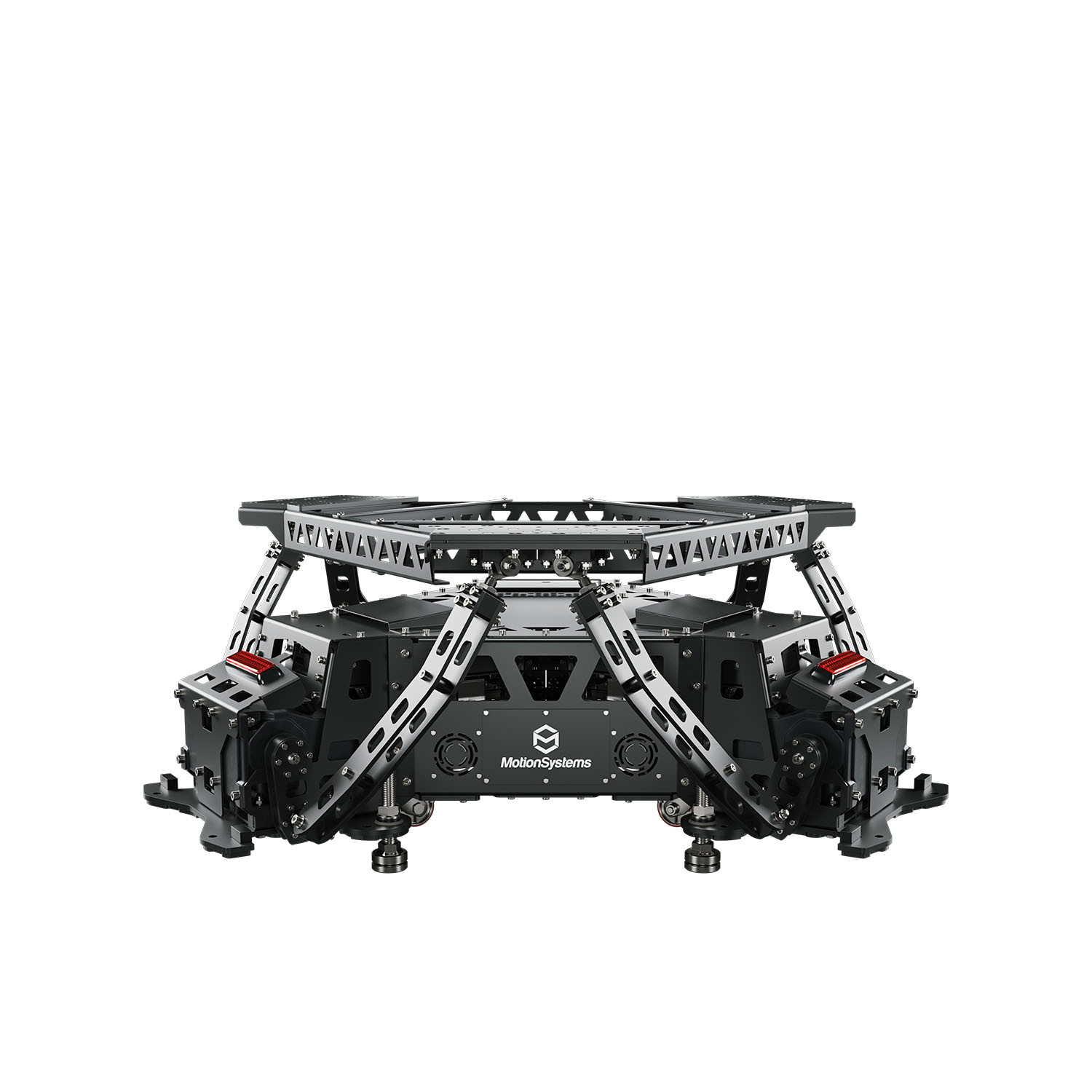
Match the model to cabin weight and motion class, not headline price. For VR arcades and sim-racing stations the compact QS-220 (3DOF, up to 350 kg in Heavy-Duty mode) and the 6DOF QS-S25 are the typical choices, with the QS-V20 adding traction-loss cueing for driving experiences. For a single-seat 4D theater pod or themed VR ride, the Professional Series PS-6TL-350 - a ball-screw Stewart hexapod rated for 350 kg gross moving load with a wide yaw envelope - is the fit; a multi-occupant ride cabin steps up to the 1000-1500 kg class (PS-3TM-1000 or PS-6TM-1500). All four run the same ForceSeatPM software and SDK, so content and integration carry across the floor. Published list prices for each model are shown on its product page.
Cybersickness comes from the visual scene and the body falling out of sync, so Qubic System attacks both latency and headset tracking. The QS-220, QS-S25 and QS-V20 hold sub-8ms end-to-end response, comfortably under the ~60ms threshold where the visual and vestibular cues start to disagree, and VR HeadWay pulls platform motion out of the head tracking inside ForceSeatPM so the scene stays locked to the cabin. It runs across SteamVR and OpenXR headsets, so a full ten-to-fifteen-minute session holds its length without queasy early exits.
Yes - titles are plug-and-play and the workflow is one button. ForceSeatPM auto-detects each supported title and loads the factory-tuned motion profile with no per-title engineering, so a new operator learns the load-and-go workflow in minutes, which matters on a floor where crews turn over every few months. The content library grows with each free software update across sim-racing, flight and coaster experiences, so the line-up keeps expanding without commissioning a developer per game. The same profiles run identically on the QS-220, QS-S25 and QS-V20.
Qubic System platforms are built for an eight-hour daily commercial duty cycle, and the QS-S25 runs at 54-59 dB(A) - inside the normal-conversation band - so a shopping-mall or retail location stays viable rather than being pushed to an industrial park. Qubic System electric servo actuators carry no hydraulic pump, seals or fluid, so scheduled downtime is periodic cleaning and a mechanical check, not pump or seal service. That keeps the acoustic profile low enough for nearby guests and the maintenance burden light across a full booking day of back-to-back sessions.
Yes, indirectly. Motion Systems builds the motion platform and its control software, and works with a network of vetted integrators who assemble the complete simulator - cockpit, visuals, controls and final integration. Share the application, cabin and timeline, and the team can point the project to a suitable partner.
Discuss an Entertainment & VR project
The team discusses project requirements directly - an outline, floor space and timeline are enough to start.