
Defense & Military
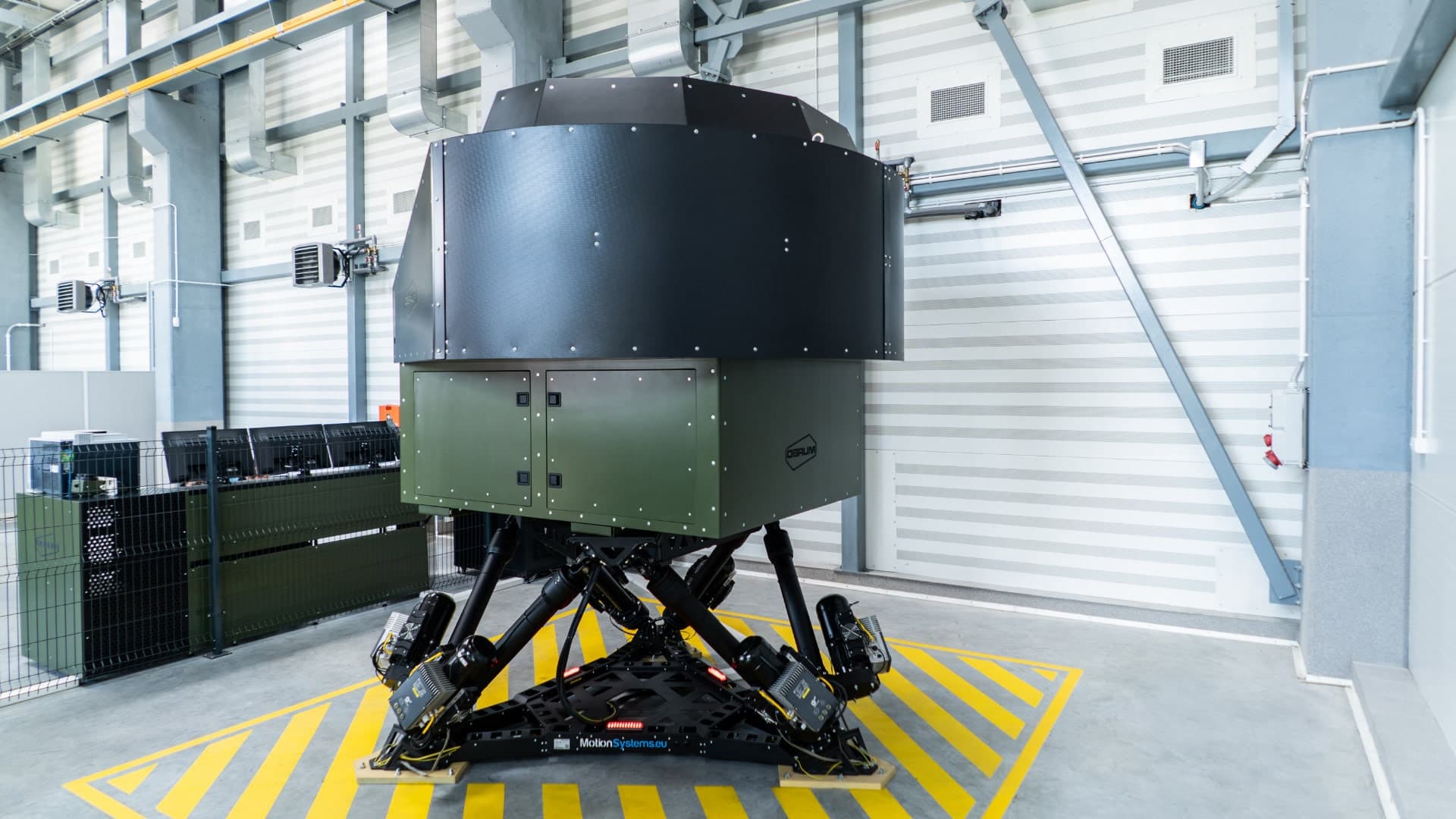
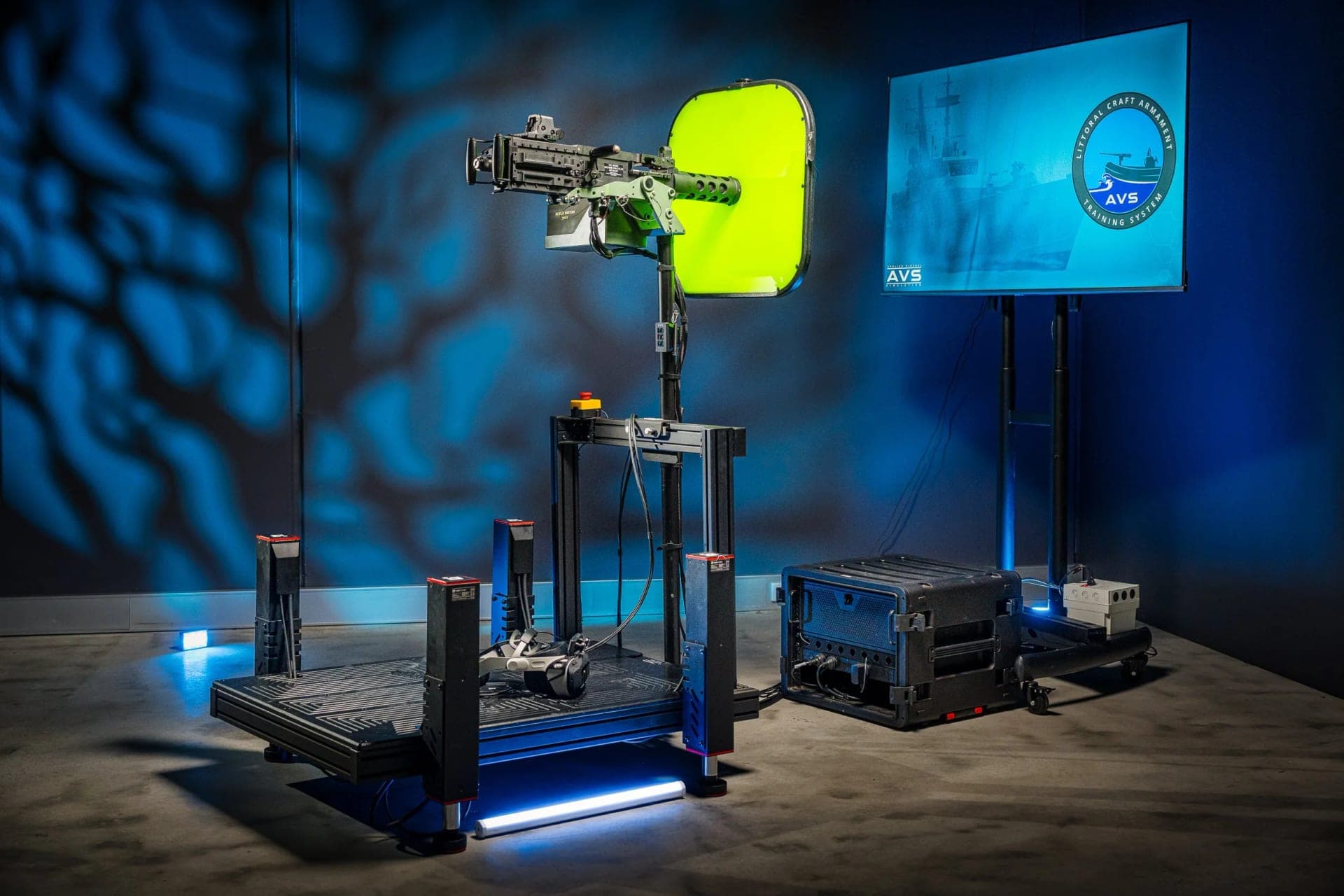
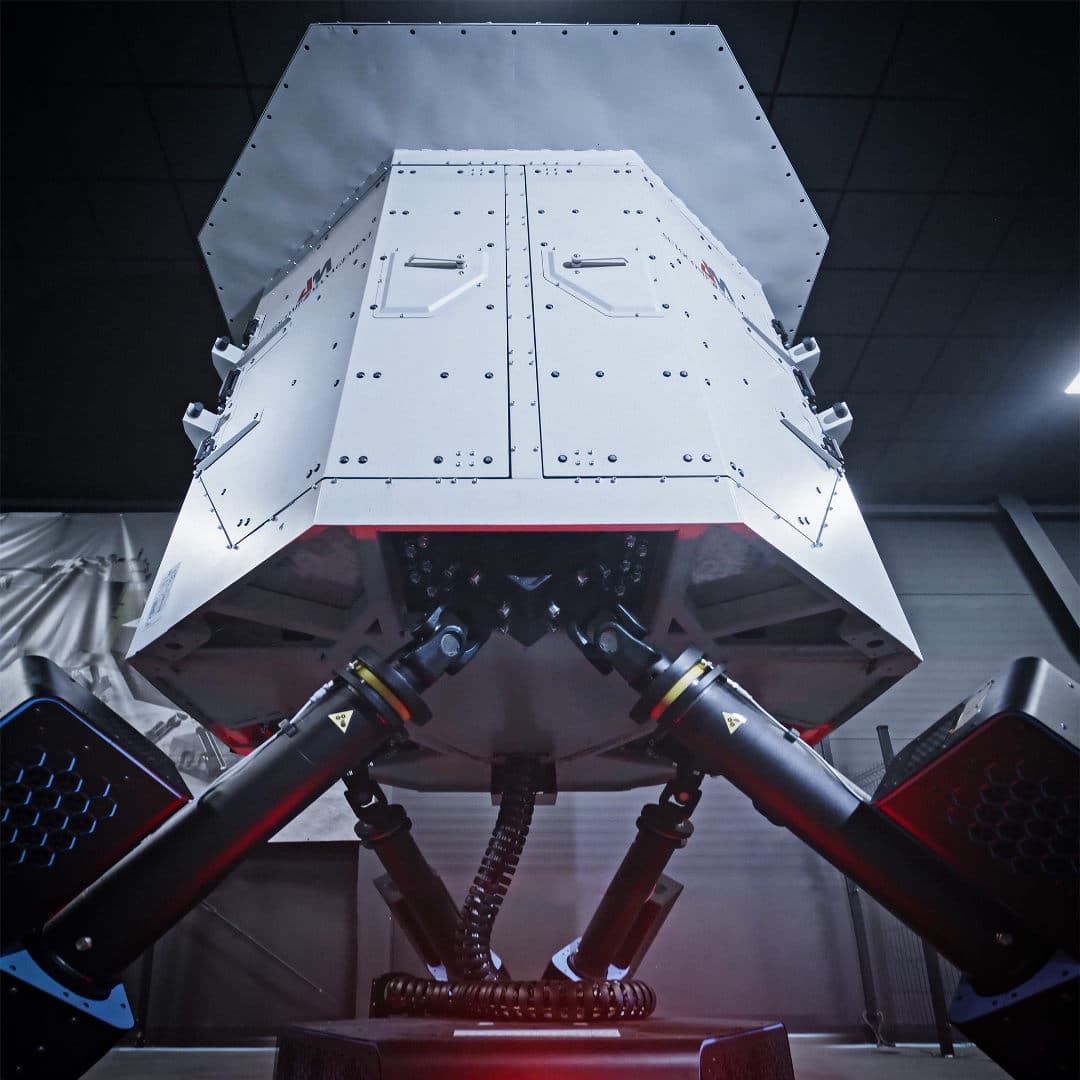
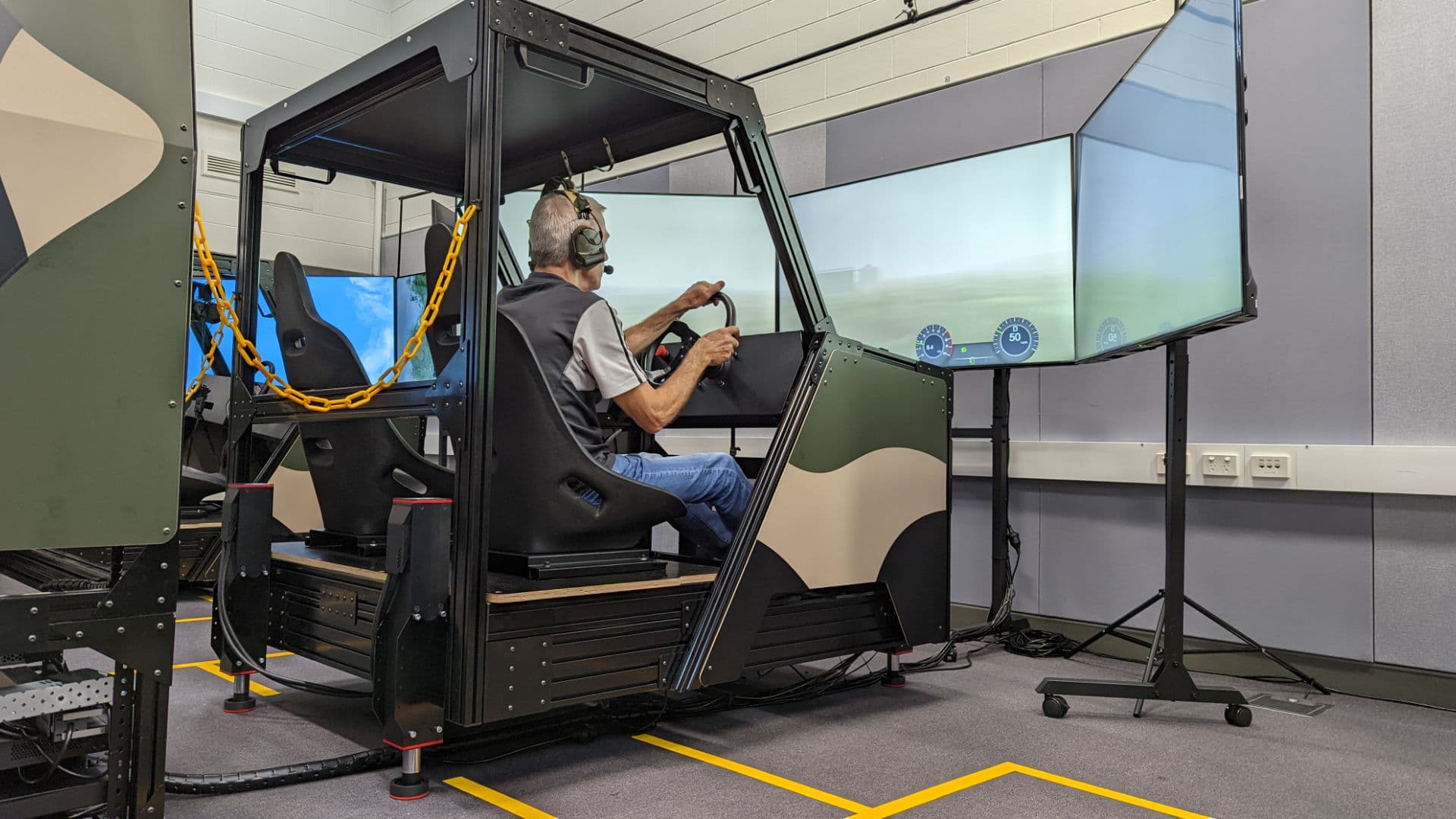
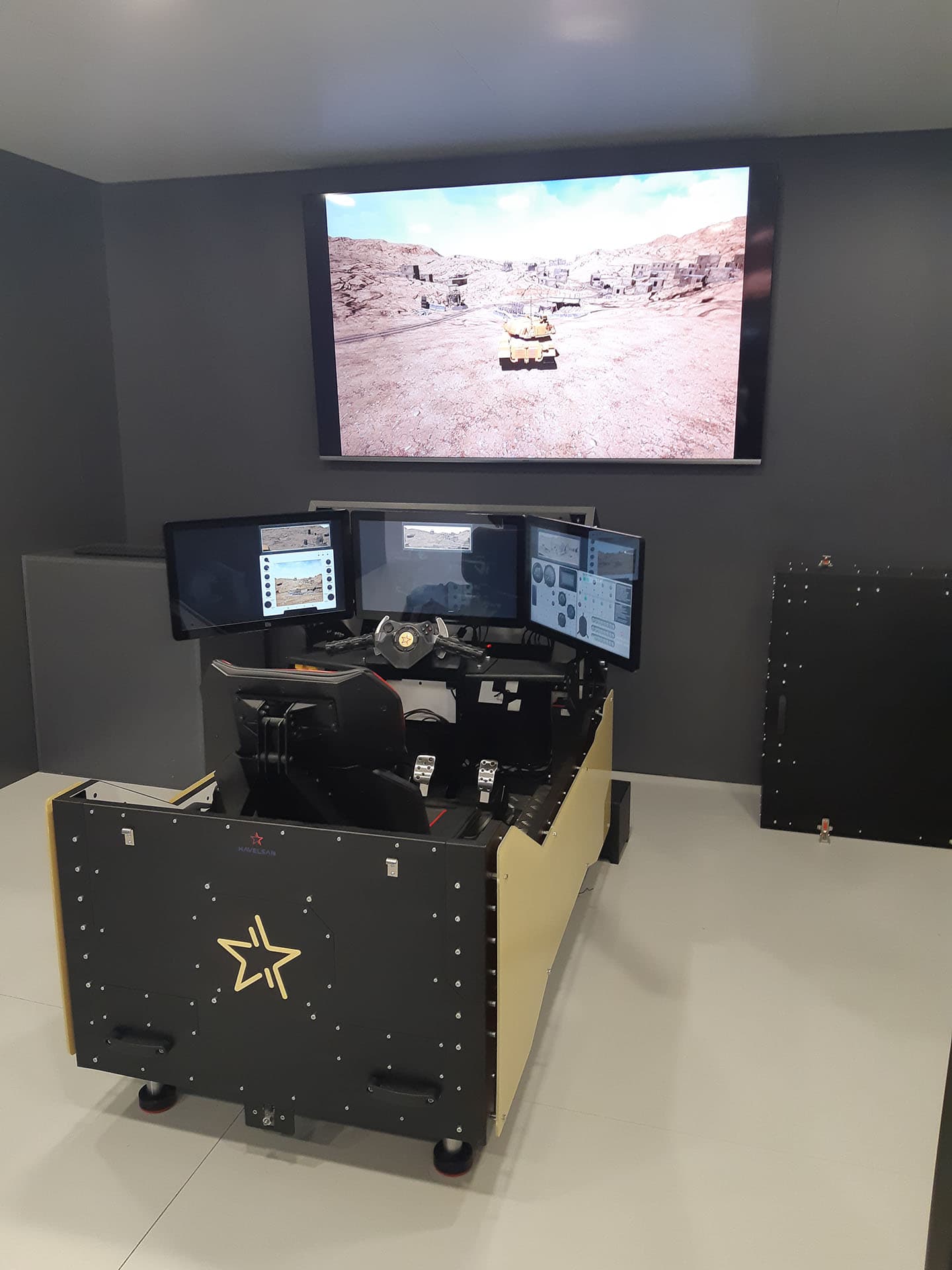
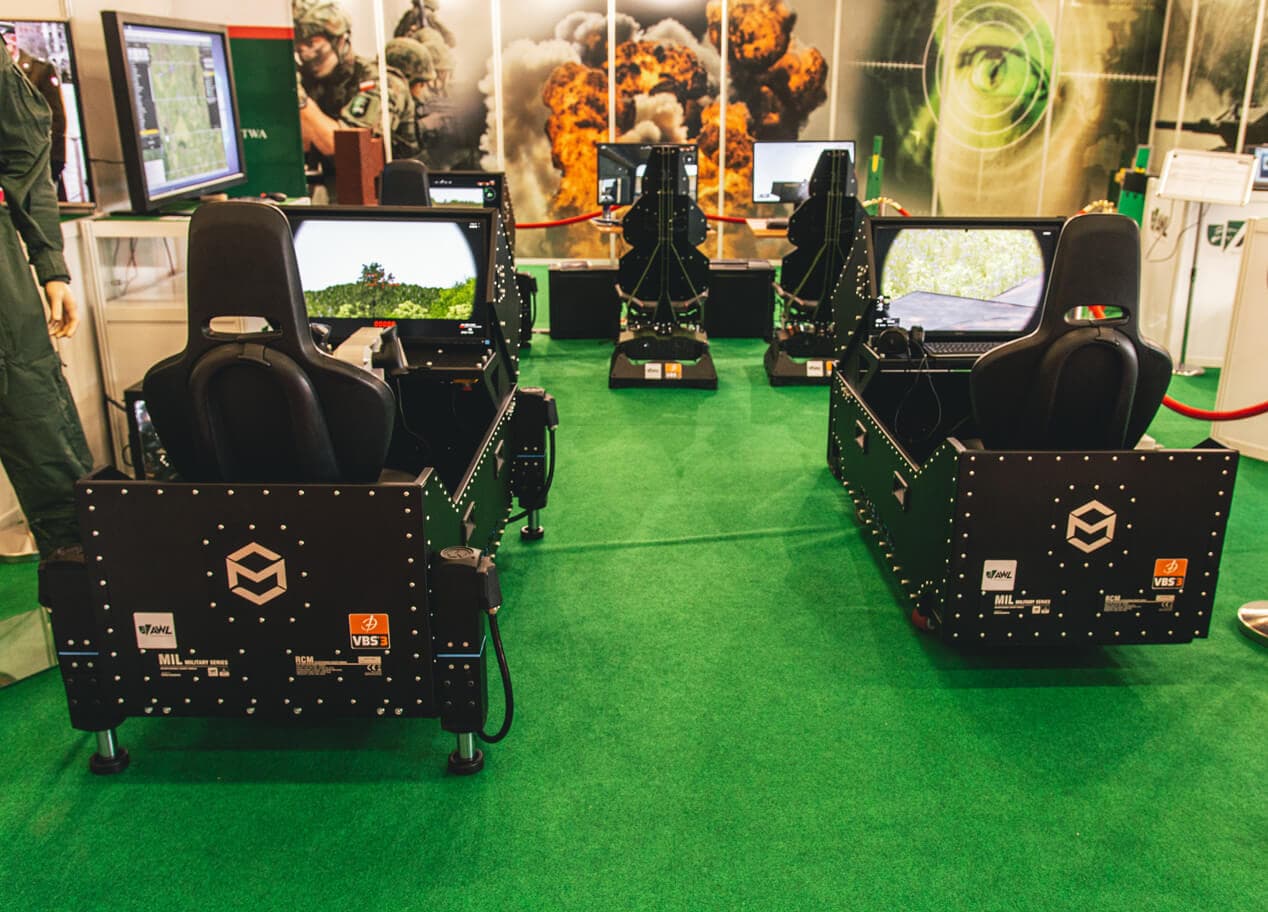
Motion platforms engineered in Nadolice Wielkie for tank trainers, protected-mobility simulators, and rotary-wing tactical training devices. ITAR-free, with electronics sourced from NATO-aligned, neutral, or friendly-nation suppliers and documented per project, sub-30ms end-to-end latency at full payload, scaling to 1500 kg cabin class.
Engineered for Defense & Military integration teams.
Defense procurement weighs a motion platform on three axes - component provenance, motion fidelity, and lifecycle sustainment. Each is engineered to a specification and documented.
Provenance Under Procurement Audit
In a defense tender the officer who signs acceptance carries the liability for every component inside the platform, and a motor controller or safety circuit traced to a non-allied source is enough to flag the bid. Firmware-bearing electronics of unverified origin raise questions a supply chain dossier cannot always close, and one derogation request can stall the procurement.
Cue Timing the Crew Can Trust
In a vehicle or rotary-wing trainer the platform sits between the simulation and the inner ear of the crew, so motion that arrives late or reads wrong teaches the body to respond to the simulator, not the vehicle. The crew then rehearses reflexes the real platform will contradict, and the hours meant to build readiness work against it.
Sustainment Across the Program
A training platform stays in service far longer than the procurement cycle that approved it, and over the life of a program the real risk shifts from the hardware to the vendor - one that cannot authorize a firmware revision, source a spare, or outlast the equipment it sold. Over that horizon, spares, firmware support, and service availability - not the purchase price - set the total cost of the program.
Defense & Military
Tap a constraint on the left to see how the platform addresses it.
Provenance Under Procurement Audit
In a defense tender the officer who signs acceptance carries the liability for every component inside the platform, and a motor controller or safety circuit traced to a non-allied source is enough to flag the bid. Firmware-bearing electronics of unverified origin raise questions a supply chain dossier cannot always close, and one derogation request can stall the procurement.
Cue Timing the Crew Can Trust
In a vehicle or rotary-wing trainer the platform sits between the simulation and the inner ear of the crew, so motion that arrives late or reads wrong teaches the body to respond to the simulator, not the vehicle. The crew then rehearses reflexes the real platform will contradict, and the hours meant to build readiness work against it.
Sustainment Across the Program
A training platform stays in service far longer than the procurement cycle that approved it, and over the life of a program the real risk shifts from the hardware to the vendor - one that cannot authorize a firmware revision, source a spare, or outlast the equipment it sold. Over that horizon, spares, firmware support, and service availability - not the purchase price - set the total cost of the program.
What sets the military simulator motion platform apart
Technical differentiators that directly impact performance in defense & military applications.
The firmware-bearing controllers and safety circuits come from NATO-aligned, neutral, or friendly-nation suppliers, so a supply-chain reviewer finds no adversary-nation electronics to flag and no derogation requests to file.
A single flagged component delays the entire procurement cycle. Post-award supply chain audits that reveal undocumented origins can trigger contract termination clauses.
Trainees develop responses calibrated to real-world stimulus timing. Onset cues arrive within the vestibular processing window. Negative training transfer minimized across vehicle, rotary-wing, and crew-coordination programs.
Latency that drifts past the vestibular window produces sensory conflict - the trainee adapts to the delay, not the vehicle dynamics. Skills learned on a high-latency simulator have to be unlearned in the real vehicle.
National operators reach the engineers who authorize field firmware directly, and modular architecture allows component-level replacement without a full platform swap. The same team stays with the platform through its service life.
A vendor without design authority routes every firmware change and spare through third parties, and a discontinued module can ground the simulator with no in-house path to a fix.
Find the right military simulator motion platform.
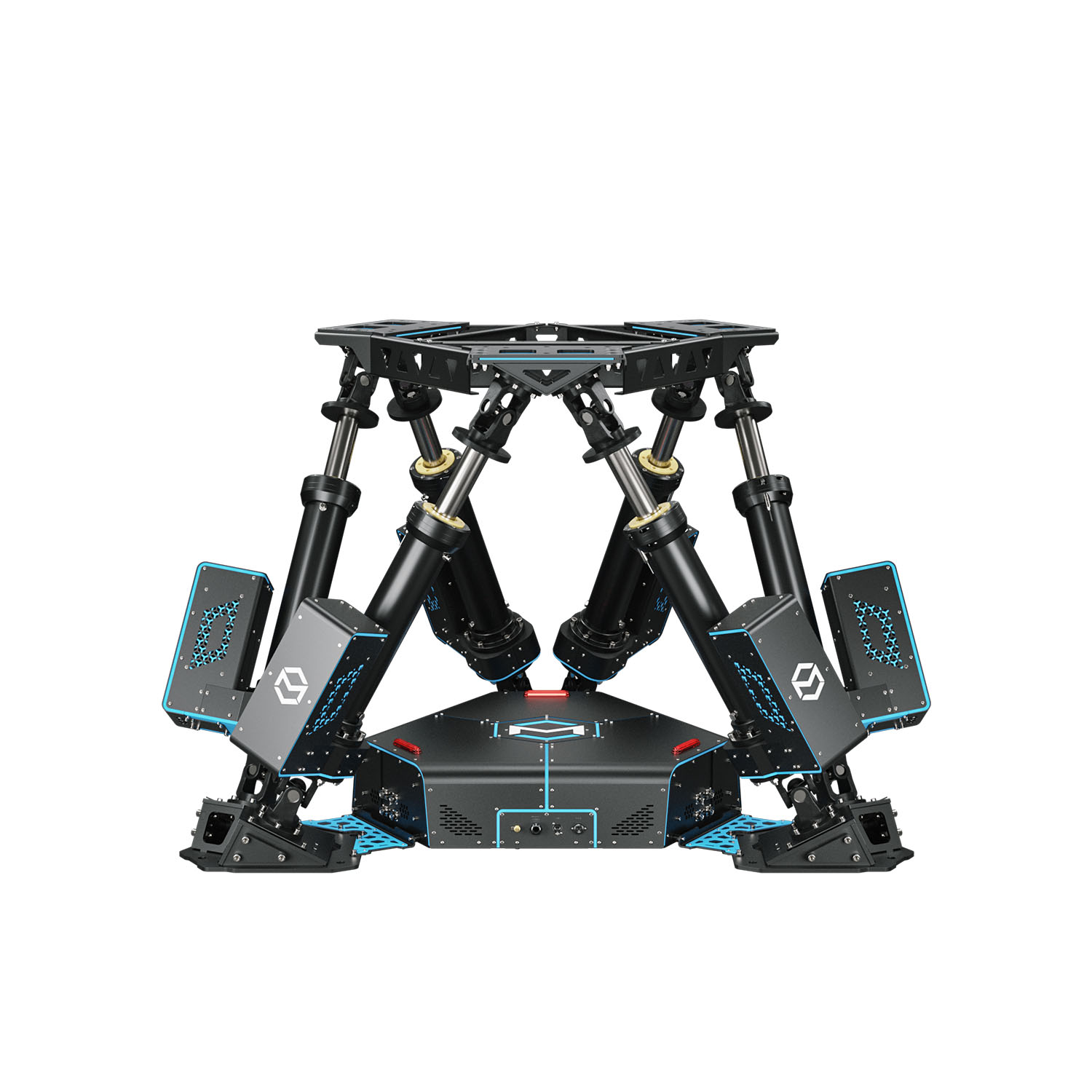
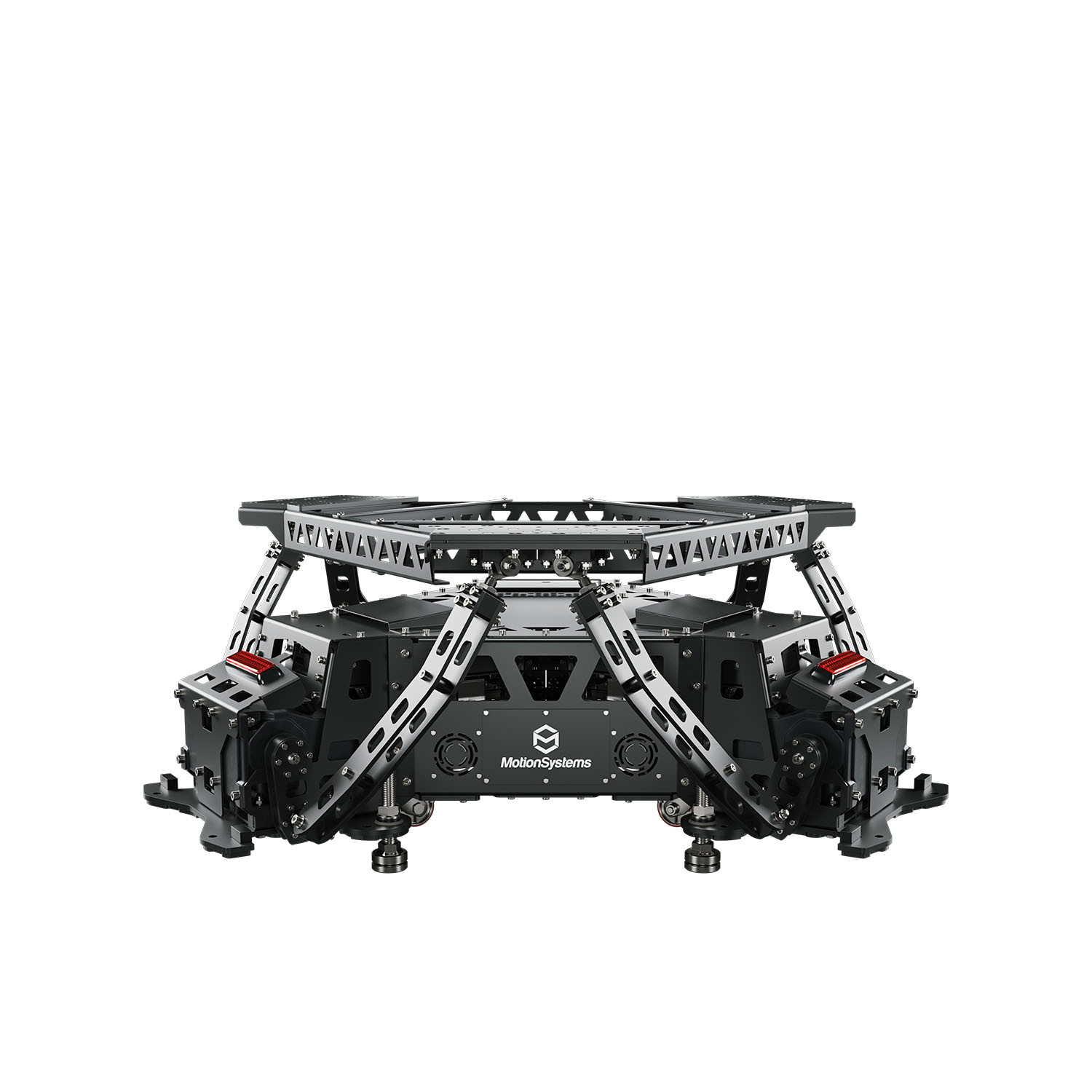
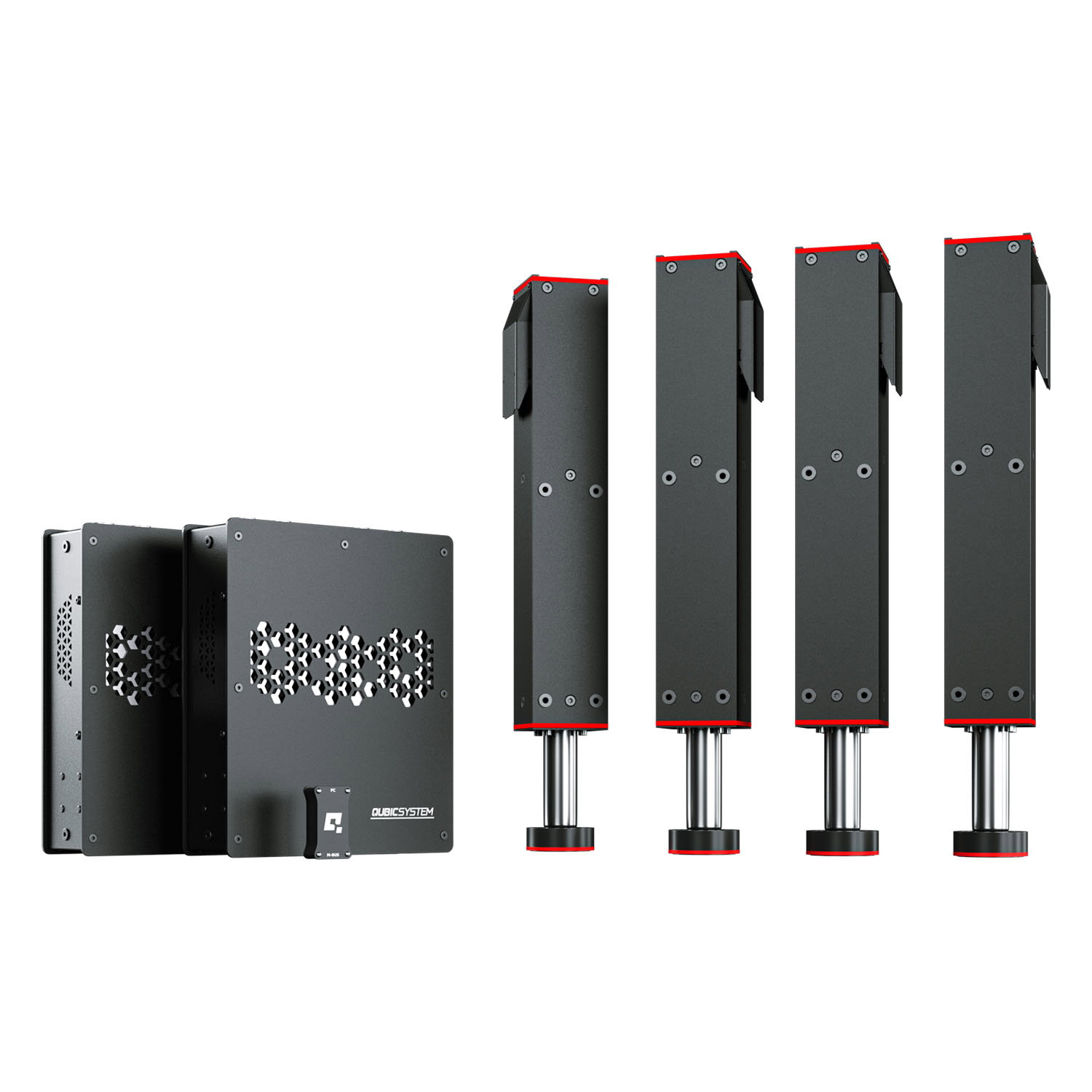
The platform families that fit this application class - Linear high-payload, Low-Profile 6DOF and compact Qubic sets.
Proven in the Field
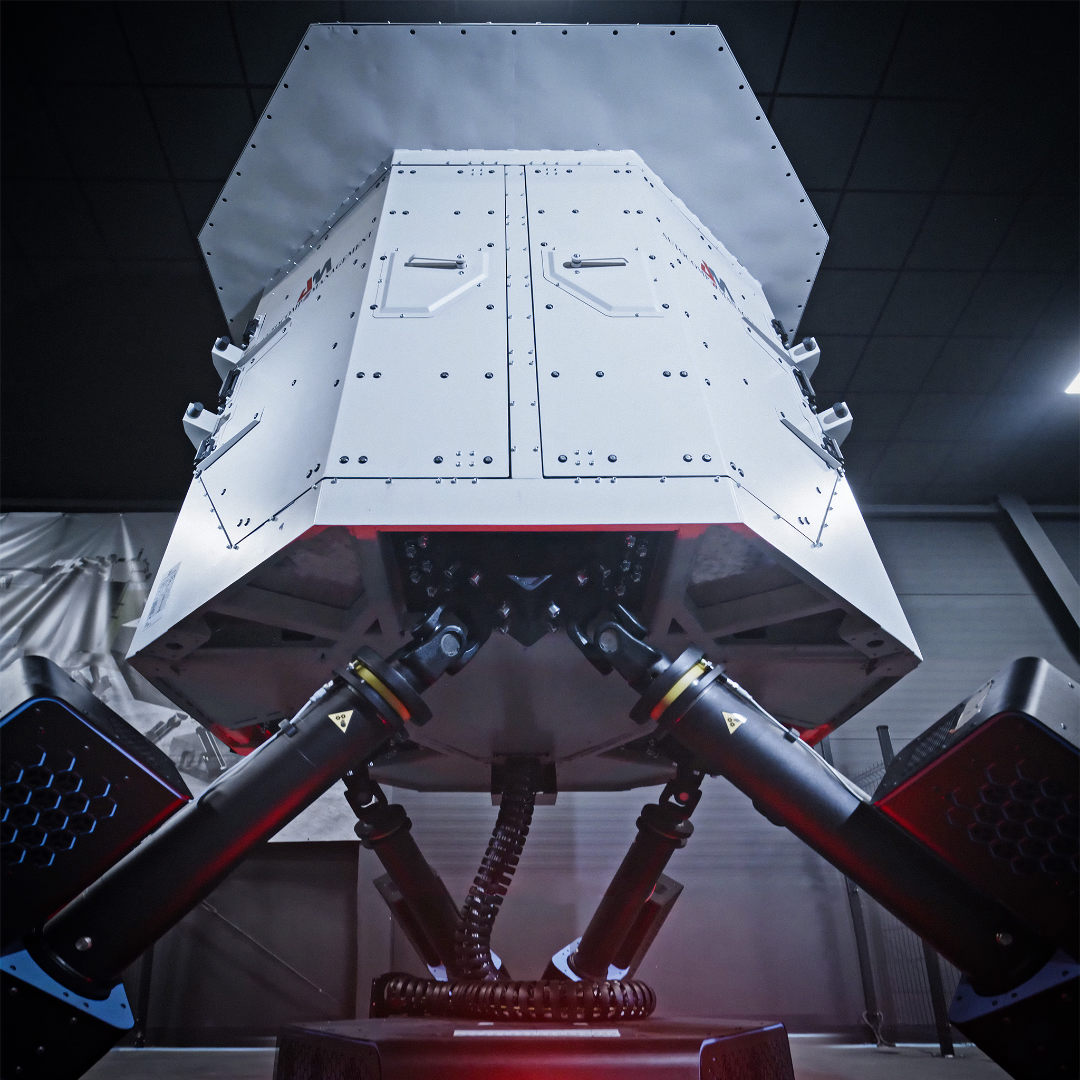
The Rosomak Wheeled Armored Vehicle Simulators
Poland
Shooting simulators for the KTO Rosomak wheeled armored personnel carrier, platoon version, located in Poland.
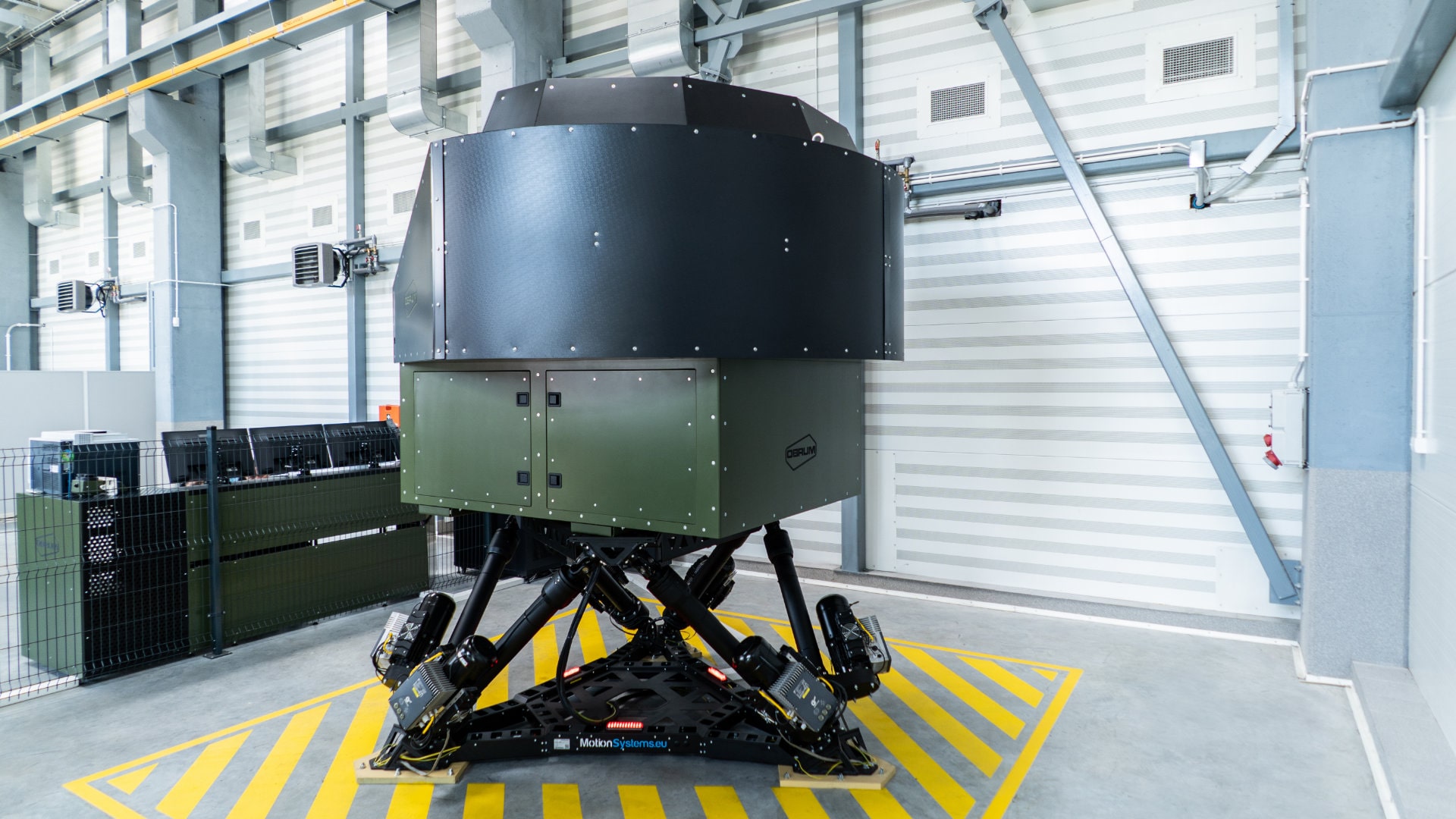
Leopard Tank Driving Simulators
Swietoszow, Poland
Leopard Tank Driving Simulators delivered by OBRUM to the Leopard Training Centre in Swietoszow, Poland.
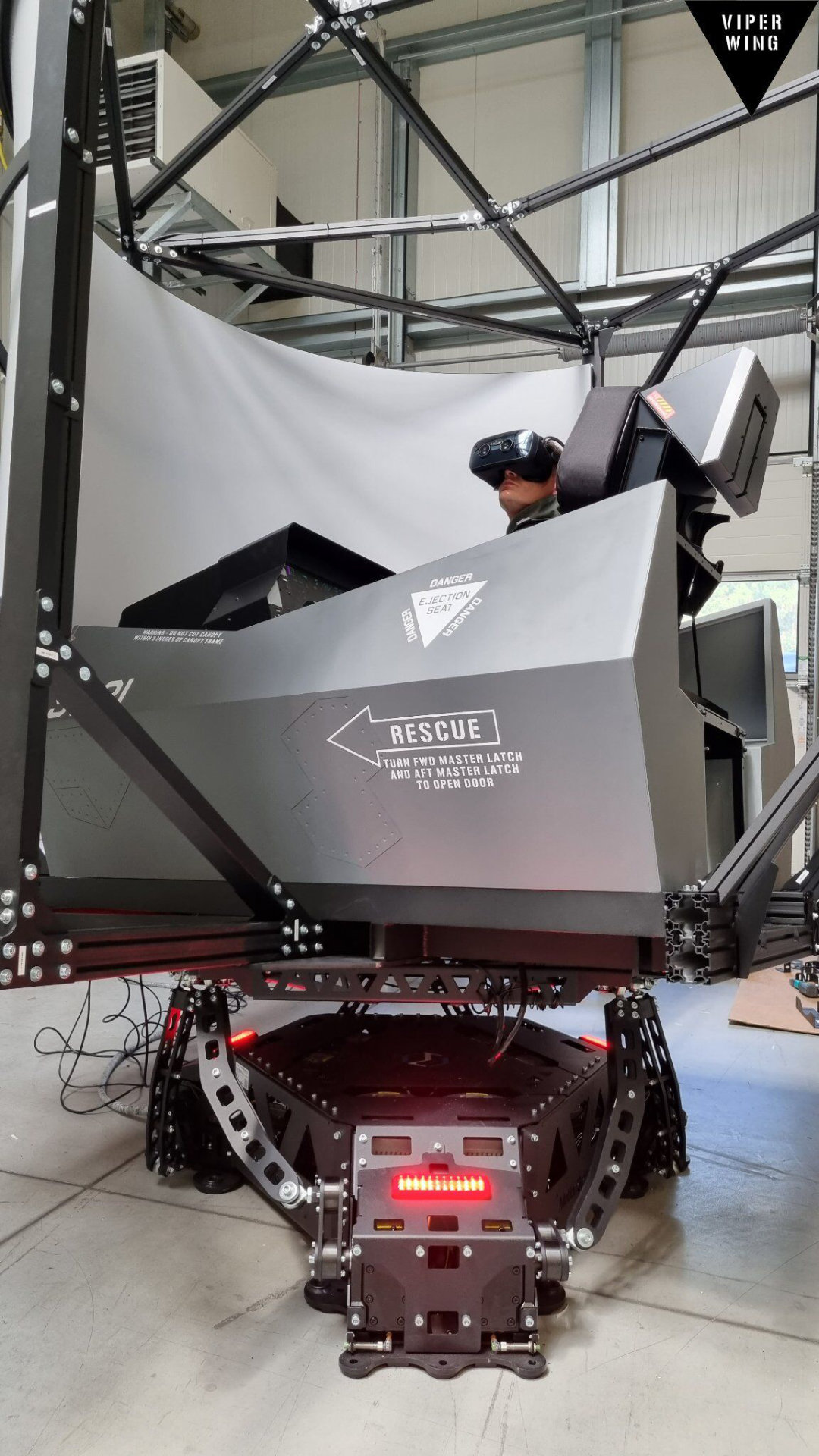
F-35 Fighter Jet Cockpit Simulator
Poznan, Poland
F-35 fighter jet cockpit simulator by Viper Wing on the compact 6DOF PS-6TM-550, with a full aluminum cockpit on a mobile wheeled base for transport between locations.
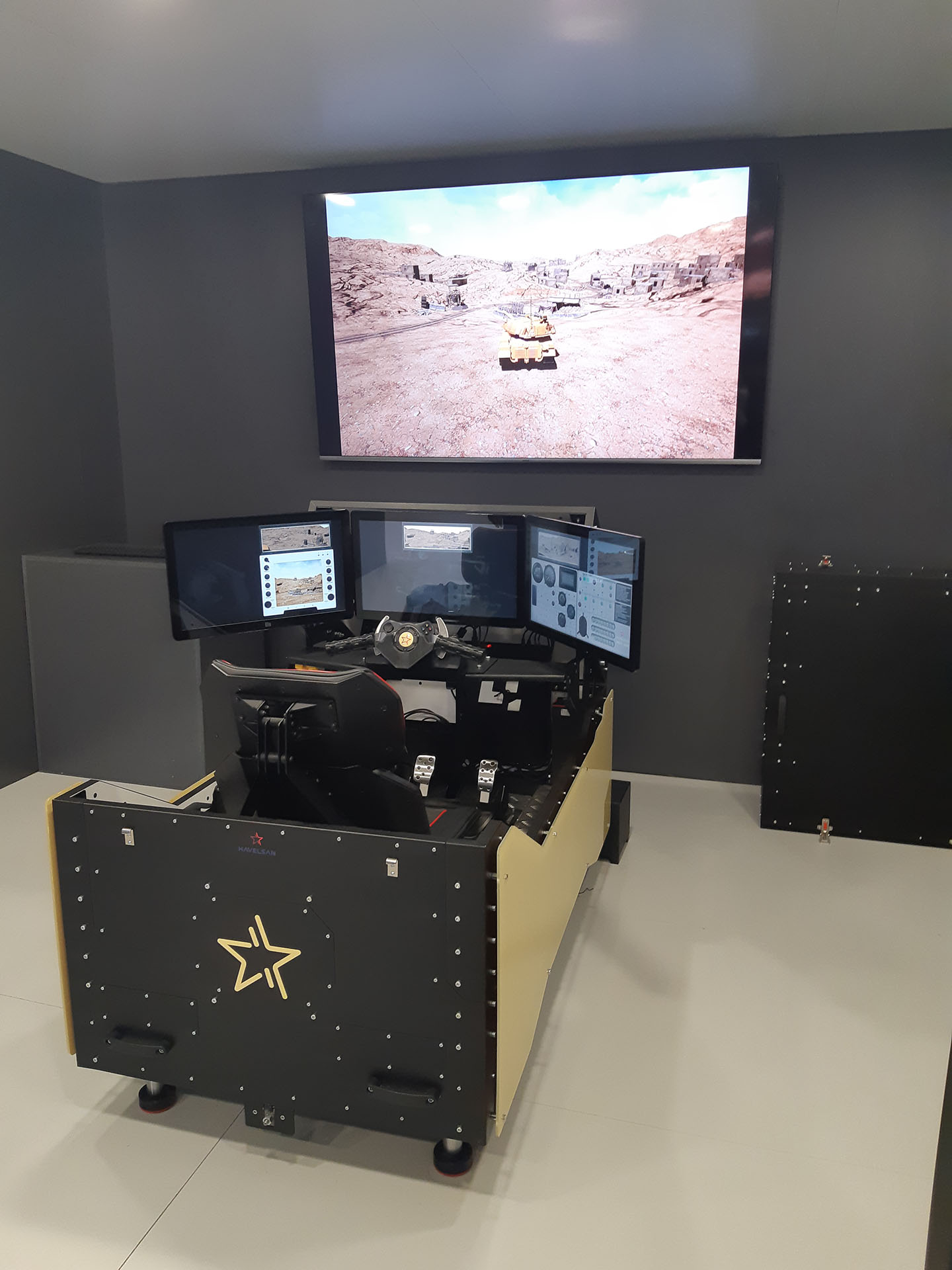
M60 Tank Simulator
International Defense Industry Fair in Istanbul, Turkey
Based on the 3DOF RCM-C420 motion cockpit, located in Turkey.
Questions the team gets first.
Provenance, ITAR status, firmware lifecycle and payload - answered up front, ahead of the first call.
Yes. Motion Systems designs and manufactures the platforms in Nadolice Wielkie, Poland - EU and NATO territory - with the firmware-bearing electronics sourced from NATO-aligned, neutral, or friendly-nation suppliers. The control electronics is designed in-house, so a supply-chain reviewer finds no adversary-nation processors or safety circuits to flag. Where a tender makes component origin a formal acceptance criterion, country-of-origin documentation is prepared inside the project, and each unit is factory-tested with the test protocol shipped for acceptance review. Reference deployment: the Rosomak APC crew trainers, accepted against military specifications.
No re-export restrictions apply. Motion Systems platforms are training devices, not classified as dual-use, and contain no US-origin controlled components - so a NATO or partner-nation buyer can specify, procure, field, and onward-transfer the equipment without US licensing overhead. Manufacturing is in Nadolice Wielkie, Poland (EU and NATO member state), and Motion Systems is ISO 9001:2015 certified, NCAGE 99LPH. This removes the export-license dependency that an ITAR-encumbered motion base would attach to a multi-nation program.
Latency under 30 ms end-to-end at full payload keeps onset cues inside the vestibular processing window, so the crew develops responses calibrated to real-vehicle timing rather than to the simulator. Motion Systems measures this sub-30 ms at the cabin attachment point - not at the motor controller - across the Professional Series, several times faster than human reaction time (150-250 ms). Cue timing that drifts past the window produces sensory conflict: the trainee adapts to the delay, and skills built on a high-latency simulator have to be unlearned in the real platform.
The platform integrates through the ForceSeatMI and ForceSeatDI SDKs (C, C++, C#, Python, plus Unity and Unreal Engine plugins on ForceSeatMI; Linux and Ethernet multi-platform control on ForceSeatDI), and the integrator connects it to VBS4, Steel Beasts Pro, MAK VR-Engage, or a custom C++ engine. DIS and HLA interoperability live at the simulation-software layer and are set per program; the platform supplies real-time telemetry usable for networked exercises and After-Action Review. The Professional Series platforms ship as partly completed machinery under Directive 2006/42/EC with a Declaration of Incorporation, while the compact Qubic System sets are CE-marked complete products - in both cases the integrator certifies and holds the safety case for the complete trainer.
Yes, indirectly. Motion Systems builds the motion platform and its control software, and works with a network of vetted integrators who assemble the complete simulator - cockpit, visuals, controls and final integration. Share the application, cabin and timeline, and the team can point the project to a suitable partner.
Discuss a Defense & Military project
The team discusses project requirements directly - technical feasibility and an indicative lead time from the first conversation.