Made in Poland
Global Shipping

QS-H13

Layered Seat Mover - Moves the Seat, Not the Cockpit

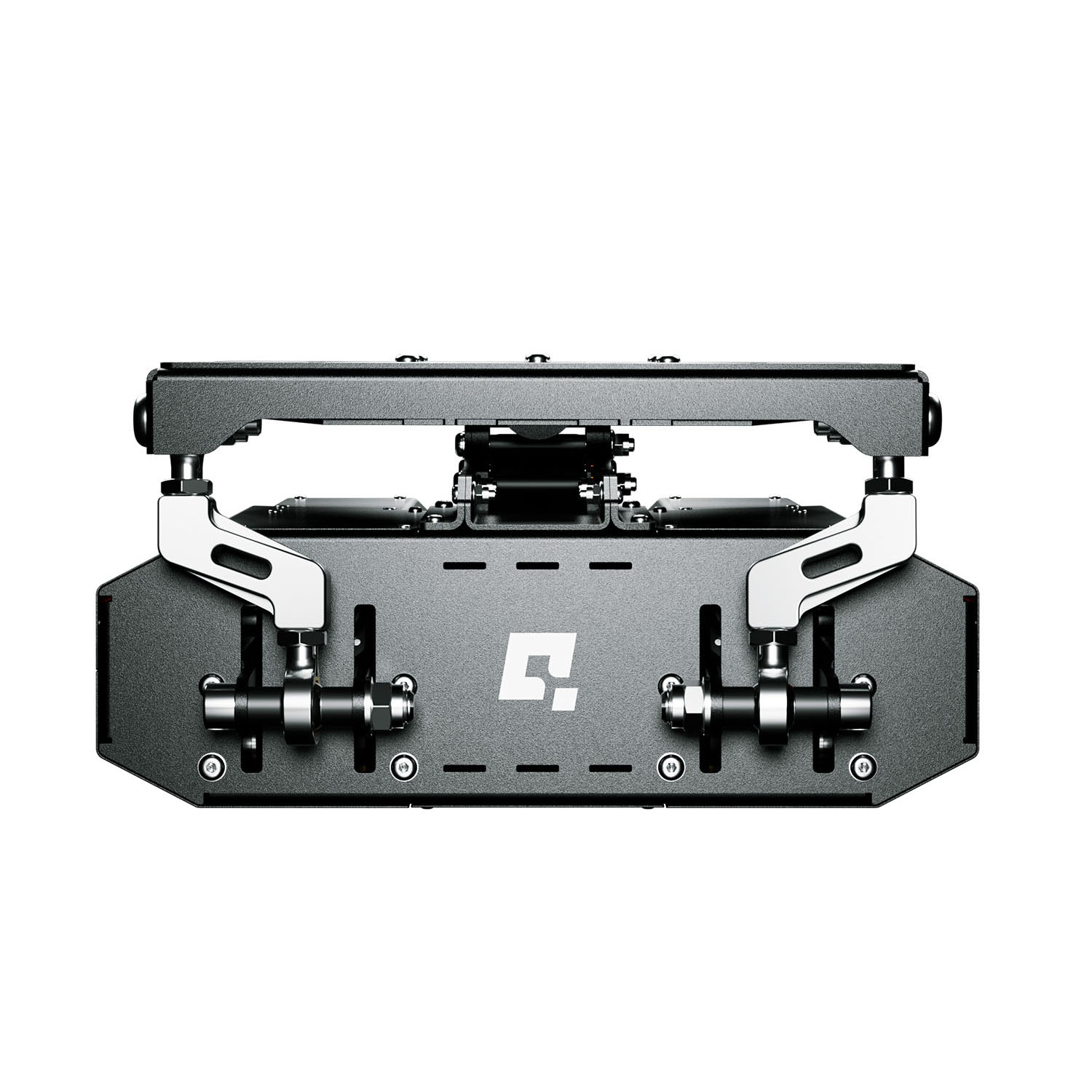
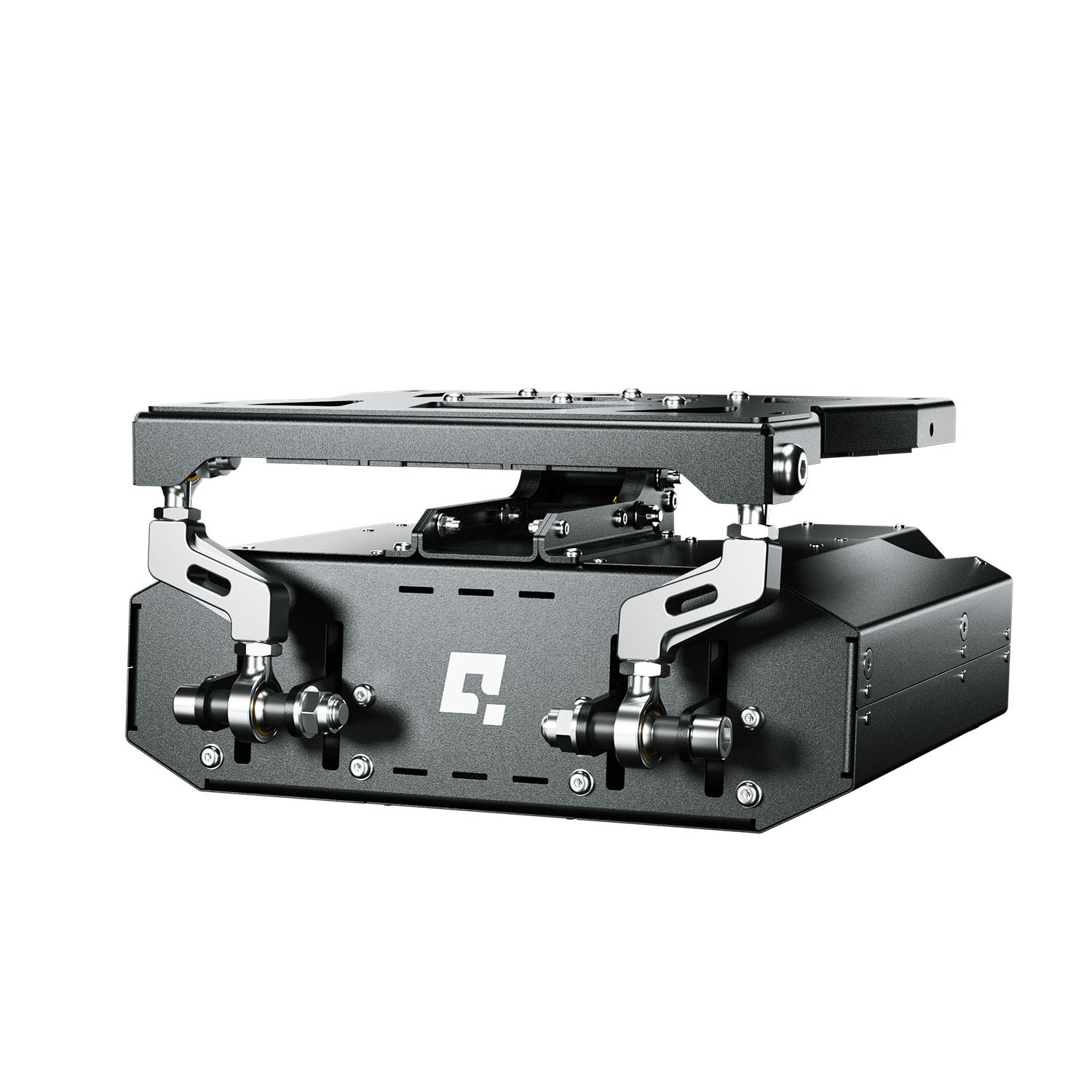
Tilts the seat frame while the wheelbase and pedal tray stay put. 33 kg, sub-10ms USB-direct, mounts under the seat to add motion to an aluminum-profile rig.
3 165*

The list price is the full price of the standard unit shown here - net and ex-works. VAT is normally zero on export orders; options, delivery and any duties are confirmed at order.

2DOF
Degrees of Freedom
130 kg
Max User Weight
120/230V AC, 1-phase
Power Supply
Seat Mover
Technology
Engineered Advantages

Why this model

Three engineering decisions that define this product.

Tilts the Seat, Not the Cockpit

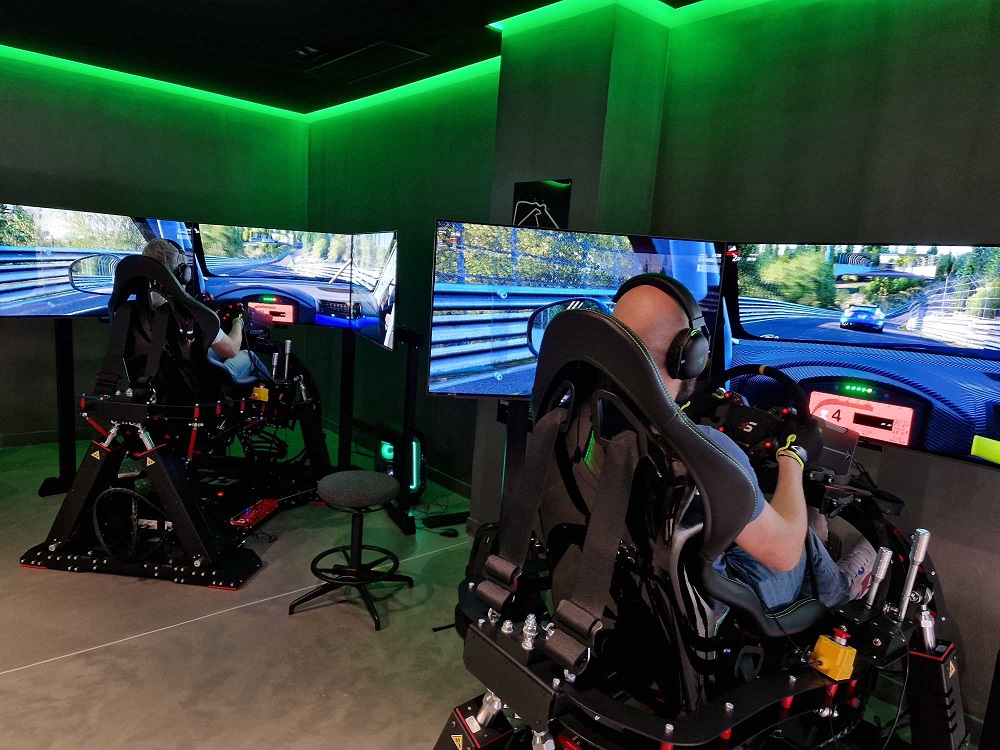
Two actuators tilt the racing seat in pitch and roll while the wheelbase, pedals and monitors stay fixed.

The body feels the motion directly while the hands hold a steady reference on the wheel, so cues stay tunable.

A full-cockpit platform swings seat and controls together, so the body reads less relative motion against the wheel.
Road Texture Through the Same Seat

The same tilt actuators double as the haptic source, layering road texture, curbs and engine into the seat.

One unit handles both motion and vibration, so the integrator wires a single device and tunes one profile, not two.

A mover without built-in haptics needs a separate shaker, its own amplifier and tuning, and the cues can drift apart.

33 kg, Mounts Under the Seat

A quiet gearless drive sits inside one 33 kg unit that connects straight to the PC, with no power cabinet.

One person mounts it under an aluminum-profile rig within an hour, with no floor-borne vibration, so a venue skips the forklift.

Geared movers carry gearbox whine and lubrication, raising the noise floor and maintenance across the life of the rig.

Motion & Dynamics

Technical Data

2DOF
AxisRangeVelocityAcceleration
Pitch-9.45/+9.45°50°/s650°/s2
Roll-10.4/+10.4°65°/s850°/s2
Payload specifications
Payload130kg(user weight)
Main dimensions
Total Width460.6mm
Total Length417.1mm
Height230.9mm
Product Weight33kg
Performance
Vibration Range0-100Hz
Latency<10ms
InterfaceUSB
Noise Level53.4-57.3dB(conversation level)
Power draw120 V230 V
Average Power0.08kVA0.09kVA
Peak Power0.1kVA0.1kVA
Average Current0.1A0.1A
Peak Current3A2A
Avg Power - Stress Test0.04kW0.03kW
Avg Power - Typical Game0.006kW0.006kW
Peak values; the 130 kg rating is maximum user weight, with the feet supported off the moving frame. Tech Sheet
Software Stack

Native SDK Integration.

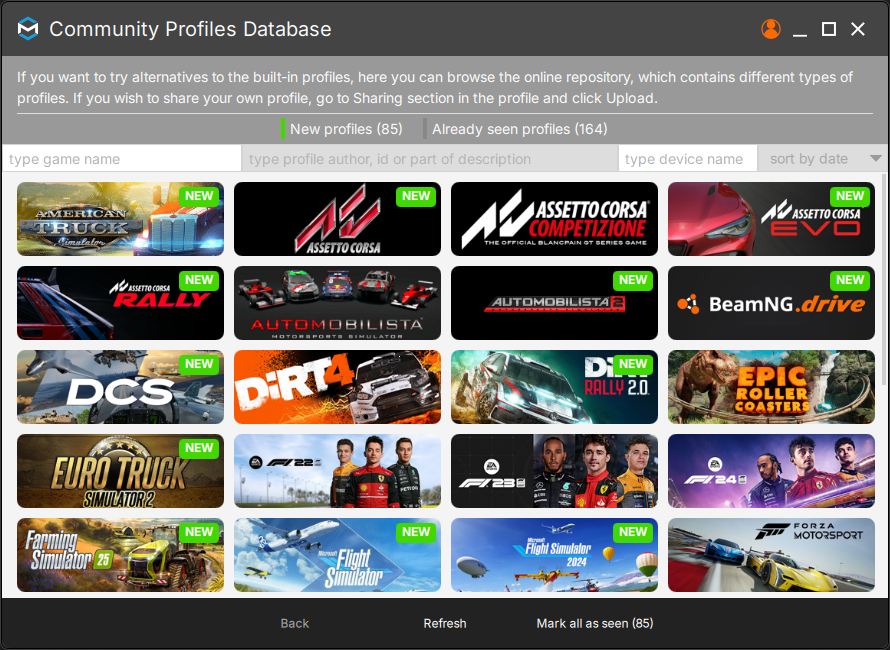
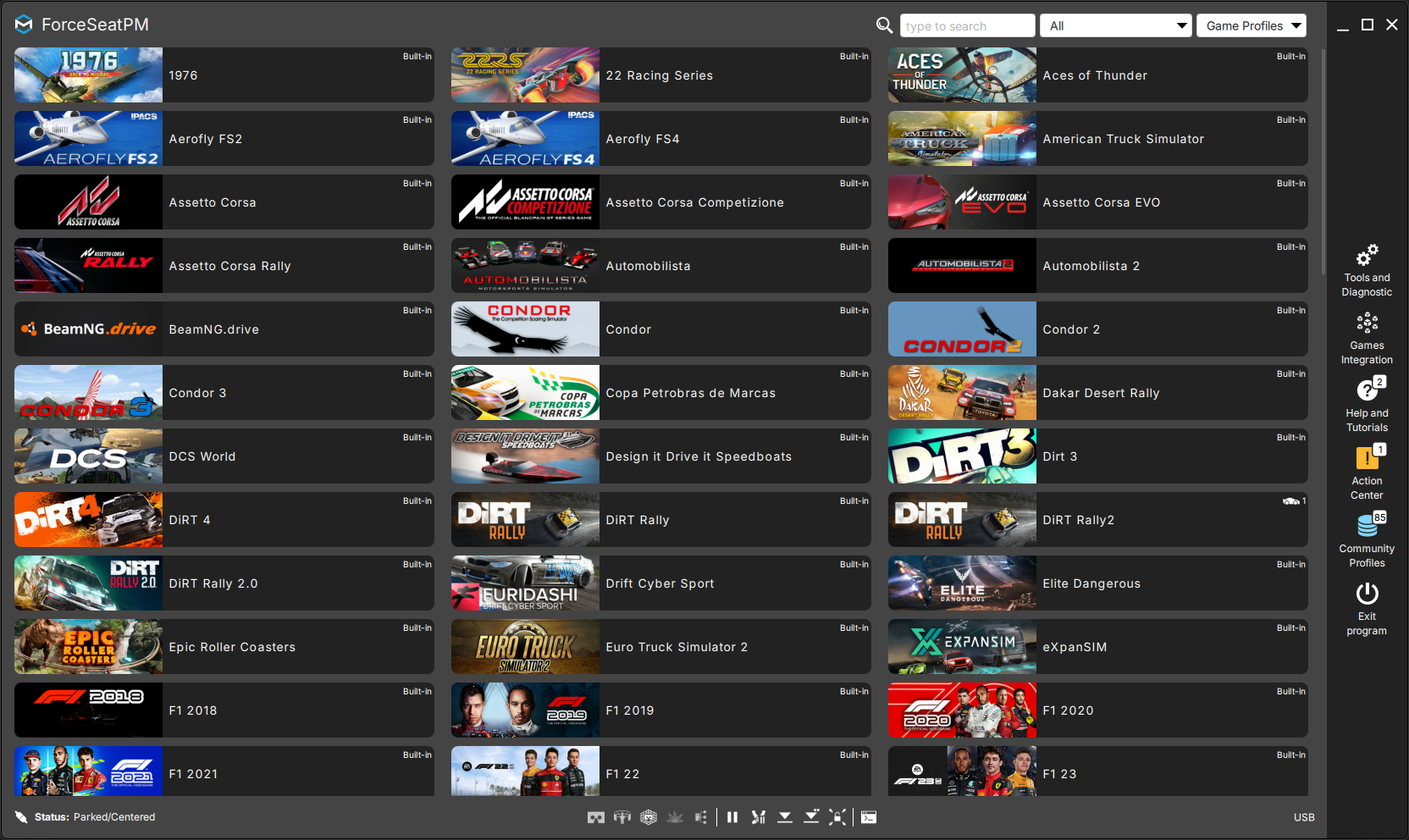
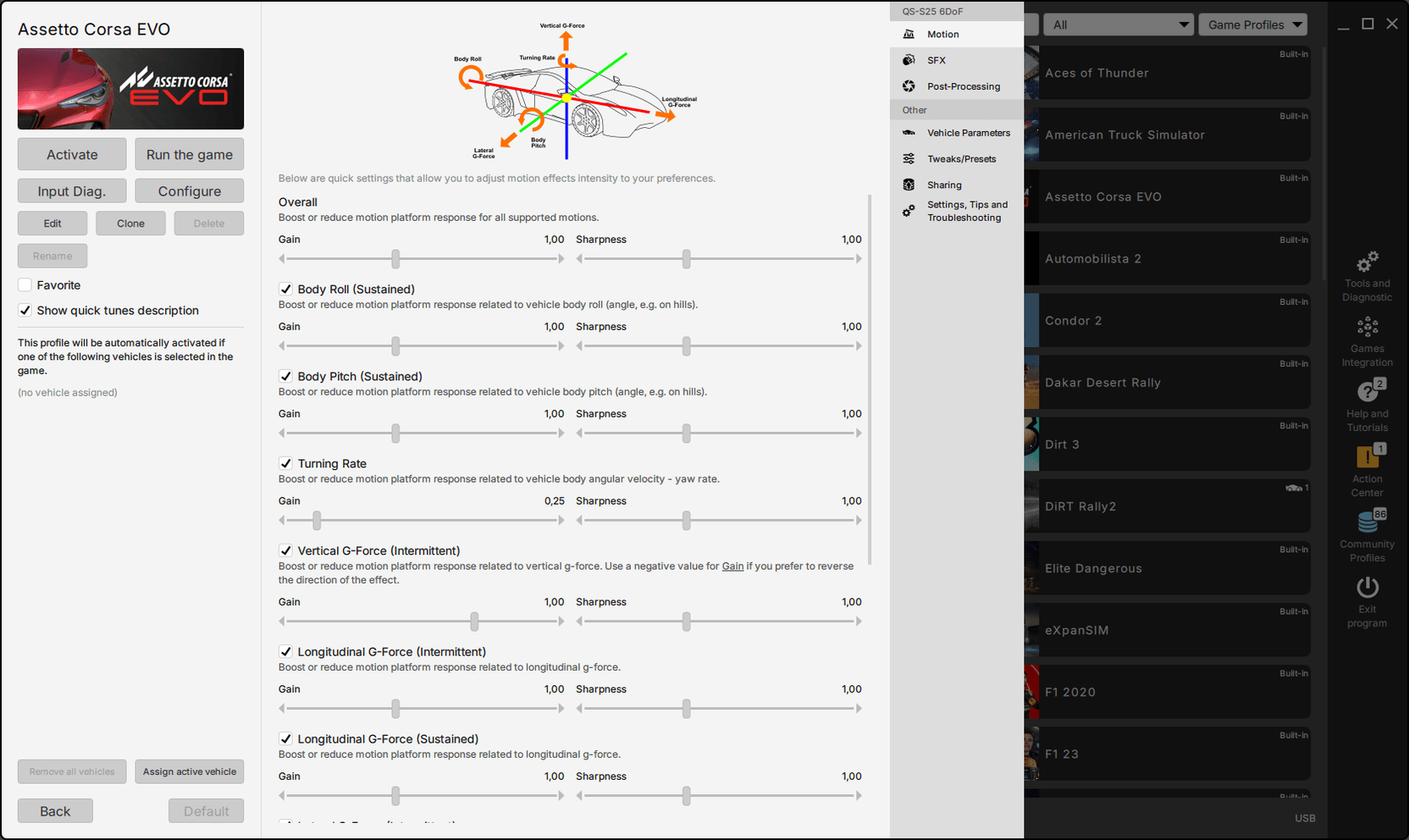
Powered by ForceSeatPM, with 154+ commercial and entertainment simulators supported out of the box. The ForceSeatMI license, held per motion platform with the key on the PC, adds native SDK access for custom logic in C++, C#, Python, Unity and UE5.

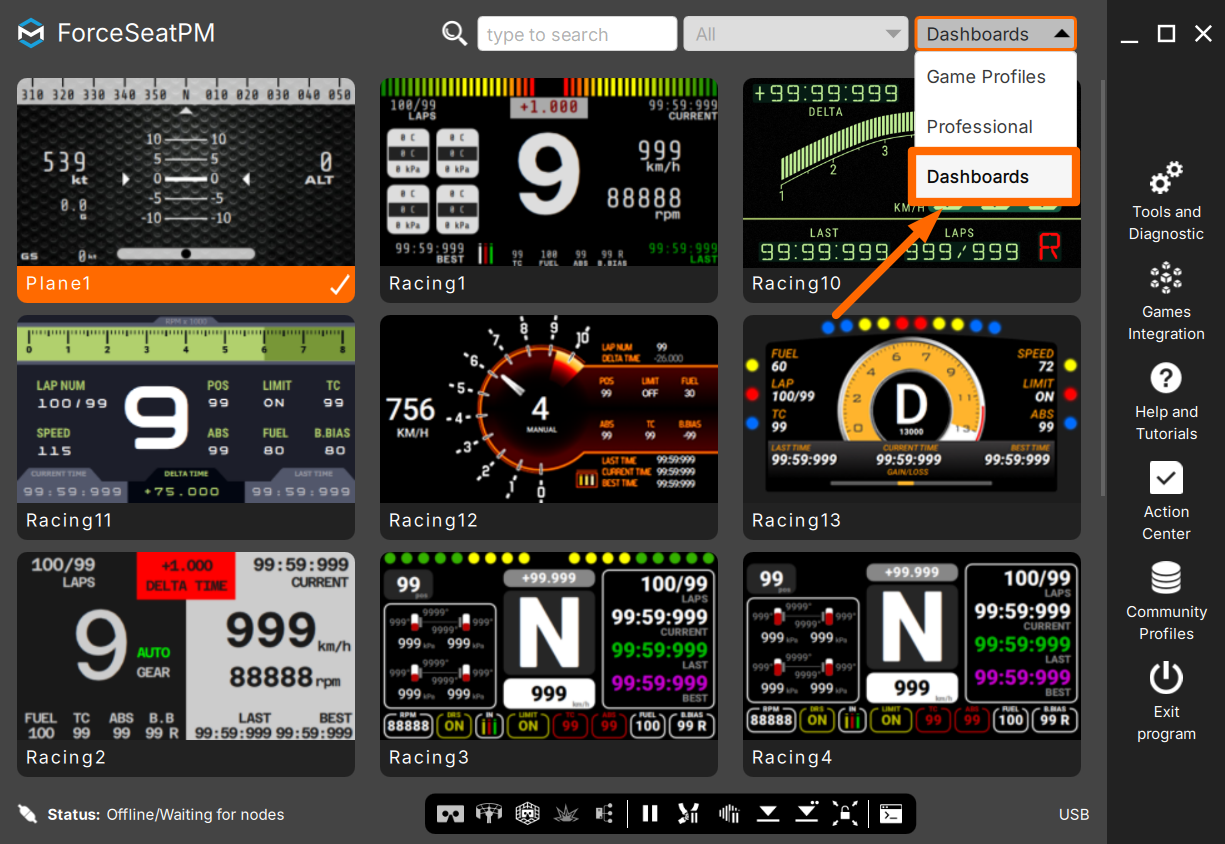
Main DashboardGame ProfilesCloud DatabaseDiagnostics
DashboardsDashboards
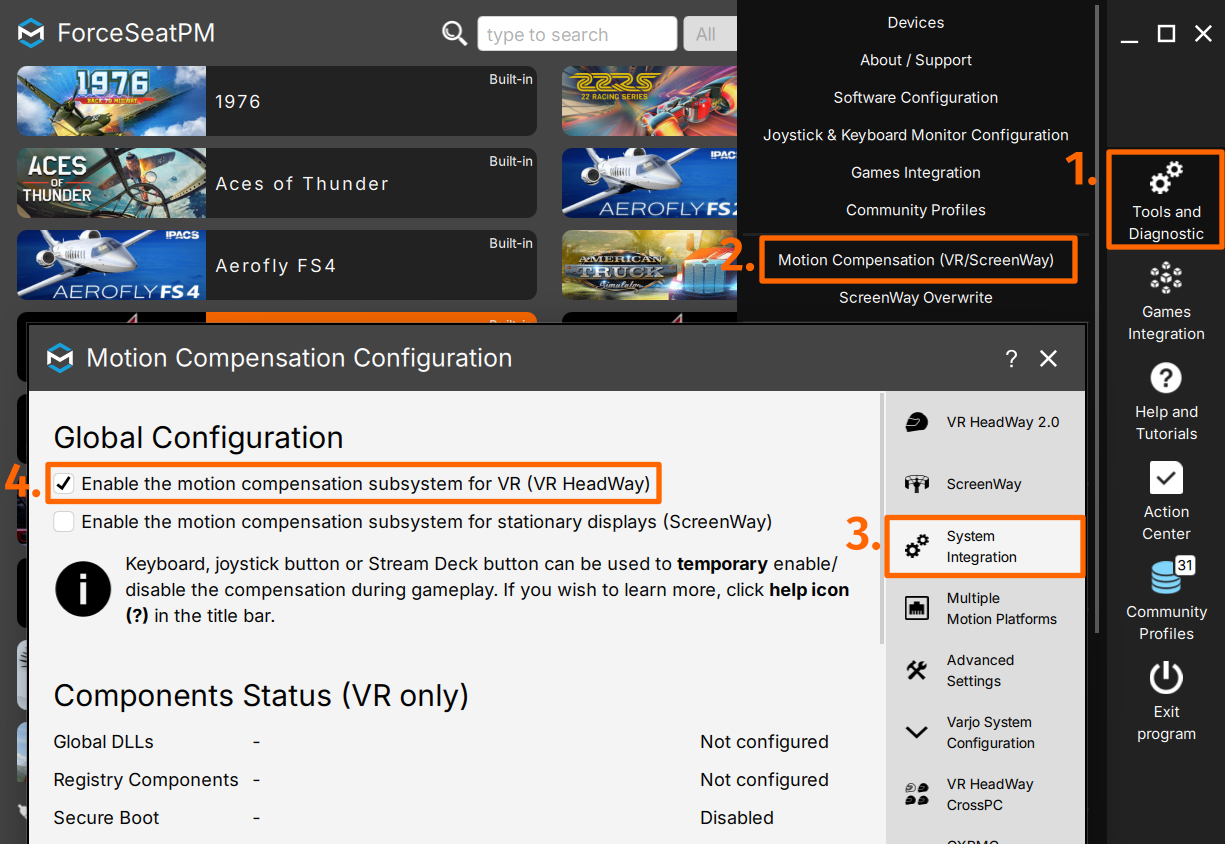
VR HeadWayVR HeadWay
Control ProtocolControl Protocol
Post ProcessingPost Processing
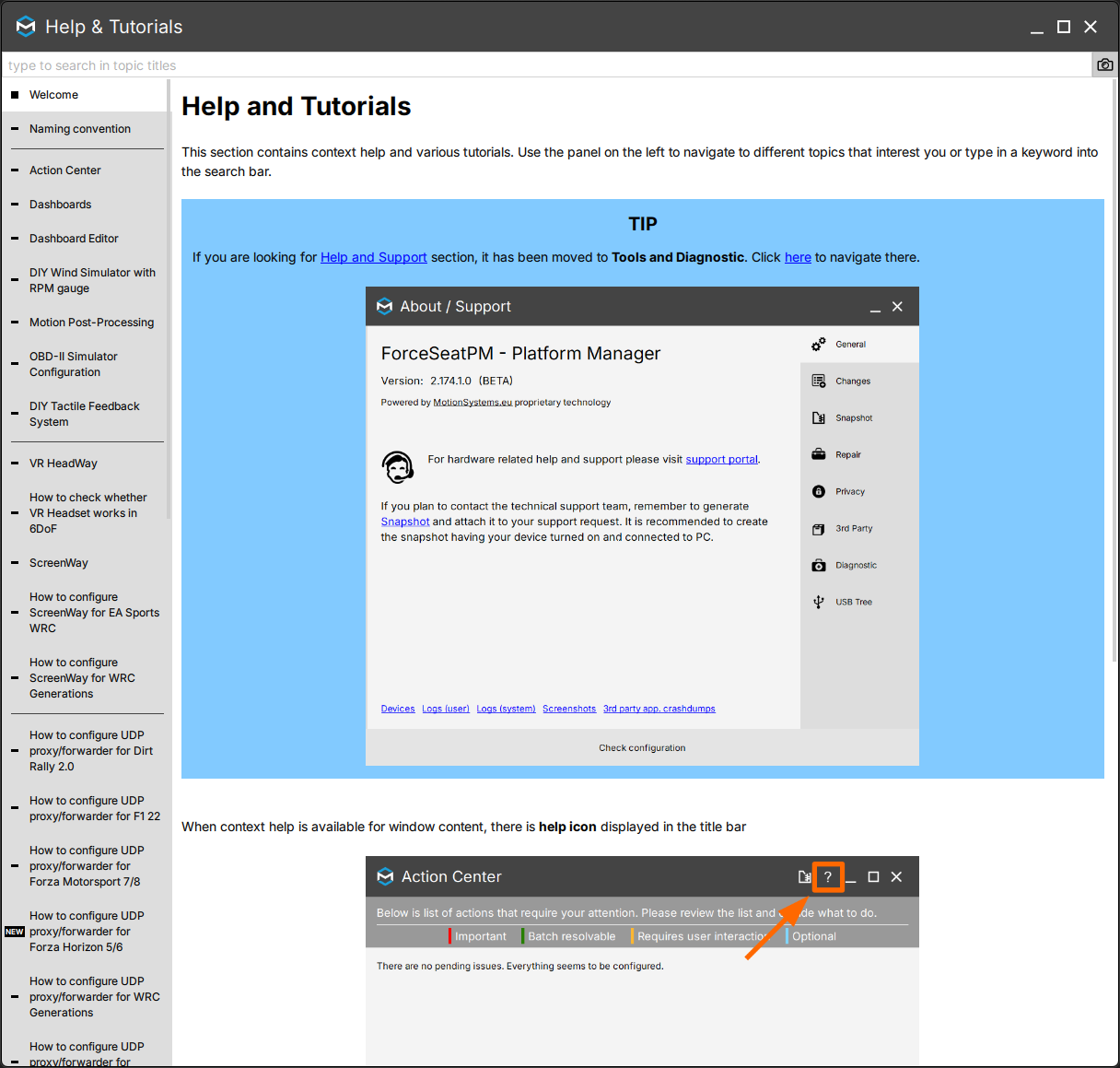
Every ForceSeatPM feature and tutorial is documented in the Knowledge Hub.Browse the tutorials →
Package & Options

What's in the Box.

Hardware, software and licenses included with every unit - plus the optional add-ons available on this model.

Hardware

  • QS-H13 Unit
    A compact 33 kg seat mover that tilts the seat itself - pitch and roll under the driver. The lightest route into motion.
  • Seat-Mount Top Frame
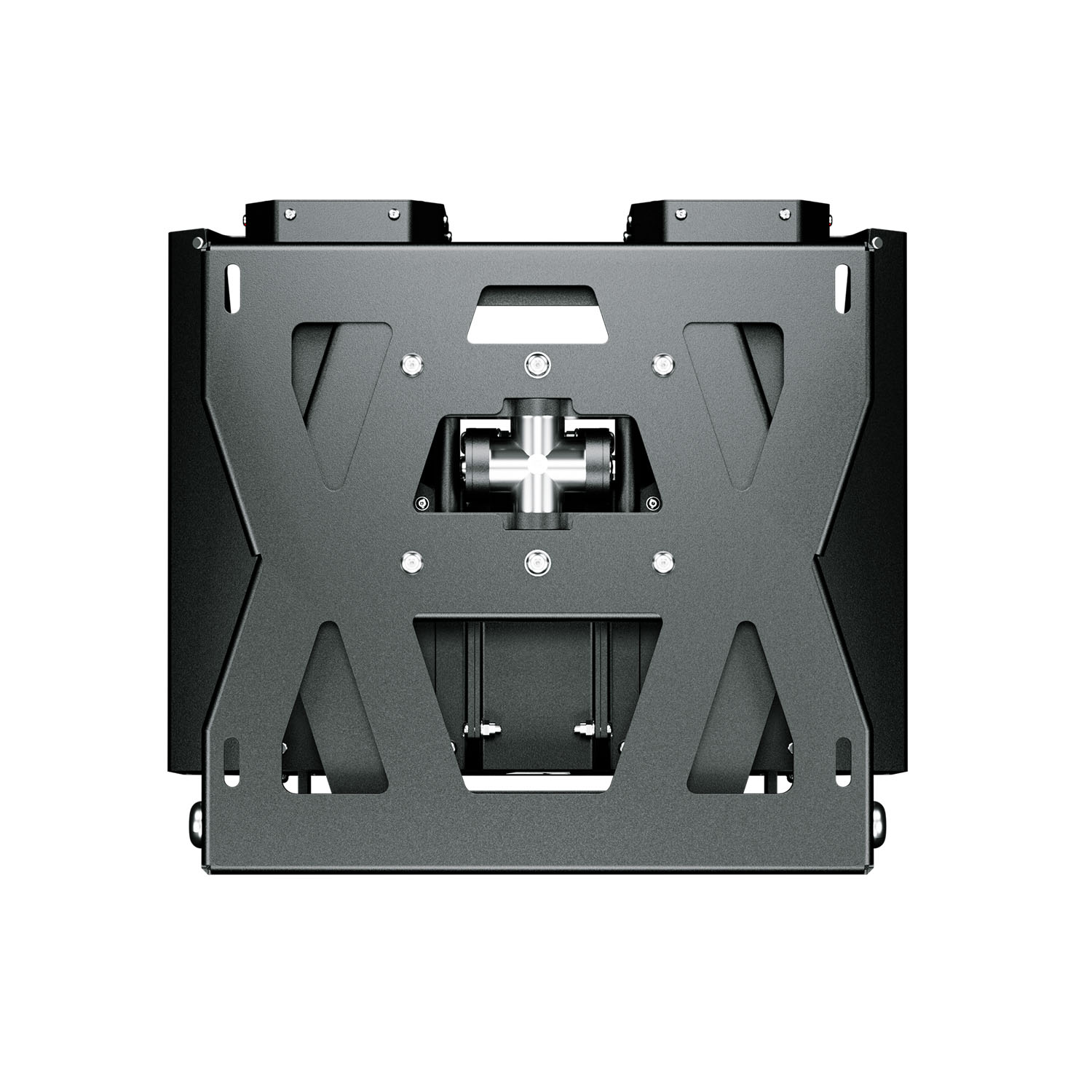
    The tilt frame the seat bolts onto, transferring the unit's motion to the occupant. Only the seat mounts here - the user's legs rest on the rig or floor, never on the moving frame.
  • Power Supply
    An external 480 W power supply running the unit from a 120/230 V wall outlet - no power cabinet, no three-phase feed. In the powered seat-lock position the draw is negligible, so it can stay plugged in between sessions.
  • USB Cable
    A direct USB link to the host PC - one connection brings the unit online.
  • Mounting Brackets
    Universal adapters bolting the unit onto a 40 mm T-slot aluminum rig, with three height positions per side - flip them over for extra range. Adapters for the QS-BT1 belt tensioner are already in the set.
  • Motion-Lock Cable + Jumper
    A Motion-Lock interlink cable plus jumper, so the unit joins a rig's lock circuit or runs standalone.

Software & Licenses

  • ForceSeatPM
    Auto-detects 154+ supported games with pre-tuned profiles. Included free, with free software updates.
  • Sim Profiles
    Pre-tuned motion profiles for the popular sims and games, so the first session already feels right.
  • ACE
    The motion cueing engine that turns simulator telemetry into felt acceleration - the sharp onset of a bend or brake on the platform, with sustained forces held by coordinated tilt rather than a crude static roll.
  • VR HeadWay
    VR motion compensation that cancels the platform's own movement from the headset, so the view stays stable and motion sickness stays low. Included free.
  • Docs & References
    Technical docs and mounting references to design the rig around exact mounting points. Complete CE-marked equipment (EMC 2014/30/EU) - tested to run without disturbing nearby VR tracking, radio or wireless links.
  • 12-Mo Warranty
    12-month commercial warranty, extendable on request; retail and consumer get the standard 24 months. Free software updates throughout.

Optional Hardware

  • Motion-Lock
    A hardware stop switch in place of the bundled jumper - press it and motion stops at once. A status LED flashes while active, steady when stopped.
    80

Optional Software and Services

  • ForceSeatMI - Motion SDK
    Motion SDK to drive the platform from custom software on top of ForceSeatPM. Licensed per motion platform, with the key stored on the PC; multiple platforms on that PC mirror the same motion.
    850
  • ForceSeatDI - Direct Interface SDK
    Low-level SDK that drives the hardware directly, without ForceSeatPM - each platform driven independently, on Windows, Linux or Raspberry Pi. Licensed per platform, with the key stored on the motion controller.
    2 750
  • Remote Training (online)
    Six-hour online session - overview, safety, operation, maintenance, ForceSeatPM setup, diagnostics and tuning. Per session.
    1 800
  • VR HeadWay CrossPC
    A paid VR add-on, licensed separately from the base VR HeadWay. One CrossPC license covers exactly two VR users on a shared platform - each seat has its own rendering PC and geometry-correct compensation (for example pilot and copilot). More seats need an additional license.
    1 900
  • Motion Theater
    Plays pre-authored motion with video or group sessions - for theaters, attractions and briefings, not live sim. Per platform.
    1 300
  • More Options
    Profile packs, installation, reports, extended warranty and bespoke development - talk to the Motion Systems team to tailor it.
    On request
Full immersion experience

Feel the forces the motion generates.

The QS-BT1 Seat Belt Tensioner pulls on the racing harness in sync with the motion - braking, cornering and traction loss on track, climbs and G-loading in flight, all become physical. Fully compatible with the QS-H13.

  • 200 N (20.5 kg) pull per channel - two independent channels
  • Direct-drive: no gearbox backlash, precise torque control
  • Whisper-quiet, built on Qubic System drive technology
  • RGB status lighting - brake, reverse, force, yellow-flag and DRS cues
  • Plug-and-play on supported titles: bolt on the included brackets, fit the seat harness, connect USB, and drive
Explore the QS-BT1
QS-BT1 Seat Belt Tensioner
Deep Dive

How It Works.

QS-H13 · Seat Mover

The QS-H13 seat mover drives motion with two gearless PMSM electric linear actuators that tilt a top frame bolted straight to the racing seat. One actuator works each side, so coordinated extension and retraction tilts the seat in pitch and roll while the wheelbase, pedals and monitors stay fixed and the hands keep a constant reference on the wheel. With the feet on the fixed pedal tray - never on the moving frame, per the manual - the seat carries only the seated occupant's weight.

The same two actuators also generate vibration, layering road texture, curbs and engine feel into the seat without a separate shaker. Drive electronics sit inside the 33 kg unit, which connects USB-direct to the host PC and runs from an external 120/230 V supply, with no power cabinet to wire. ForceSeatPM streams telemetry to the seat mover, and it layers on top of a motion cockpit - a QS-210, QS-220 or QS-CH2 rig, or a third-party actuator platform - for compounded immersion.

A Motion-Lock switch parks the seat mover, and the frame settles gently into its resting position before the operator steps clear.

Comparison

Compare Lineup

Side-by-side technical data. Toggle Differences only to highlight the higher values.

Target
QS-H13
Compare with
QS-CH2
Specifications
Degrees of Freedom
2DOFQS-H13
2DOFQS-CH2
Max Payload
N/AQS-H13
300 kgQS-CH2
Max User Weight
130 kgQS-H13
N/AQS-CH2
Power Supply
120/230V AC, 1-phaseQS-H13
120/230V AC, 1-phaseQS-CH2
Core Technology
Seat MoverQS-H13
Linear ActuatorQS-CH2
Wheels and Feet
N/AQS-H13
YesQS-CH2
Frequently Asked

Questions the team gets first.

Setup, supported titles, latency and software integration - answered up front, ahead of the first call.

Qubic System sets up in hours: the platform and ForceSeatPM auto-detect supported simulator titles with pre-tuned profiles, no code required. The customer supplies the PC, title and controls; the ForceSeat SDK covers custom integration.

ForceSeatPM auto-detects a wide range of supported simulator titles with pre-tuned profiles, and the ForceSeat SDK and API cover custom telemetry for bespoke integrations.

Yes. Qubic System accepts add-ons such as the QS-BT1 seat-belt tensioner and the QS-CH2 module, so a rig can extend the effects and axes it delivers over time.

The ForceSeat SDK streams telemetry in C, C++, C# and Python with Unity and Unreal Engine plugins, and the Hardware Imitator M10 lets integration code be written and validated in days, before the platform arrives.

Qubic System hardware is often in stock and typically ships within 1-3 weeks, with the exact date confirmed at order. Integration work does not have to wait for delivery - the ForceSeat SDK lets custom development start ahead of the hardware.

Every platform ships with a warranty, diagnostic support and access to spare parts, with the exact term listed in the box above. Extended service options are available for fleet and training deployments.

Integrate the QS-H13 into the project.

One team scopes the build, carries it through integration and commissioning - with integrator partners where a full simulator is the goal - and stays involved once the rig runs in the field.

What happens next?

< 1 business day

Confirmation & initial review

A dedicated account manager reads the message directly.

2-3 business days

Technical assessment

The team analyzes feasibility and prepares questions or an initial concept.

5-10 business days

Proposal delivery

Detailed technical proposal with a platform recommendation, transparent pricing, lead time, and integration timeline.

Ongoing

Team support

Ongoing support from the team behind the recommended platform - for the life of the project.