The most important thing to know before buying a motion platform is that the spec sheet is the last document to read, not the first. The decision starts with the task the simulator has to teach and the cabin it has to carry, and only then moves to degrees of freedom, payload, latency, and price. Buyers who reverse that order pick a number off a brochure and discover the mismatch after the platform is bolted to the floor.
This article walks through seven things a first-time buyer should settle before the first vendor conversation. It is written for anyone meeting motion procurement for the first time - a sim racer pricing a motion cockpit, an integrator scoping a first training simulator, a researcher specifying lab equipment. The examples come from two product lines built by Motion Systems that sit at opposite ends of the same idea: Qubic System, an industrial-grade compact line for sim racing, VR, driver training, and R&D, and the Professional Series for heavy cabins and professional training. The point of preparing is simple. A buyer who arrives understanding these seven things talks to a vendor as a peer; a buyer who does not pays for the education later, in budget overruns and a platform that almost fits.
Key takeaways
- Define the training task before the hardware - the sensations the simulator must reproduce decide everything downstream, including how many axes a project needs.
- Cabin weight is the one number that changes which platforms are even possible. Weigh it, do not guess it.
- More degrees of freedom is not automatically better; a well-tuned 3DOF platform beats a badly tuned 6DOF one.
- Three costs hide behind the purchase price: rig rigidity, the right power supply, and floor space - budget them before, not after.
What should a buyer look for when buying a motion platform?
Start with the job, not the gear. The first thing to settle is what the simulator is actually for - which forces of real operation the trainee or driver has to feel and learn to react to. A rail operator rehearsing emergency braking needs strong longitudinal cues. A pilot practicing a stall needs the buffet and the pitch onset. A sim racer needs to feel the rear step out the instant the screen shows it. Each task has its own motion signature, and that signature, defined in plain language before any vendor call, drives every later decision about axes, payload, and platform class.
This matters because vendors respond to clarity. A buyer who opens with "we train fleet drivers on emergency stops and skid recovery" gets a focused recommendation. A buyer who opens with "what is the best 6DOF platform available?" invites an upsell, because the question contains no information to push back against. The motion signature is the buyer's anchor in the conversation. Without it, the spec sheet leads the discussion, and the spec sheet is written to sell, not to fit.
A buyer does not need every answer before reaching out. Two or three pieces of information are enough to start a useful conversation: a short description of what the simulator does, roughly how heavy the cabin will be, and when the project needs to go live. Everything else is what the first conversation is for.
How many degrees of freedom does a project actually need?
A project needs the degrees of freedom the task requires, and no more. Degrees of freedom (DOF) describe the independent ways a platform can move - the six are pitch, roll, yaw (rotational) and surge, sway, heave (translational). The industry shorthand that treats 6DOF as premium and 2DOF as budget gets the decision backwards. The right count tracks the motion signature, not the price tier.
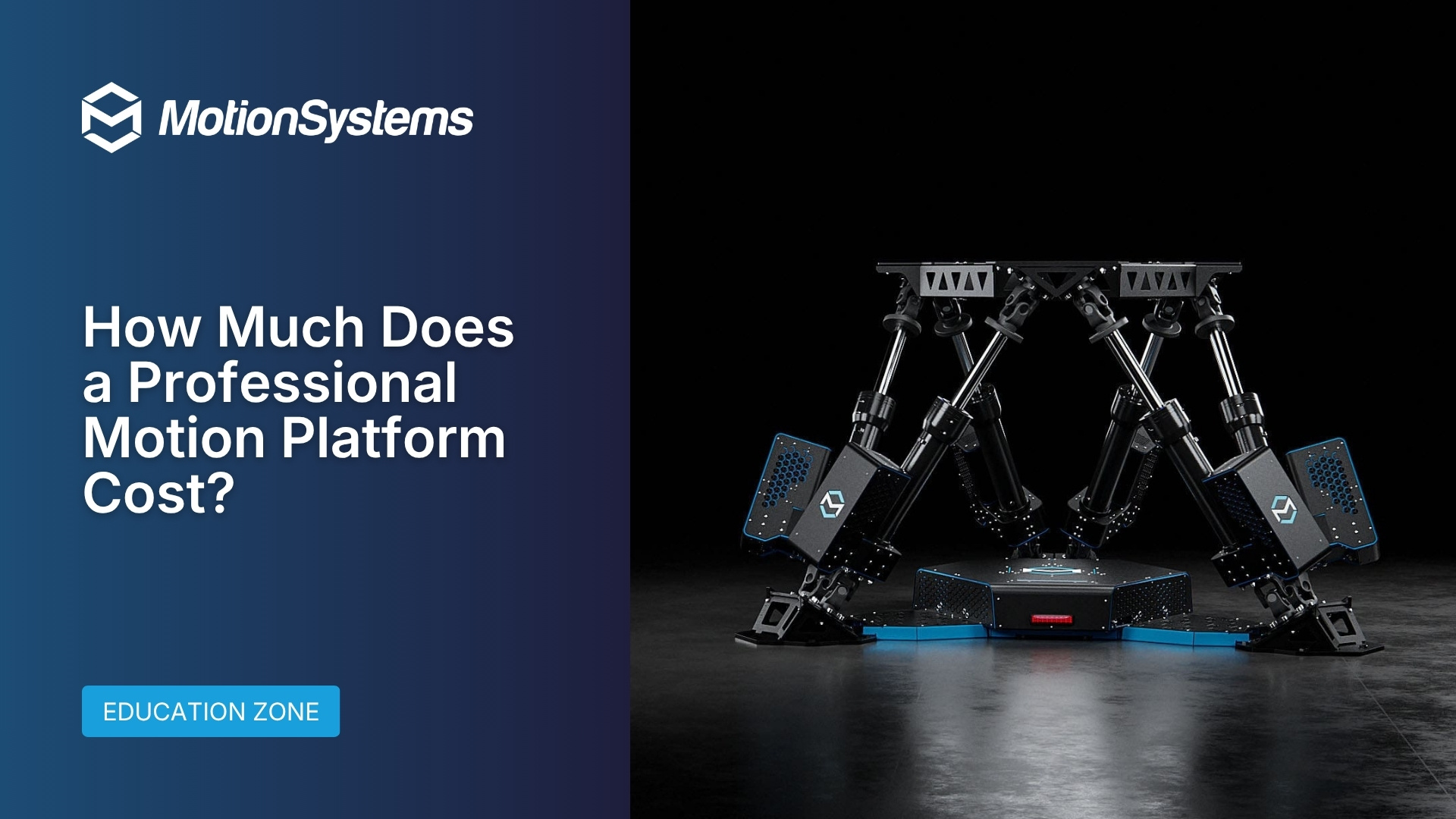
This is where most first-time buyers go wrong in both directions. Over-specification is the common one: a team feels safer with six axes because six is more than three, then pays for the extra axes in purchase price, power draw, floor space, control complexity, and service burden - with no training benefit if the task never exploits them. Under-specification is the opposite trap: a program that needs strong vertical cues ends up on a tilt-only platform and feels the cue in the wrong place, so instructors stop trusting the simulator. The two product lines map the range cleanly. A compact QS-220 delivers 2-3DOF for sim racing; the QS-V20 adds a fourth axis for traction loss; a Professional Series PS-3TM-200 covers fleet driver training in 3DOF, while a 6DOF PS-6TL-1500 carries a full cabin for certified flight training.
Tip - the 6DOF question, answered in one line. A well-tuned 3DOF platform with professional cueing software delivers a more convincing experience than a poorly calibrated 6DOF system running basic algorithms. The quality of the whole signal chain matters as much as the number of axes. The question to ask is what the trainee needs to feel, then count axes - never the reverse.
Does a rig need reinforcing before adding motion?
Almost certainly, yes - and this is the cost first-time buyers miss most often. A motion platform moves its mounting surface; it does not turn whatever is bolted on top into a stiff structure. If the cockpit or cabin floor flexes during pitch and roll, the actuators waste their energy bending the chassis instead of moving the operator. The fine cues vanish, the feel goes mushy, and the fasteners take cyclic loads that shorten the machine's life. Structural rigidity is the buyer's responsibility, decided at cabin design, not after delivery.
The mechanism is worth understanding because it traps people who did everything else right. The platform transmits motion through defined mounting points on its top frame, and the top frame is an interface, not a load-bearing element - it does not stiffen anything. The cabin floor has to span those mounting points as a rigid structural member. A floor wider than the top frame is normal and expected. What is not acceptable is an aesthetic shell over a flexible base, because the flex absorbs the very motion the platform was bought to deliver.
Feature to consequence. The platform delivers calibrated movement through its mounting interface, which means a stiff cabin floor receives that movement intact and the driver feels every cue. Without a rigid floor, the actuators spend their force flexing the chassis, the fine motion is lost before it reaches the seat, and the fastener cycling quietly erodes mechanical life until something works loose mid-session. The fix costs nothing at the design stage and a great deal after it.
How much floor space, clearance, and power does a motion platform need?
A motion platform needs more room than its footprint suggests and, above a certain size, a dedicated power supply. Three site facts belong in the plan before purchase: floor space per station including swept clearance, ceiling height, and the electrical supply available at the installation point. Getting these wrong does not degrade the motion - it stops the install.
Space is not just the base dimensions. A platform tilts and lifts, so the cabin sweeps a volume larger than its static outline, and a low-profile design needs less ceiling clearance than a taller Stewart platform carrying the same cabin. Power is the other gating factor: compact sim-racing platforms run from standard single-phase outlets, but larger professional platforms require three-phase 400V at the installation point. That is cheap to provision during a building fit-out and expensive to add after the floor is laid. The same logic applies to the floor itself - a heavy cabin under dynamic load transmits real forces into the slab, so floor reinforcement and clearance are parallel tasks to settle while the room is still on paper.
| Qubic System (QS) | Professional Series (PS) | |
|---|---|---|
| Built for | Sim racing, VR, compact driving and training sims, R&D, defense part-task | Heavy cabins, flight and vehicle training, defense, R&D |
| Typical DOF | 2-3DOF (QS-220), 4DOF with traction loss (QS-V20), 6DOF (QS-S25) | 3DOF low-profile (PS-3TM-200) to 6DOF Stewart (PS-6TL-1500) |
| Payload class | Single cockpit and driver | Up to a full cabin (PS-6TL-1500 carries a 1350 kg payload) |
| End-to-end latency | Below 8 ms (QS-H13: below 10 ms) | Below 30 ms, measured |
| Typical power | Single-phase, standard outlet | Three-phase 400V for larger models |
| Typical lead time | Series-built; some configurations from stock | Built to order, six to ten weeks |
Will a motion platform make a driver faster, or just more immersed?
For sim racers the answer is both, in that order: immersion first, lap time second and indirectly. A motion platform does not steer the car or brake for the driver. What it does is feed the body the forces the screen cannot - the weight transfer under braking, the lateral load before a slide, the moment the rear grip lets go. Over repeated sessions the body learns to read those cues earlier, and earlier reading is what eventually shows up as consistency. The platform sharpens a skill; it does not hand over a result.
That is also the reason latency stops being a marketing bullet and becomes the spec that decides whether motion helps at all. The felt motion has to stay locked to the seen motion, because when the eyes and the inner ear disagree, the nervous system reads the mismatch as something being wrong - and the result is nausea, not faster laps. So response time is a hard design target. Across the Qubic System range, end-to-end latency runs below 8 milliseconds, fast enough that the rear stepping out arrives the instant the screen shows it. A platform that lags the visuals produces the very sensory conflict it was bought to resolve: the body feels the turn a beat after it sees it, the brain flags the error, and sessions get cut short. That is the real loss a latency number protects against - not slow movement, but the sickness and abandoned practice that arrive when motion and vision drift apart.
What is the difference between a seat mover and a full motion platform?
A seat mover moves the seat; a full motion platform moves the whole cockpit or cabin. The distinction sounds obvious and trips up buyers anyway, because both get called "motion" in marketing copy. A seat mover - or a gaming chair with rumble motors - shifts the operator relative to a fixed rig, and a rumble chair in particular produces buzz, not force. A true motion platform uses calibrated actuators to move the entire structure through controlled displacement, so the inner ear reads the output as real acceleration.
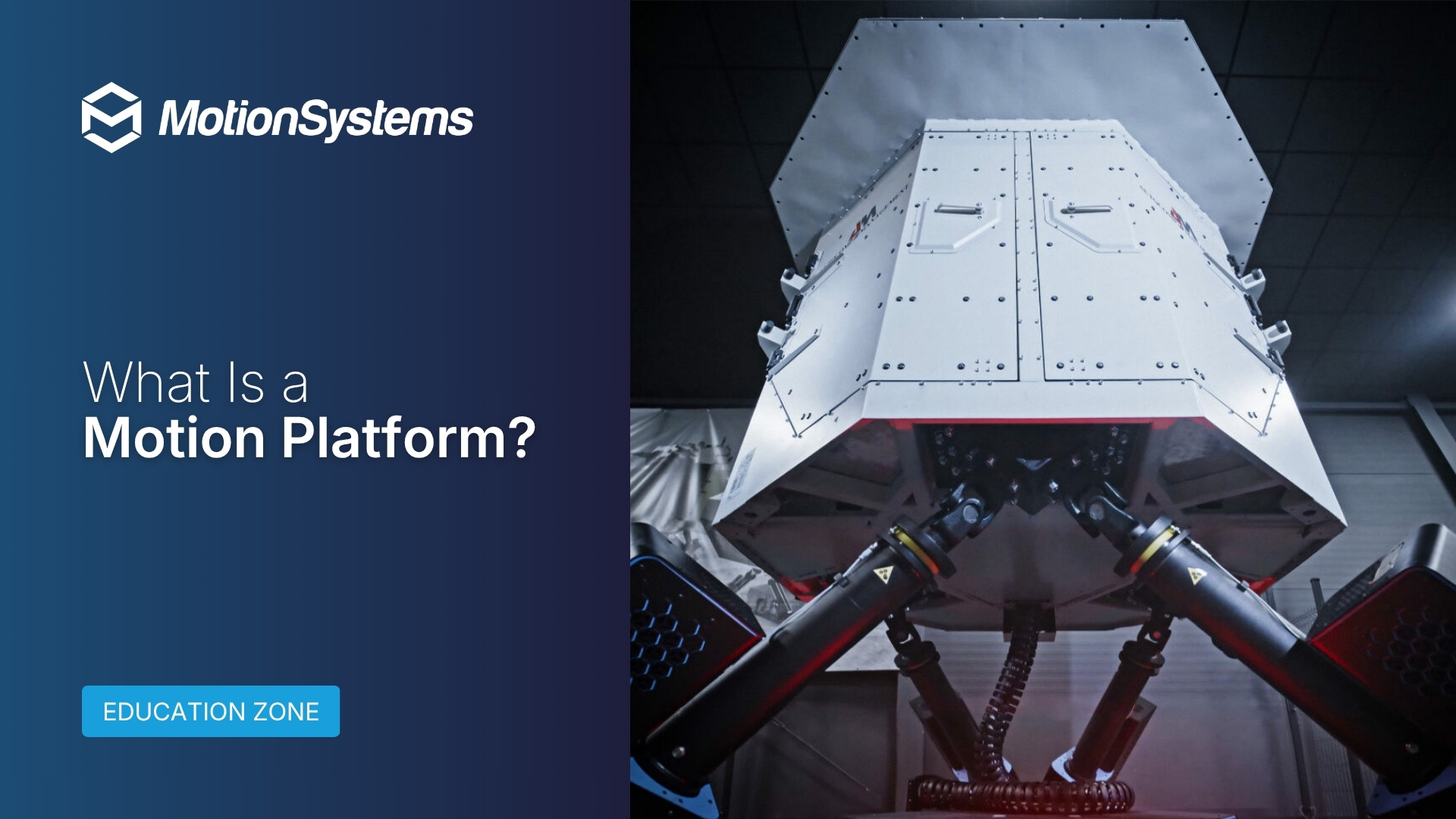
The practical consequence is what each can teach. Buzz and seat shift add sensation; they do not reproduce the coordinated forces a body uses to anticipate a vehicle's behavior. That gap is the line between a setup that feels exciting for an evening and one that builds genuine muscle memory over months. The same idea scales across both product lines: a compact platform under a single sim-racing cockpit and a 6DOF hexapod under a flight cabin are the same category of device, solving the same problem - sensory coherence between eyes and body - at very different sizes. Which one fits is a question of task and payload, not of which is objectively "better."
What is the most common mistake first-time motion buyers make?
The single most common mistake is budgeting only the purchase price. The platform is one line in a larger cost picture, and the lines a first-time buyer forgets - rig reinforcement, the right power supply, floor work, integration time, and ongoing support - are the ones that turn a comfortable budget into an overrun in the second year. The purchase price buys the machine. It does not buy the conditions the machine needs to work.
A close second is treating motion platforms as interchangeable commodities. Two platforms can list identical degrees of freedom, payload, and stroke and still deliver dramatically different results, because the things that separate them live where a datasheet cannot show them: motion cueing maturity, how the platform behaves at the edges of its envelope, the responsiveness of the team during integration, and spare-parts availability years after commissioning. An experienced operator can feel the difference within ten minutes of a structured demo. A buyer reading the spec sheet alone cannot. That is exactly why the preparation in this article matters more than any single number - and why the right move is to start small, prove the value, and scale, rather than to over-buy on a first project and hope the task grows into the hardware.
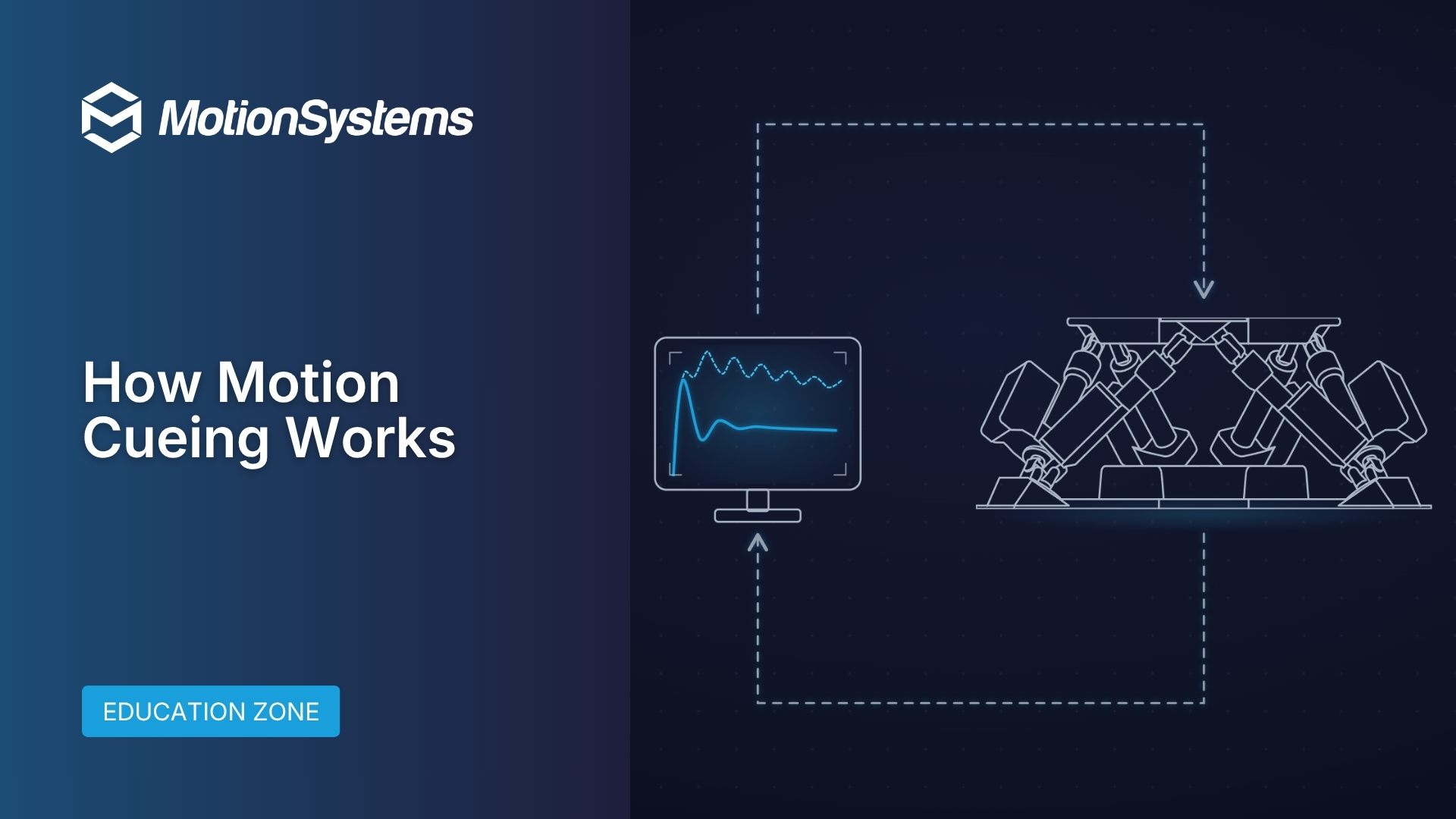
Definition - motion cueing. The software that decides how a platform moves - a real-time translator between the simulation and the hardware. The quality of this translation, more than the number of axes, separates motion that sharpens a skill from motion that only shakes the seat. It is also the hardest thing to read off a spec sheet, which is why a demo beats a brochure.
Frequently asked questions
Is 3DOF enough, or is 6DOF necessary?
For most sim racing and fleet driver training, 3DOF is enough - and a well-tuned 3DOF platform outperforms a poorly tuned 6DOF one. Stepping up to 6DOF makes sense when sustained linear forces matter, as in flight training, automotive research, or maritime simulation. The decision follows the training task and the forces the trainee must learn to read, not the prestige of more axes.
Does a cockpit need to be reinforced for a motion platform?
Almost always, yes. A motion platform moves its mounting surface but does not make the cockpit on top rigid. If the cabin floor flexes during motion, the actuators waste energy bending it instead of moving the operator, and the fine cues are lost. Rigidity is the buyer's responsibility and should be designed into the cabin floor from the start, with mounting points matched to the platform's top frame.
How much floor space and clearance should a buyer plan for?
Plan for more than the static footprint. A platform tilts and lifts, so the cabin sweeps a larger volume than its base, which calls for both swept clearance and adequate ceiling height. A low-profile platform needs less headroom than a taller Stewart design carrying the same cabin. The room should be measured in three dimensions before a model is selected.
Do motion platforms require a dedicated power circuit?
It depends on size. Compact sim-racing platforms run from a standard single-phase outlet. Larger professional platforms require three-phase 400V at the installation point. Provisioning that power during a building fit-out is inexpensive; adding it after installation is not, so the supply is worth confirming early.
What is the difference between a seat mover and a full motion platform?
A seat mover shifts the seat relative to a fixed rig; a full motion platform moves the entire cockpit or cabin through calibrated actuators. A seat mover or rumble chair adds sensation but does not reproduce the coordinated forces the inner ear reads as real acceleration. The full platform is what builds genuine muscle memory over time.
Is it possible to start small and upgrade later without replacing everything?
Often, yes, with a platform family designed for growth and a vendor whose software carries across models. Starting with a smaller configuration, proving the value, and scaling is usually wiser than over-buying on a first project. It is worth asking the vendor directly about upgrade paths and whether the integration work transfers when a larger platform is added. Before settling on a path, it is also worth watching vendor demo videos to judge setup flow, tuning, and the overall experience.