
3DOF Motion Platforms.
Three degrees of freedom - heave, pitch and roll - the axes that carry most of the perceived motion cue in driving and flight training. Fewer actuators than a hexapod means a lower deck, a simpler installation and a lower price per seat, across the Low-Profile (TM) and Qubic System series.
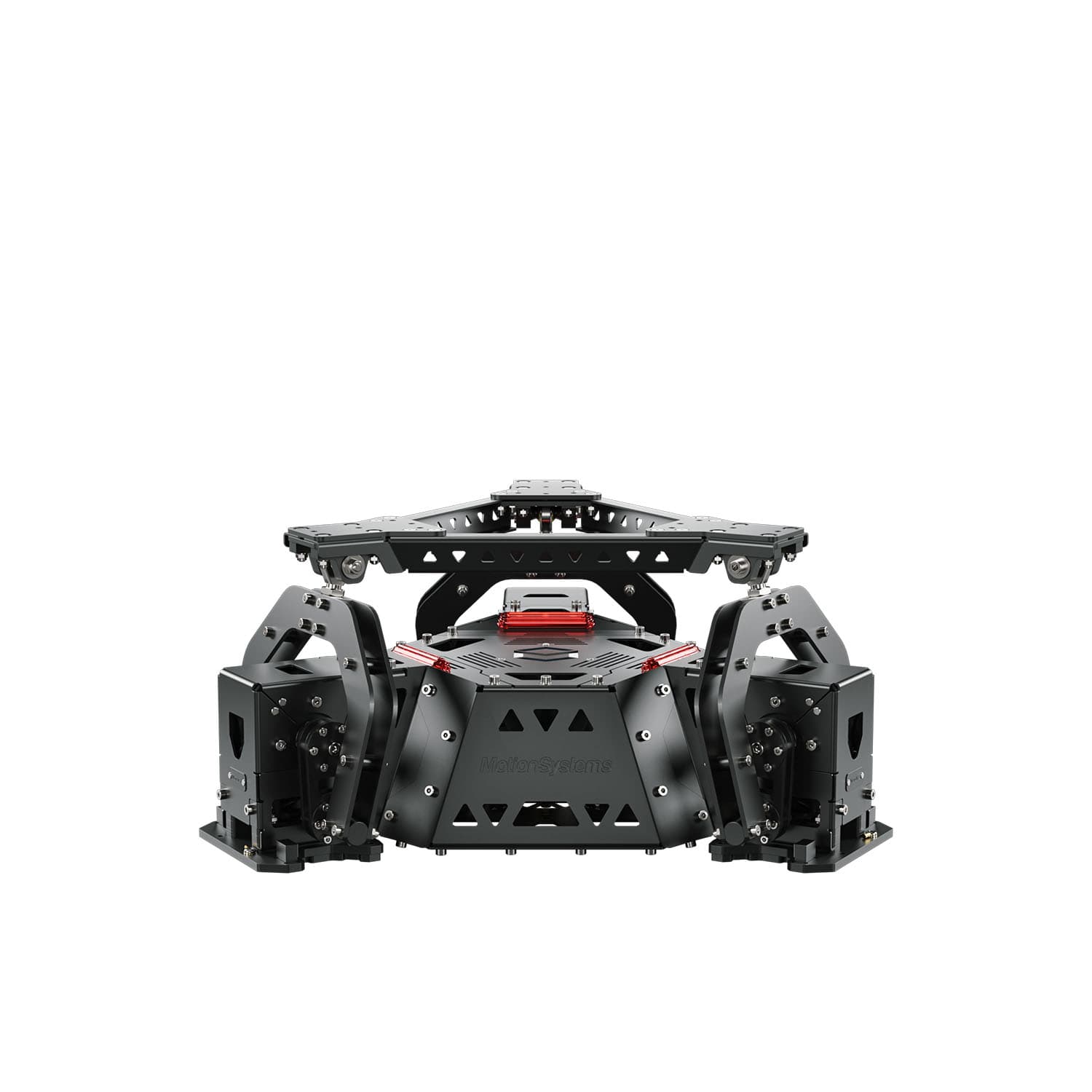
PS-3TM-200
€19 800TM Series
Sized for space-constrained installs - flight-school classrooms, VR-center kiosks, city-driving trainers. Two technicians set it up in a single morning, with no hydraulics to service.
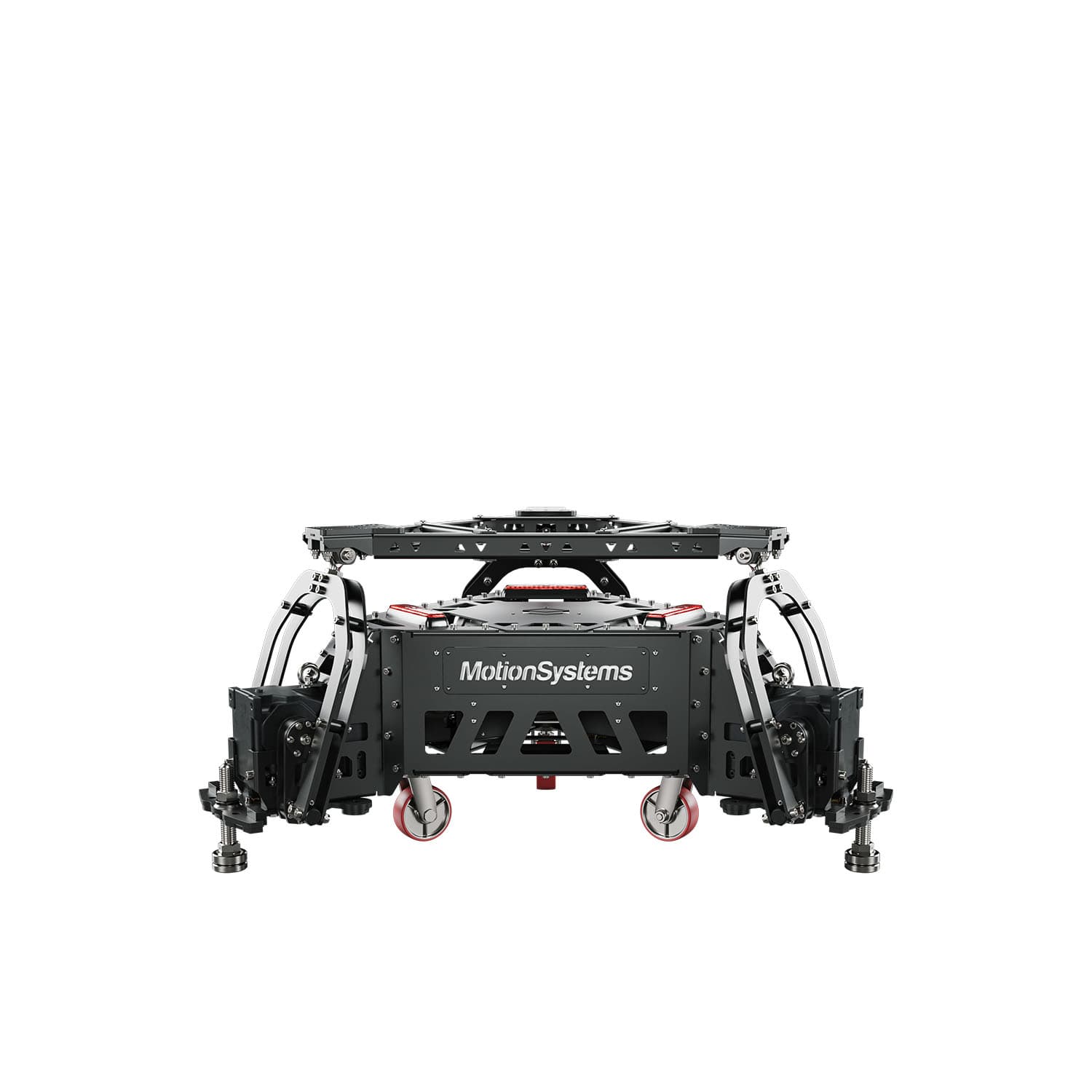
PS-3TM-350
€21 600TM Series
Mid-range tripod for single-seat training cockpits and VR or mixed-reality rigs. Quick pitch for stall and recovery work - one cabinet, no hydraulics to service.
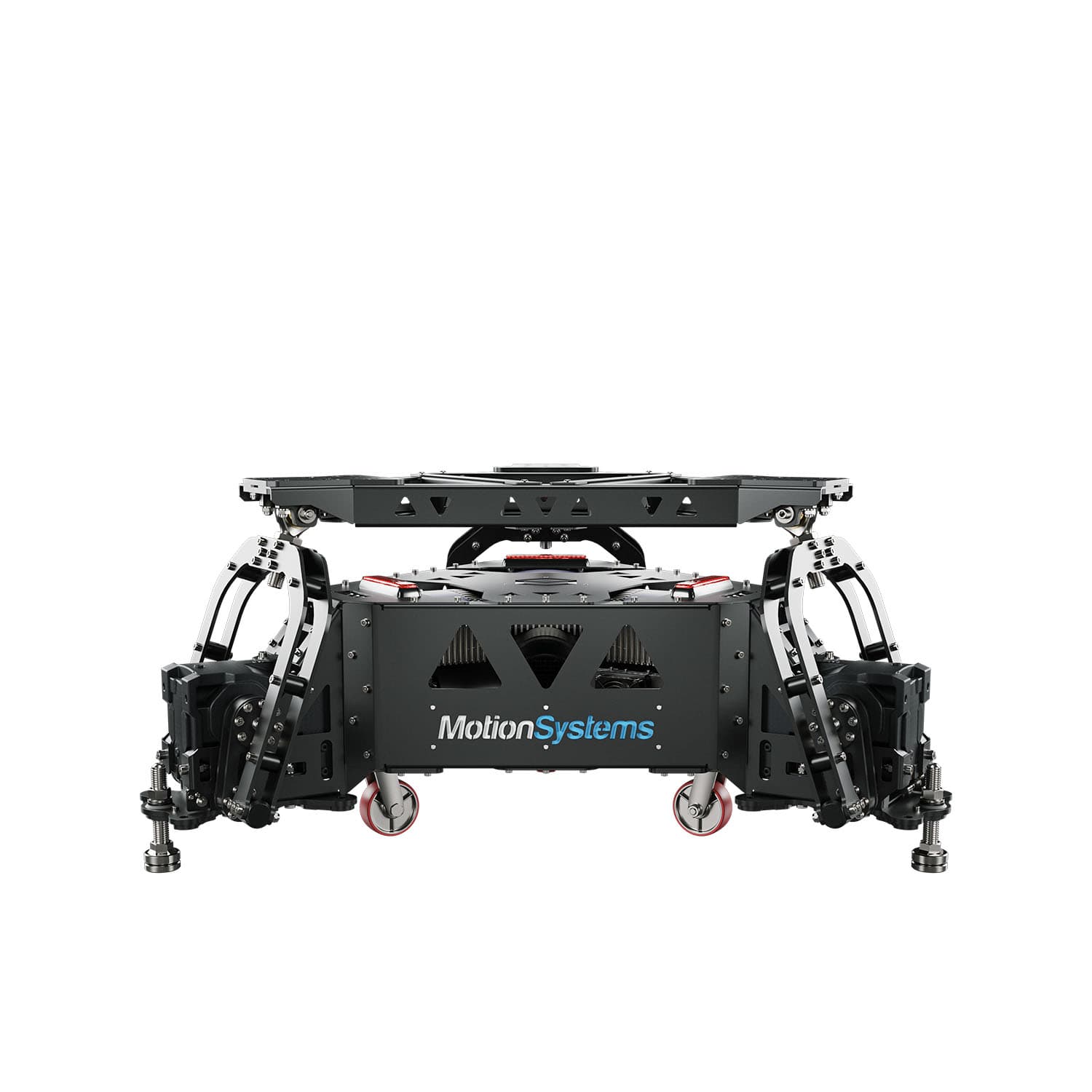
PS-3TM-550
€24 700TM Series
Built for busy training centers - a two-seat cockpit that rolls in, bolts down and runs session after session. Quiet enough to run in occupied rooms.
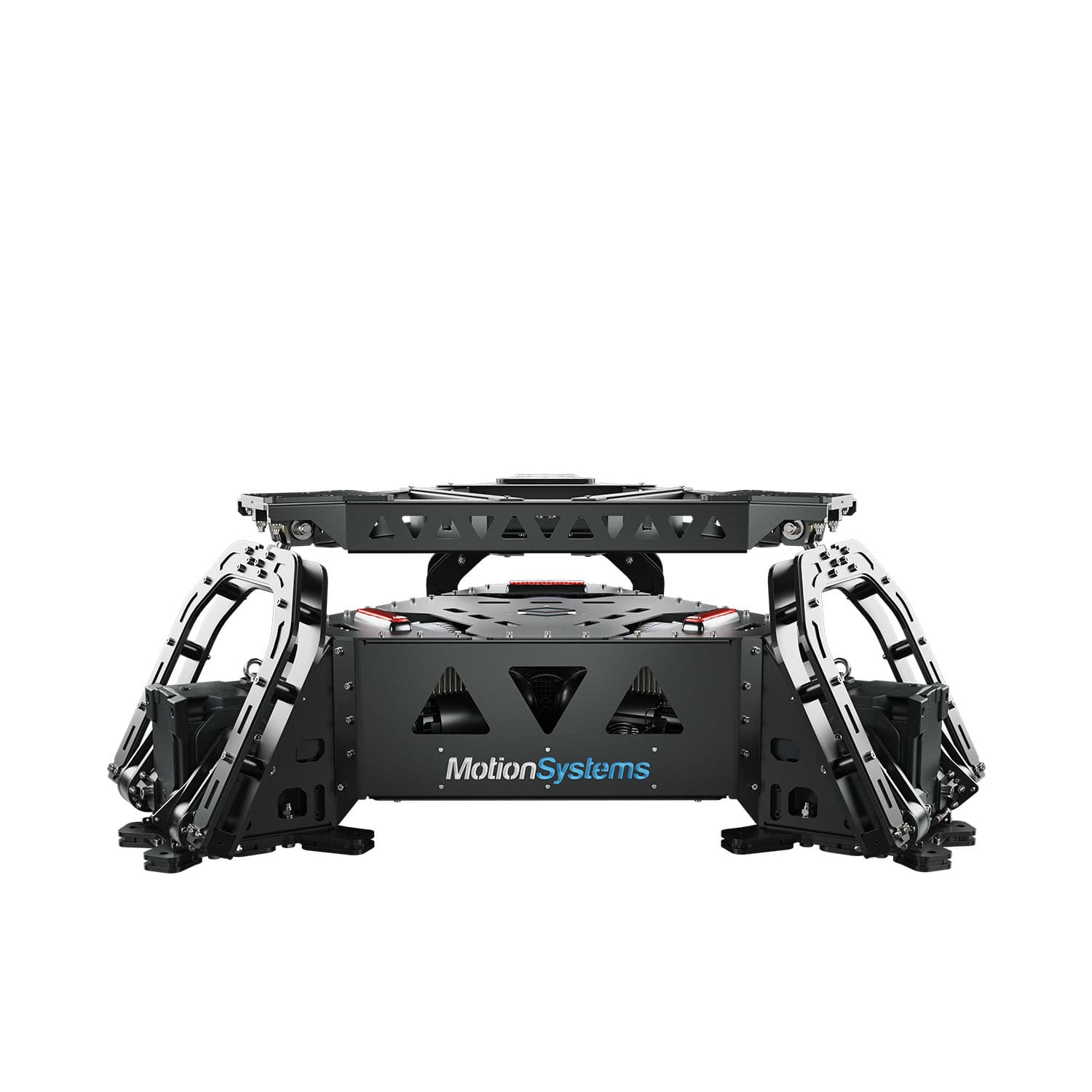
PS-3TM-1000
€36 800TM Series
For vehicle simulators and full-cabin group trainers - instructor plus three trainees in one booking. Deepest, fastest vertical travel in the 3TM line.
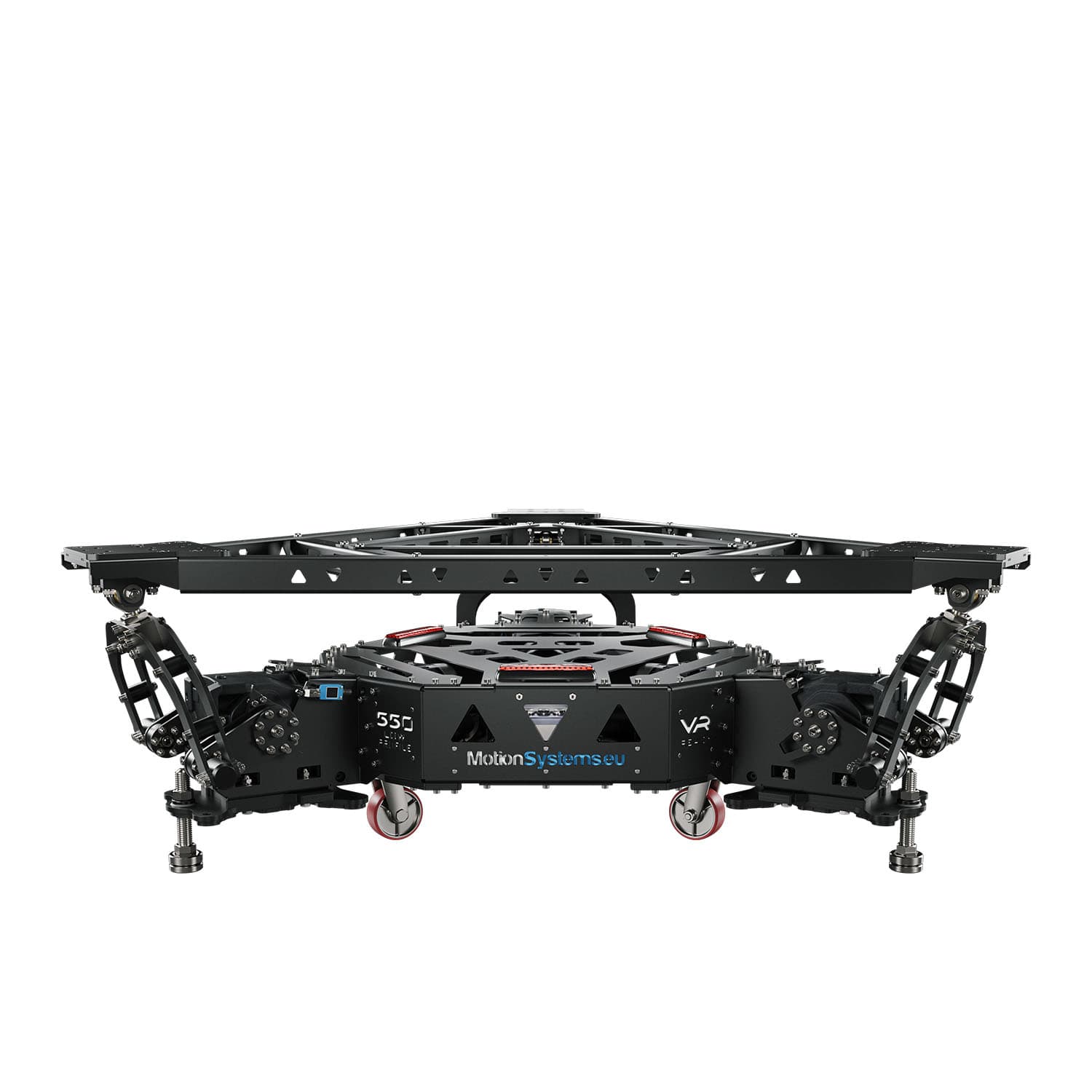
PS-3TM-LP550
€24 700TM Series
Low-profile PS-3TM-550 for low-ceiling rooms - the same two-seat cockpit on a shorter frame, sharing its cabinet, controller and spares.
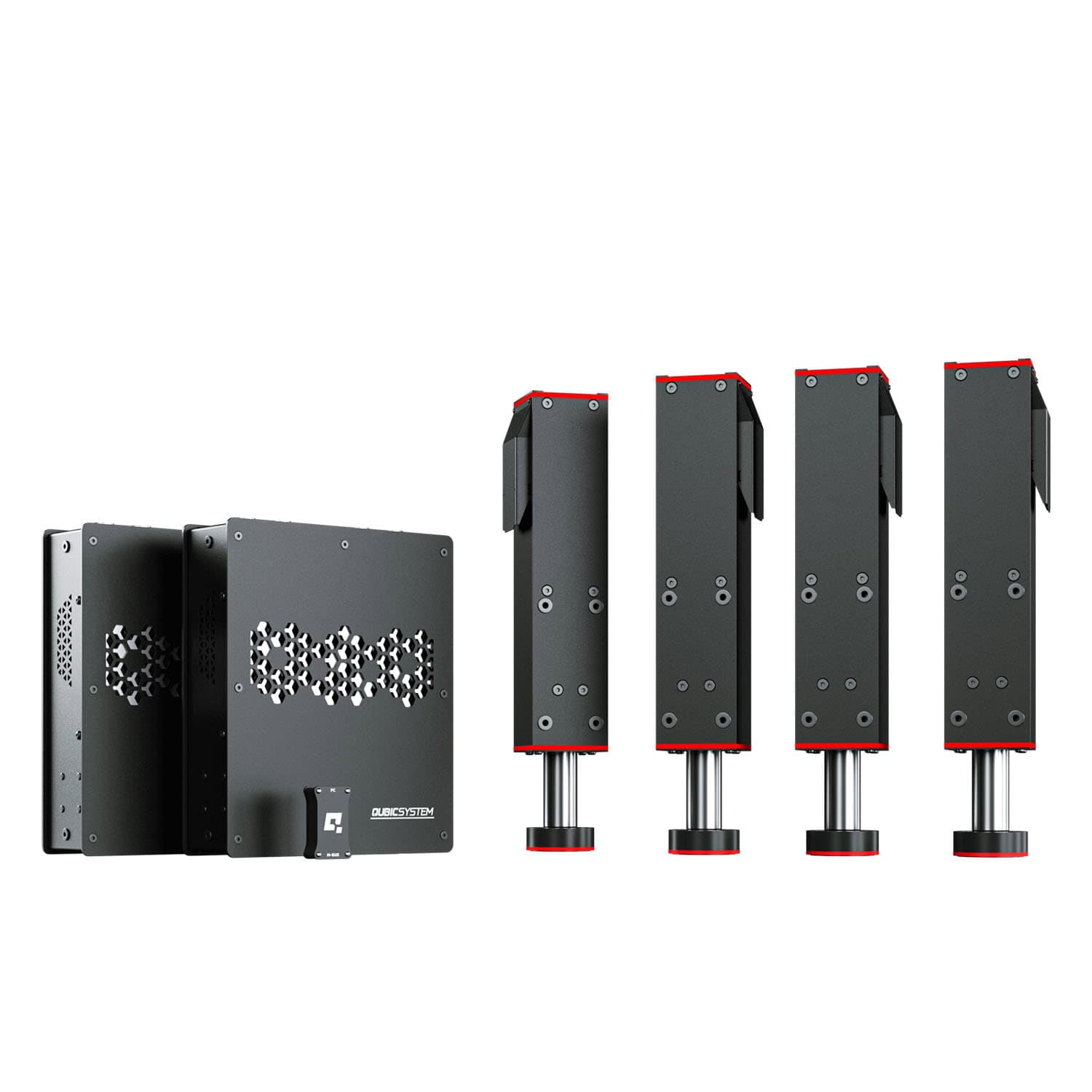
QS-210
€3 515 - €6 680Qubic System
A staged actuator set: two actuators and a pivot bar tilt the rig, a second pair adds 3DOF, a QS-CH2 stage adds traction loss - each upgrade on one controller.
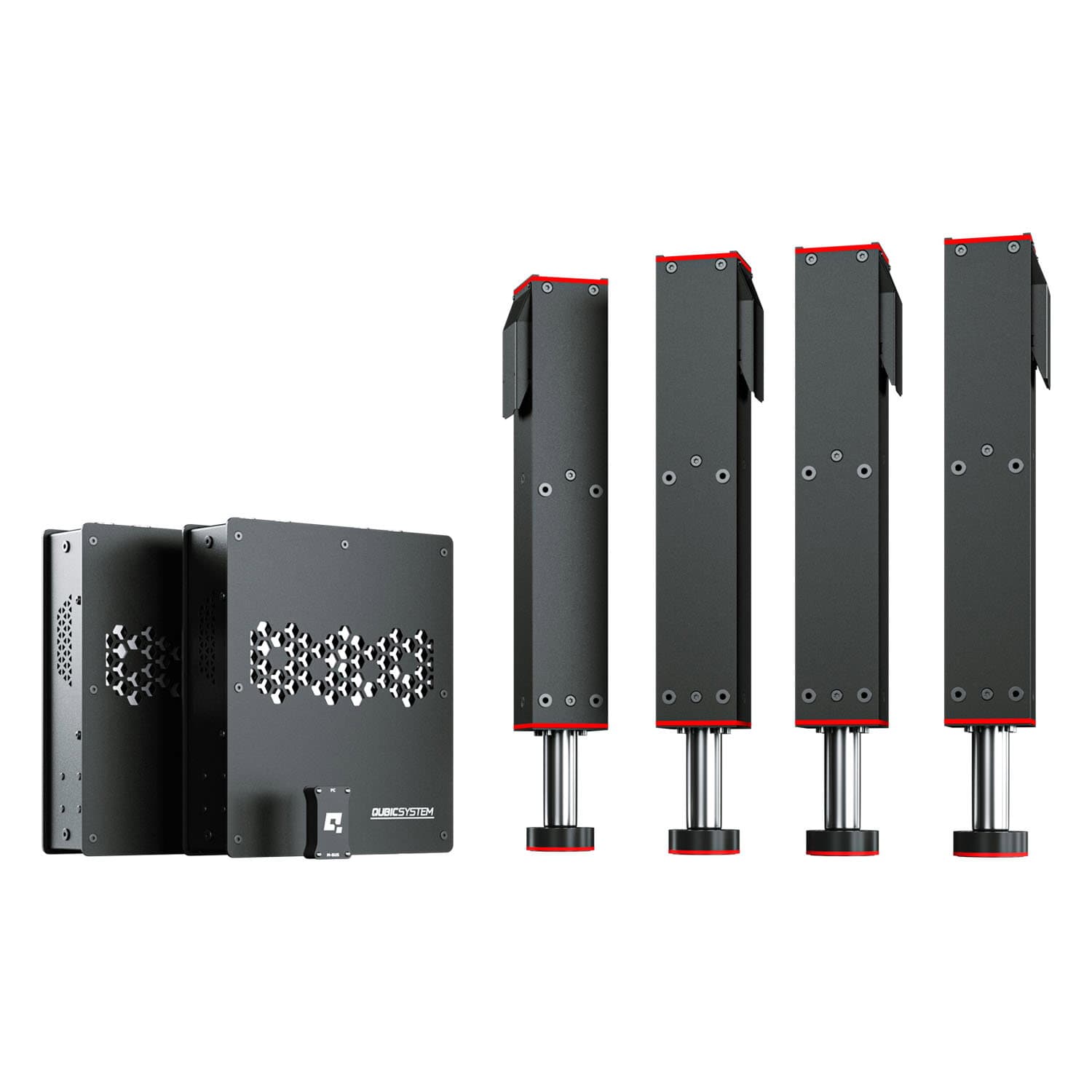
QS-220
€4 615 - €8 880Qubic System
One hardware set, three duty modes - long commercial sessions, everyday training or peak performance - for compact simulators and VR training. Sub-8ms, quiet.
Where three axes are the right answer
A 3DOF platform drives vertical travel plus the two tilt axes. Longitudinal and lateral acceleration are reproduced through tilt coordination: the platform pitches or rolls, and the component of gravity along the occupant's body stands in for the acceleration. Inside the frequency range where the human vestibular system is actually sensitive, that substitution is convincing - which is why three axes remain the most common configuration in commercial driver training and procedural flight training.
What you give up is holding a translational cue independently of attitude. Where a trainee is expected to read vehicle attitude as information, that coupling matters and six axes is the honest answer. Where the motion exists to make a scenario believable and load the body correctly, it usually does not.
The practical case is as strong as the perceptual one. Fewer actuators means less installed height, a smaller supply requirement, a shorter installation and a lower cost per seat - which is what makes multi-rig training rooms and location-based entertainment viable at all.
3DOF Motion Platforms - common questions.
What comes up most often when a project is being specified around this axis count.
Direct surge, sway and yaw. A 3DOF platform produces longitudinal and lateral cues by tilting, so the cue arrives coupled to an attitude change, and it cannot produce yaw at all. For most training built around scenario realism the trade is worth it; for tasks where the motion itself is being assessed, or where attitude is information the trainee must read, it is not.
For the large majority of sim racing installations, yes - heave, pitch and roll carry kerb strikes, braking, weight transfer and body roll, which is most of what a driver reads through the seat. What three axes cannot produce is the rear of the car stepping out, since that is yaw. If traction loss matters to you, either move to a platform with a driven yaw axis or add a traction-loss stage to a 3DOF rig.
Less than an equivalent hexapod, which is often the deciding factor. The Low-Profile (TM) architecture places the motor beside the actuator rather than beneath it, so the deck sits considerably lower for the same payload class. Exact installed height is per model - the product pages carry the figures, and we will check your ceiling against them before quoting.
Partly, and it depends what you buy. The Qubic System actuator sets are staged by design: a pair of actuators tilts the rig, a second pair takes it to three axes, and a traction-loss stage adds surge and yaw - all on one controller. A complete 3DOF motion base is not upgraded to six axes in place, so if six is likely within the life of the installation it is usually cheaper to specify it up front.
Not sure which platform is right?
The Configurator walks through five parameters - payload, DOF, drive technology, infrastructure, and software integration - to narrow the field.
Describe the project being built.
Quick question or a full simulator project - the team reads everything.
What happens next?
Confirmation & initial review
A dedicated account manager reads the message directly.
Technical assessment
The team analyzes feasibility and prepares questions or an initial concept.
Proposal delivery
Detailed technical proposal with a platform recommendation, transparent pricing, lead time, and integration timeline.
Team support
Ongoing support from the team behind the recommended platform - for the life of the project.