
6DOF Motion Platforms.
Six degrees of freedom - heave, surge, sway, pitch, roll and yaw - each driven independently, so the platform can reproduce any rigid-body motion inside its envelope. Built across the Linear (TL), Low-Profile (TM) and Qubic System series, from compact cockpits to full-cabin trainers.
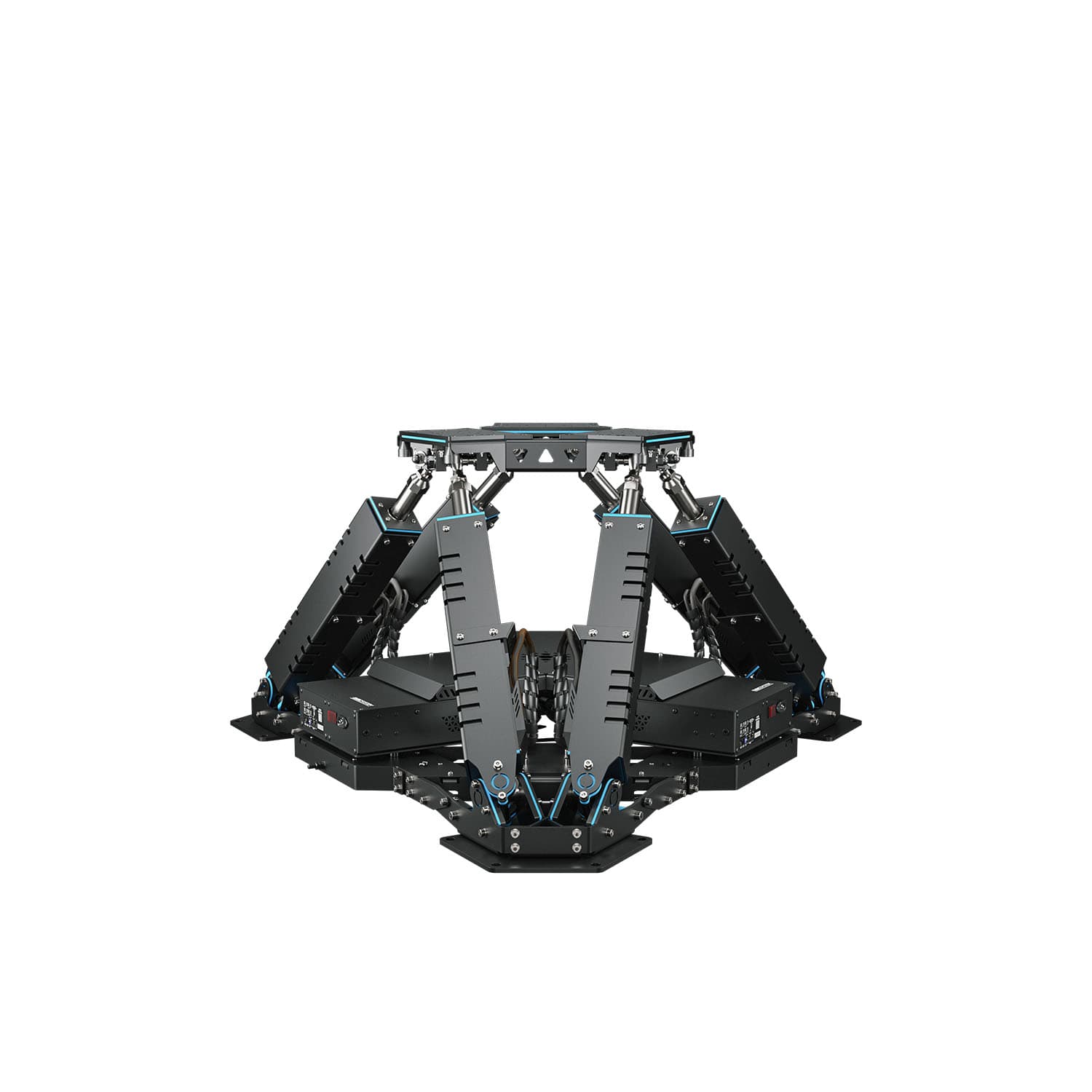
PS-6TL-150
€26 700TL Series
Compact Stewart hexapod for industrial test rigs - cameras, antennas, optical modules, not human cockpits. Production-speed profiles for centered instrumentation.
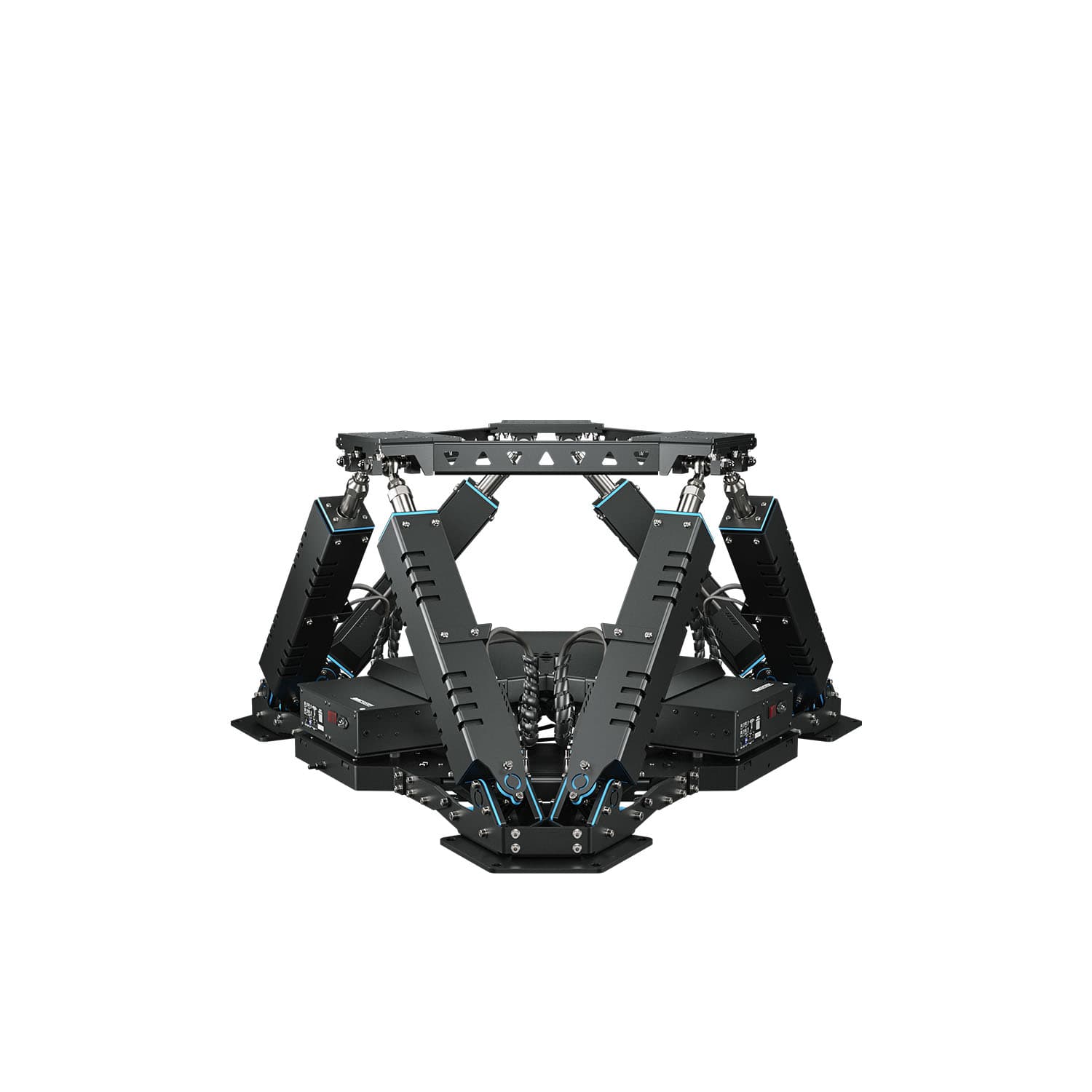
PS-6TL-250
€26 700TL Series
A motion range biased toward straight-line travel, tuned for realistic acceleration cues rather than tilt alone, for single-seat training and research cockpits.
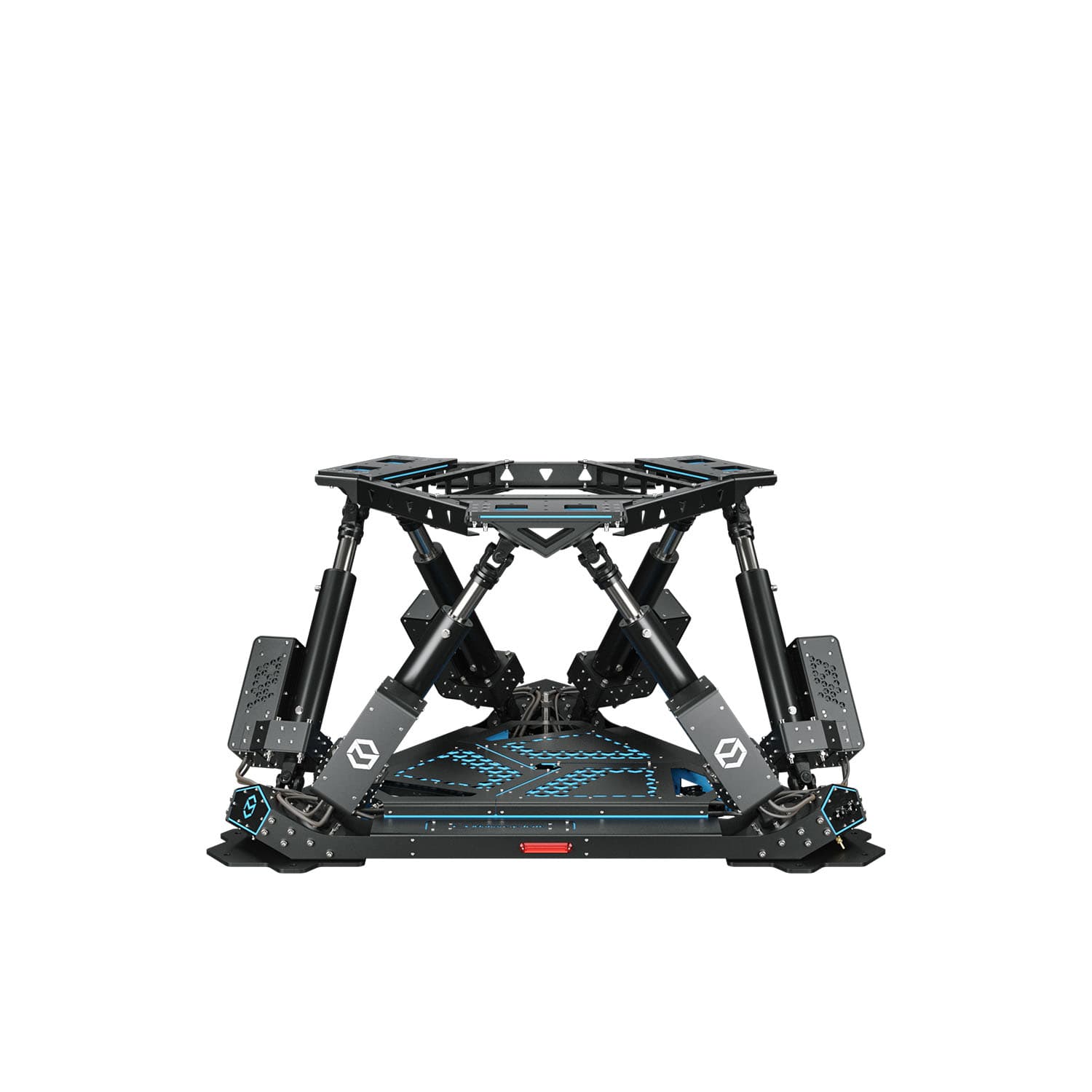
PS-6TL-350
€33 700TL Series
For single-seat training cockpits and tight-access sites - ships assembled, or in modules that pass through standard doorways.
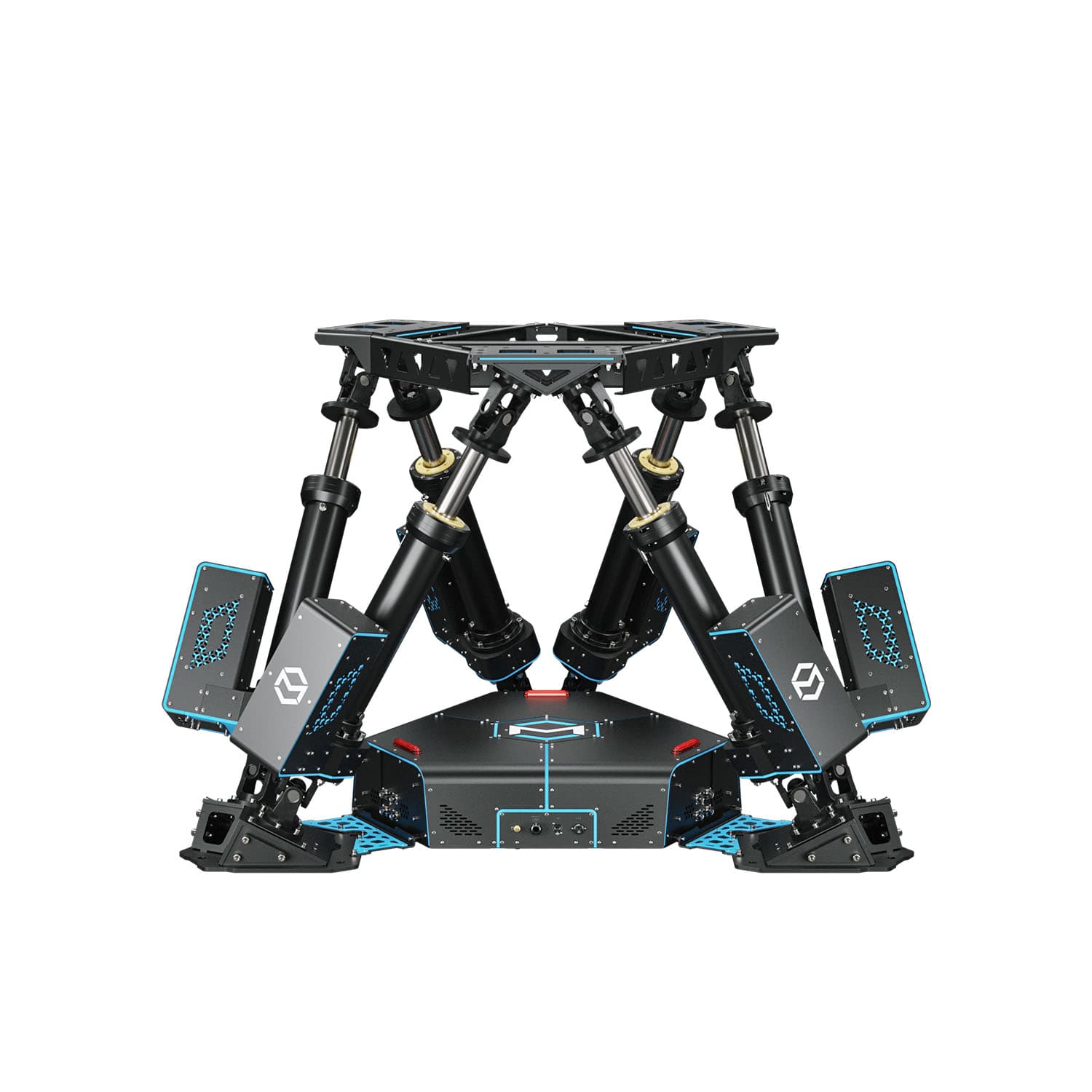
PS-6TL-800
€61 700TL Series
Heavy Stewart hexapod for vehicle-class and rotary-wing trainers - broad turn-and-sideslip travel with strong cabin force at full load.
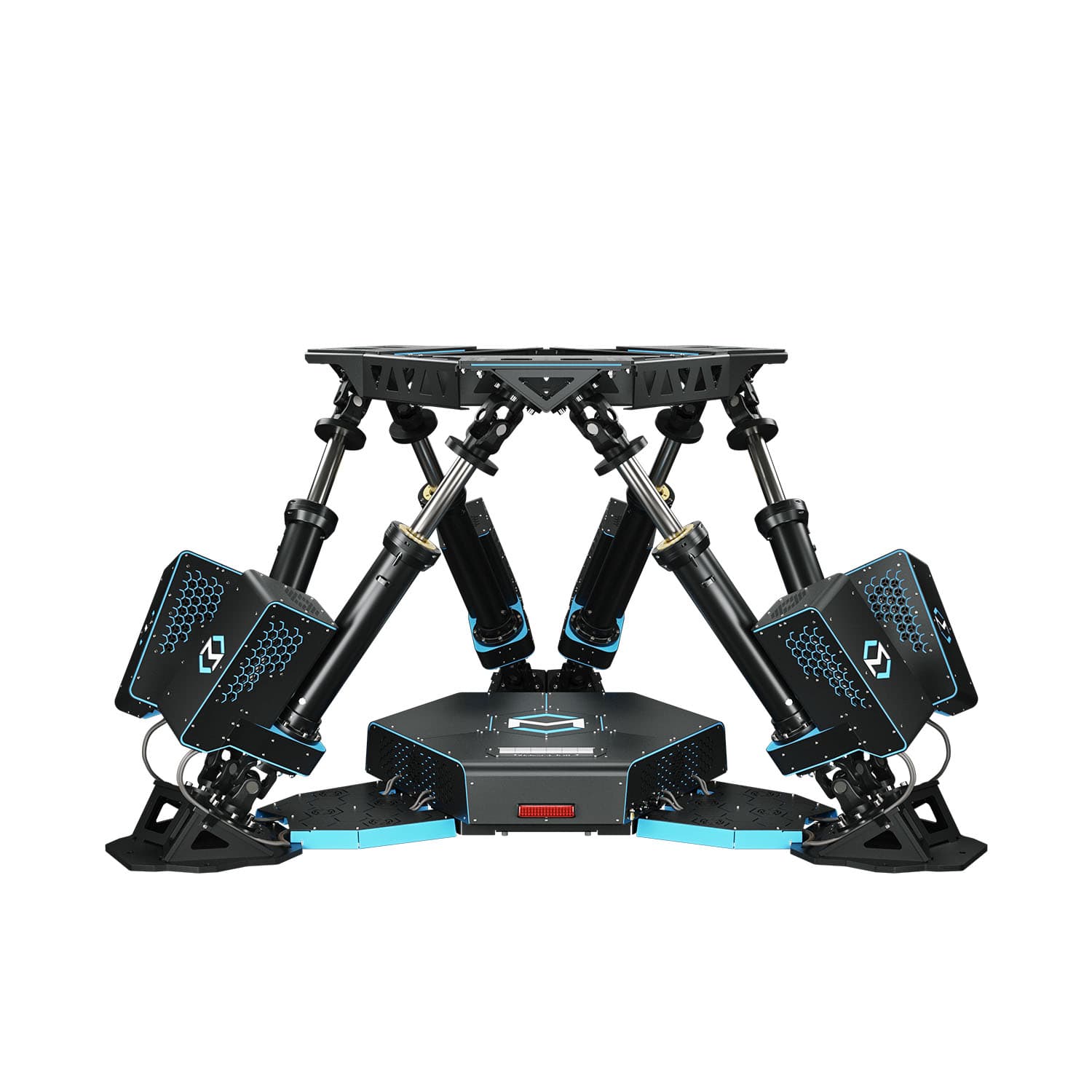
PS-6TL-1500
€78 600TL Series
For full-cabin flight, defense and automotive R&D simulators - long vertical travel for sea-state and runway motion, delivered in modules, the heaviest about 300 kg.
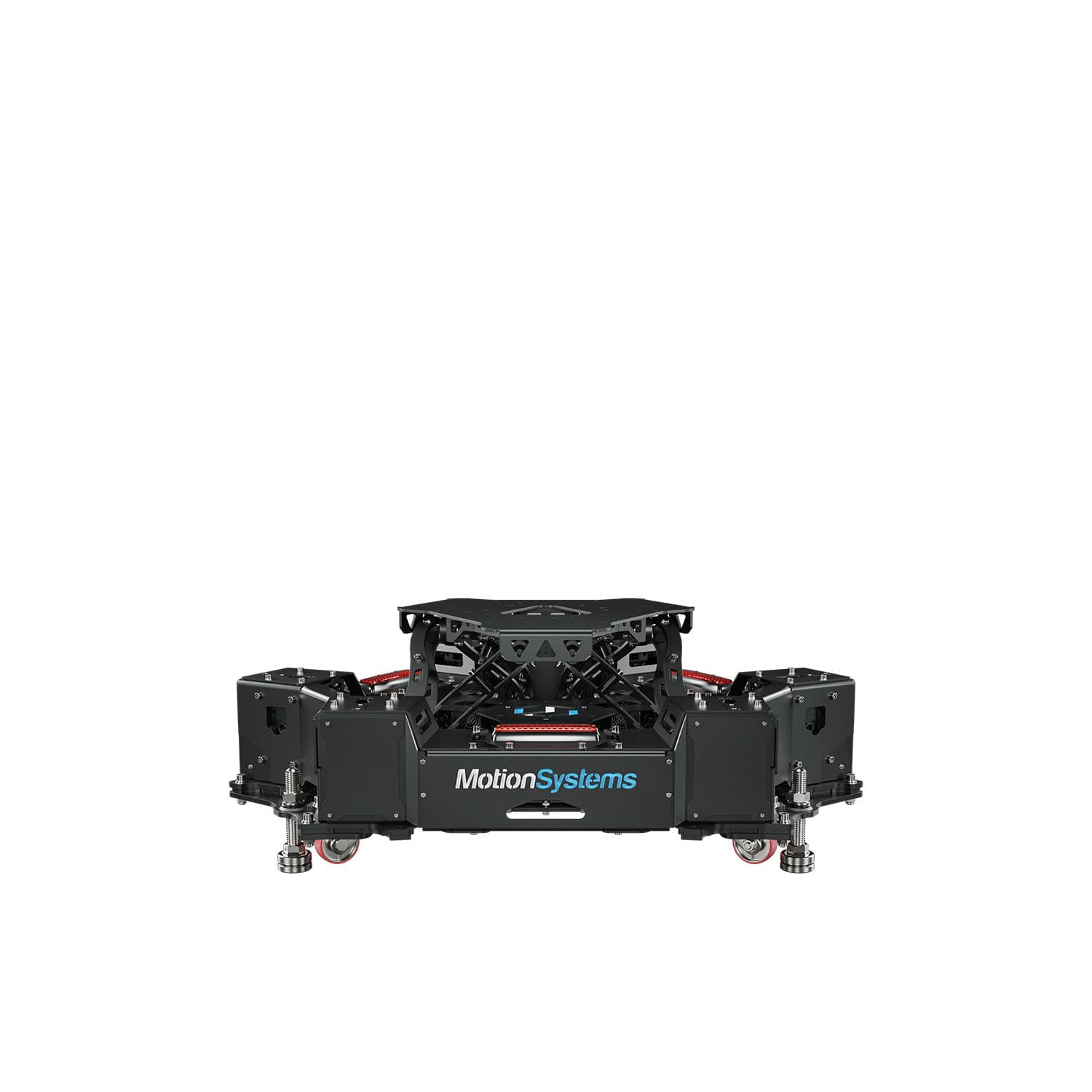
PS-6TM-150
€29 800TM Series
Entry 6DOF platform for VR research, light training cockpits and prototype rigs. Fuller, true-to-physics motion cues - more real forces than a 3DOF base reaches.
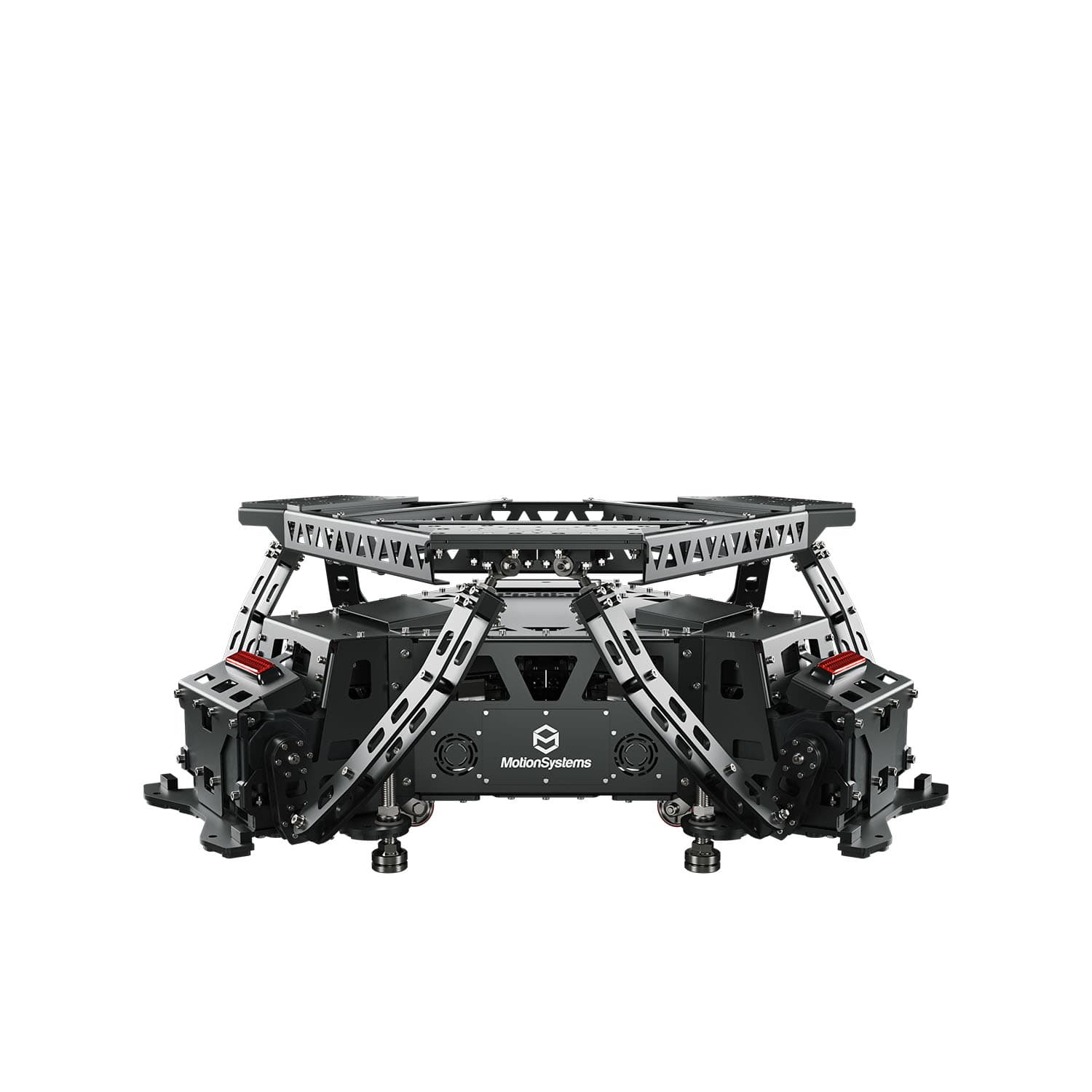
PS-6TM-550
€48 600TM Series
Full 6DOF motion where a Stewart hexapod would need far more height, opening low-ceiling rooms on clearance alone. Carries a two-seat cockpit.
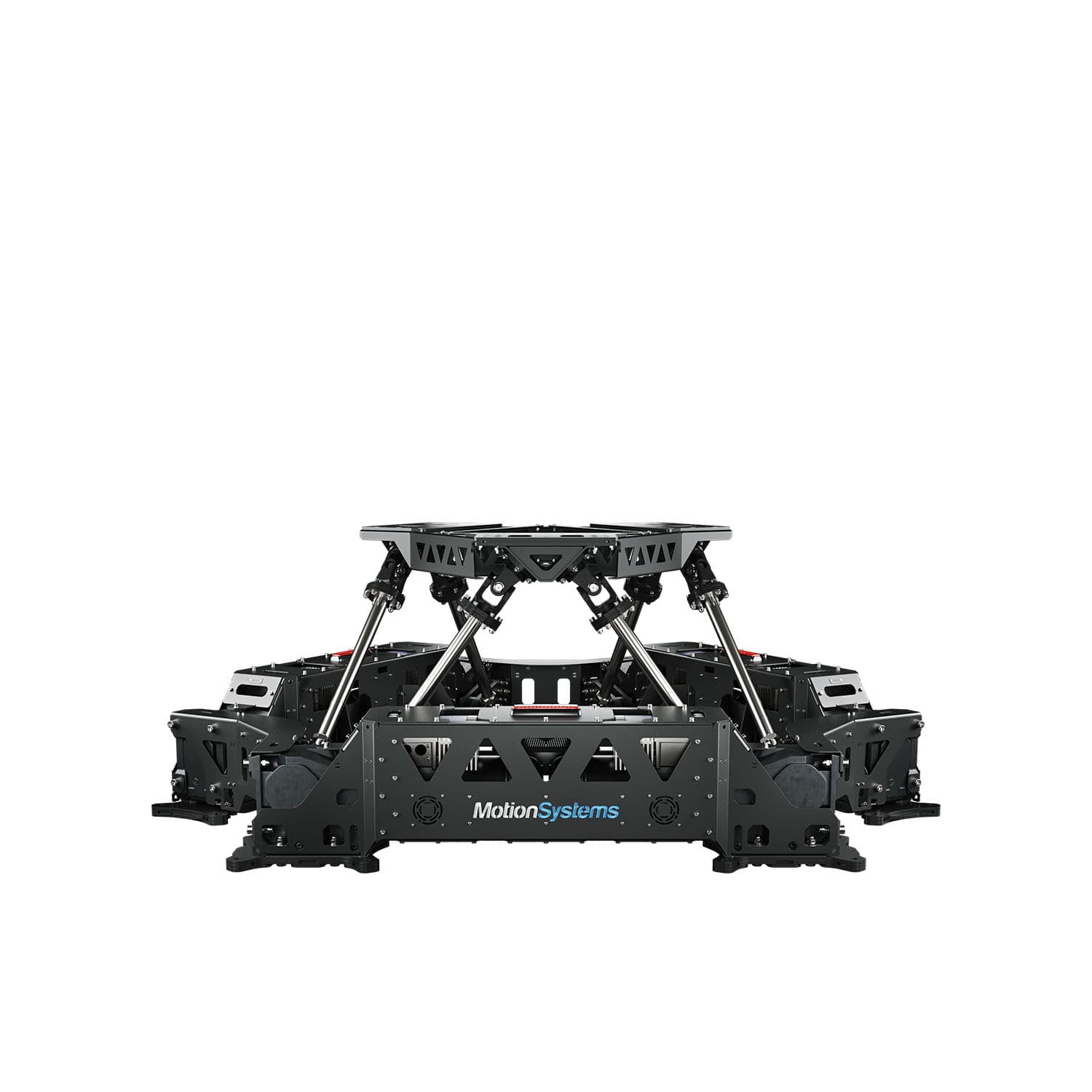
PS-6TM-1500
€63 600TM Series
Low-profile base for full-size cabins and cockpits - from truck simulators to defense trainers - that fits standard-ceiling rooms a taller platform cannot enter.
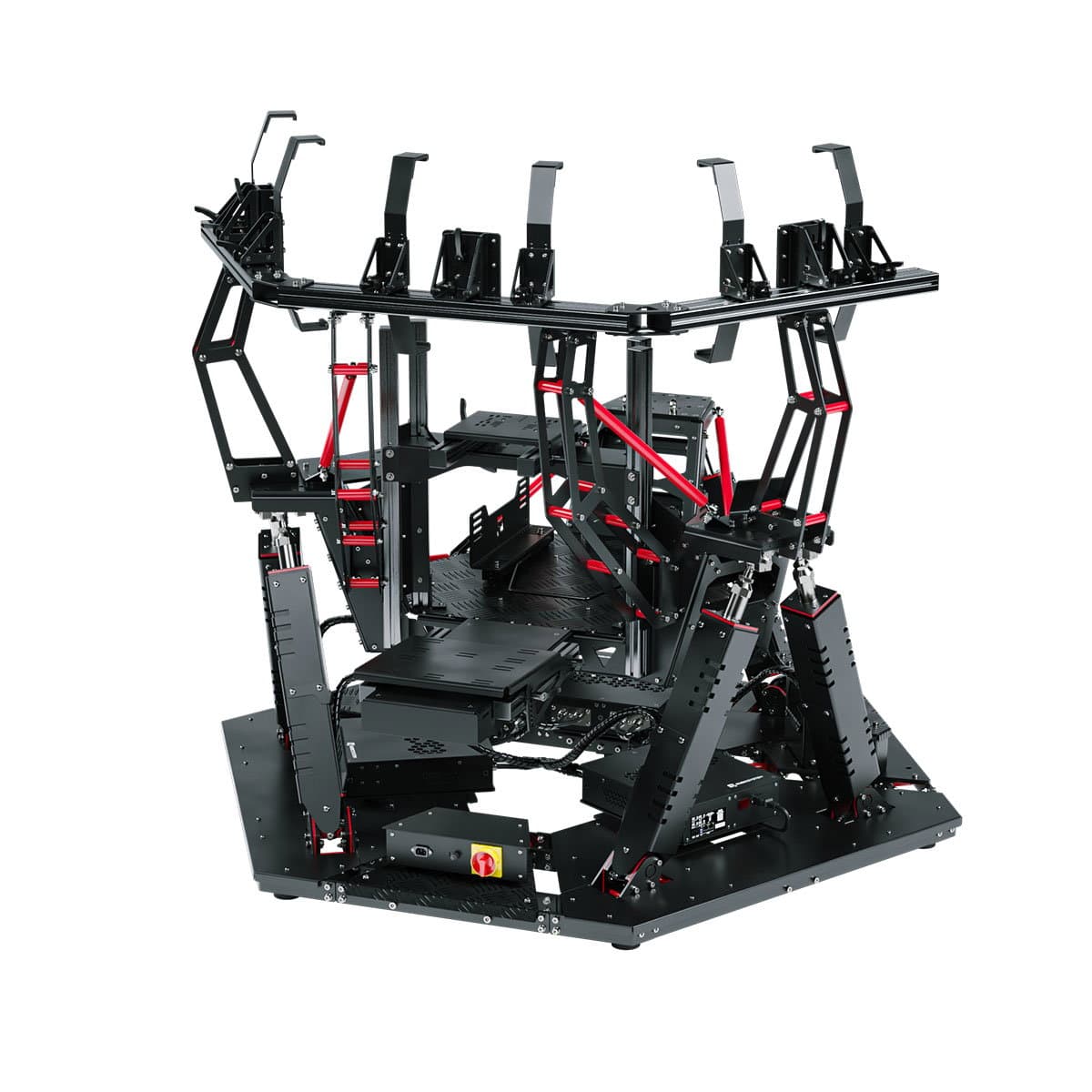
QS-S25
€29 500 - €34 900Qubic System
Compact 6DOF for professional simulators and sim-racing - a fast forward-surge response, apartment-quiet, with doorway-friendly modules on request.
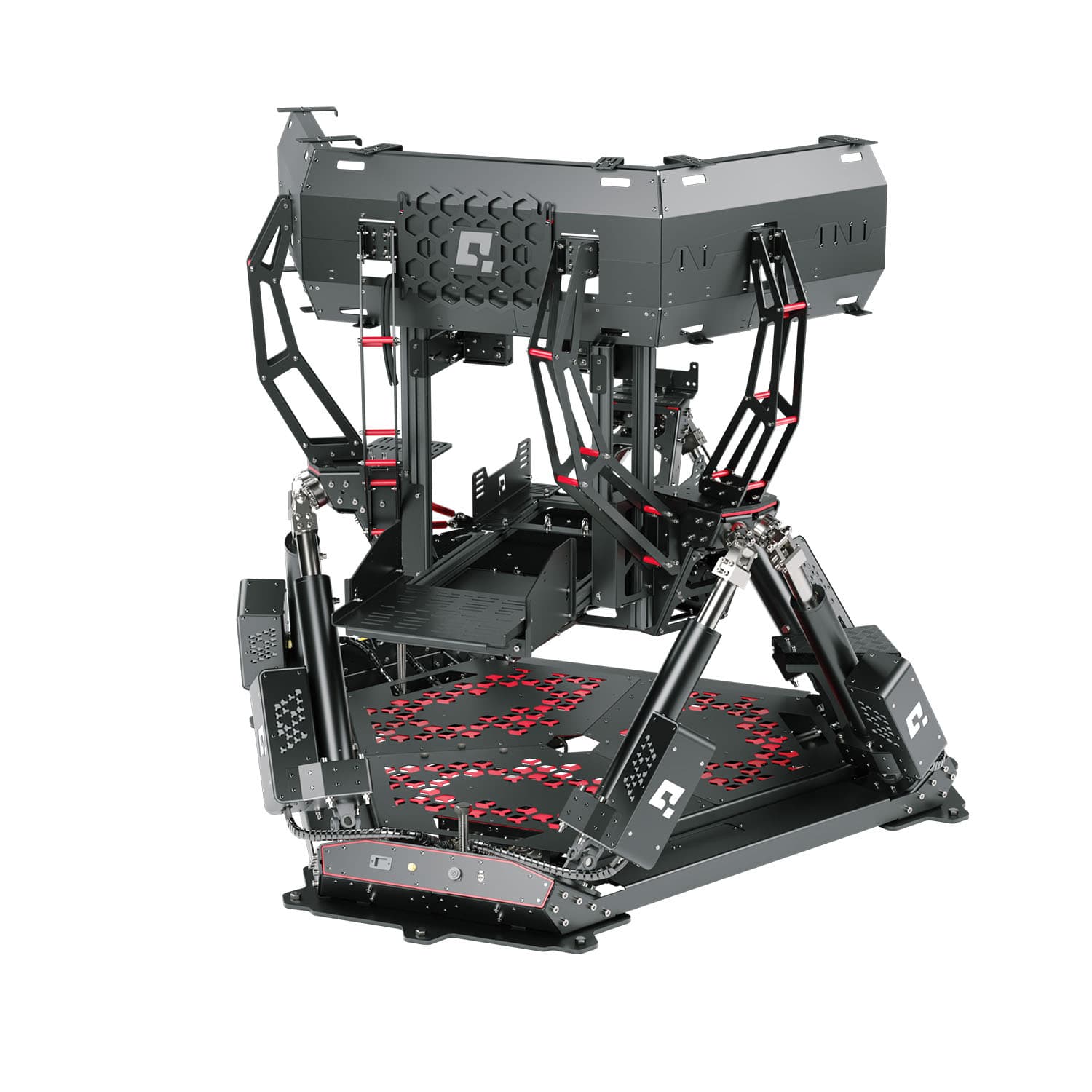
QS-S35
€59 500Qubic System
For commercial training centers - a factory-wired build with an integrated triple-monitor mount that moves with the platform, so the screens stay locked to the motion.
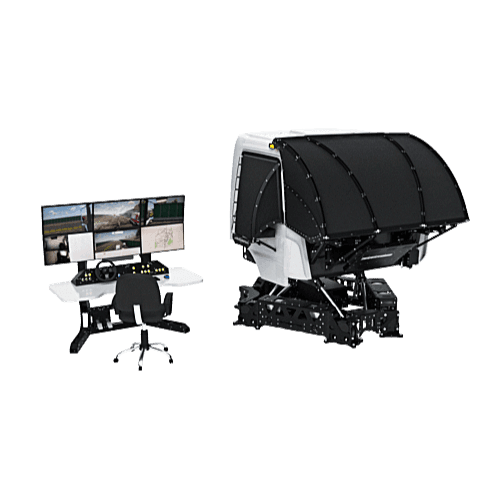
Truck Simulator TS-10
Ask about priceBespoke Solutions
Turnkey truck-driving simulator for driver training - certified by PIMOT (Poland's Automotive Industry Institute), proven in daily commercial lessons.
What six axes actually buy you
Six degrees of freedom is the complete set: three translations and three rotations. Nothing has to be substituted. A platform with fewer axes reproduces longitudinal acceleration by tilting the cockpit and letting a component of gravity stand in for it - effective, and the basis of every tilt-coordination cue - but it ties that cue to an attitude change the occupant can both see and feel. With surge and sway driven directly, the onset of a cue and its sustained part can be separated.
That separation is what matters when the motion is part of the task being assessed rather than set dressing: recovery from an unusual attitude, a loss-of-control event, sea state on a ship bridge, or ride-and-handling work where an engineer has to trust that what the platform did is what the model asked for.
Two architectures reach six axes here. The Linear (TL) series uses ball-screw actuators in a Stewart hexapod - the stiffest option, with the longest vertical travel in the range. The Low-Profile (TM) series places geared rotary drives beside the actuators rather than beneath them, trading stroke for a far lower deck: often the difference between a cabin that fits under a standard ceiling and one that does not. The Qubic System platforms bring the same six axes to pre-assembled cockpits.
6DOF Motion Platforms - common questions.
What comes up most often when a project is being specified around this axis count.
If the task depends on sustained longitudinal or lateral acceleration - braking, cornering, ship heave and sway, unusual-attitude recovery - then yes, because a tilt-only platform has to borrow attitude to produce those cues. If the work is mostly about the onset of a cue, a 3DOF platform delivers much of the perceived effect for a lower installed cost. The Configurator walks through the parameters that usually settle it.
Both drive all six axes. A Stewart hexapod - our Linear (TL) series - uses six ball-screw actuators arranged as legs, giving the highest structural stiffness and the longest heave stroke, and it needs the height to accommodate them. A low-profile platform (the TM series) places the motor beside the actuator instead of under it, cutting installed height substantially at the cost of some stroke. Ceiling height and payload usually decide between them before peak performance does.
It follows the model rather than the axis count: lighter platforms run on a single-phase supply, heavier ones need 400V three-phase. All of them want a reinforced concrete floor with chemical anchoring and a clear operational radius with safety interlocks. The exact supply for each model is on its product page.
ForceSeatPM drives every platform in the range and detects supported titles automatically. For custom or in-house simulation there is an SDK with direct interfaces, alongside MATLAB/Simulink and VBS integrations. If you are working with a specific toolchain, it is worth raising on the first call so we can confirm the interface before anything is quoted.
Not sure which platform is right?
The Configurator walks through five parameters - payload, DOF, drive technology, infrastructure, and software integration - to narrow the field.
Describe the project being built.
Quick question or a full simulator project - the team reads everything.
What happens next?
Confirmation & initial review
A dedicated account manager reads the message directly.
Technical assessment
The team analyzes feasibility and prepares questions or an initial concept.
Proposal delivery
Detailed technical proposal with a platform recommendation, transparent pricing, lead time, and integration timeline.
Team support
Ongoing support from the team behind the recommended platform - for the life of the project.